


Why is New Year's Day a holy day of obligation?
December 30, 2025 at 2:00 p.m.
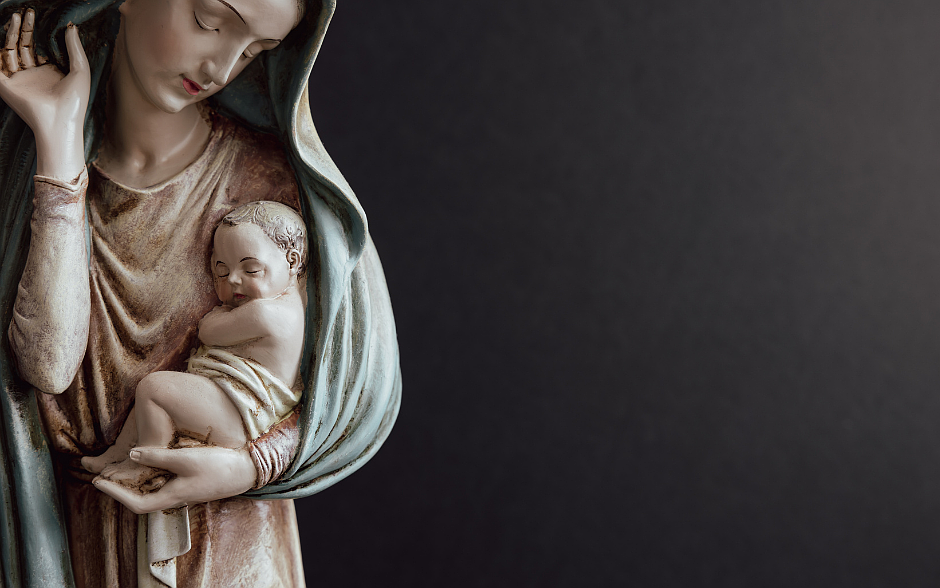
Q: If the Church's new year begins on the first Sunday of Advent, then why is the secular New Year's Day (Jan. 1) a holy day of obligation?
A: You are correct that the Church's liturgical new year begins usually in late November with the first Sunday of Advent, and you are likewise correct that in the United States and for the universal Church in general, Jan. 1 is a holy day of obligation (see Canon 1246 of the Code of Canon Law).
But January 1 is not a holy day of obligation because of the civil new year, but because it is the feast of Mary, the Mother of God.
"Mother of God" – also known by the theological Greek term "Theotokos," or "God-bearer" – is an ancient title for Our Lady which not only references her own great dignity, but further points to deeper Catholic teachings on Jesus' identity and the nature of the most Holy Trinity.
Although this title had been in use among the Christian faithful long before then, formal endorsement of the practice of calling Mary the "Mother of God" is most closely associated with the Council of Ephesus in the year 431 A.D. Among other things, the Council of Ephesus refuted the Nestorian heresy.
The Nestorian heresy is named after the fifth-century bishop Nestorius, who argued that Mary should be considered the mother of only Jesus' human nature, because to say that she was the mother of Jesus' divine nature would seem to imply that she herself was divine.
Nestorius preached against the use of the term "Theotokos" in favor of the title "Christotokos," or "mother of Christ." However, this was problematic because it undermined the Church's doctrine on the "hypostatic union," or the teaching that Jesus has two natures – a divine and a human nature – fully "united in the one person of God's Son" (See the Catechism of the Catholic Church, 481).
To make a long story short, the Council of Ephesus formally declared Nestorius a heretic. The council clarified that because Jesus' two natures were distinct but not separated into different persons, and since Mary was the mother of the person of Jesus in His human nature, she was also the mother of Him in His divine nature. Hence, she can, in this specific sense, rightly be called the "mother of God": not because Mary was herself the source of Jesus' divinity, but because she bore to the world the man who was also God.
It's fitting that in our current calendar we observe the solemnity of Mary, the Mother of God on the eighth day after Christmas. In our Catholic liturgical tradition, especially important feasts like Christmas and Easter are celebrated for eight days. This is called an "octave," and it gives us the space to fully ponder the mystery of faith being celebrated, often in its many various nuances and facets.
The fact that we commemorate Mary as the Mother of God in the octave day of Christmas reminds us, as the Catechism puts it, that "the Incarnation is therefore the mystery of the wonderful union of the divine and human natures in the one person of the Word" (CCC 483).
On a side note, there is one Catholic custom that is specifically tied to the civil celebration of the new year. Provided the other usual conditions for obtaining an indulgence are met, Catholics can earn an indulgence on Dec. 31 if they devoutly pray or chant the "Te Deum" prayer.
This is an ancient hymn of thanksgiving which today is most often prayed as part of the Liturgy of the Hours on Sundays and major feast days, but is to be prayed on Dec. 31 as a way to thank God for the blessings and graces of the past year. Similarly, a Catholic can earn a second indulgence on Jan. 1 for praying the "Veni Creator Spiritus," a prayer asking for the Holy Spirit's light and guidance.
Jenna Marie Cooper, who holds a licentiate in canon law, is a consecrated virgin and a canonist whose column appears weekly at OSV News. Send your questions to [email protected].
Related Stories
Tuesday, December 30, 2025

E-Editions
Events
Q: If the Church's new year begins on the first Sunday of Advent, then why is the secular New Year's Day (Jan. 1) a holy day of obligation?
A: You are correct that the Church's liturgical new year begins usually in late November with the first Sunday of Advent, and you are likewise correct that in the United States and for the universal Church in general, Jan. 1 is a holy day of obligation (see Canon 1246 of the Code of Canon Law).
But January 1 is not a holy day of obligation because of the civil new year, but because it is the feast of Mary, the Mother of God.
"Mother of God" – also known by the theological Greek term "Theotokos," or "God-bearer" – is an ancient title for Our Lady which not only references her own great dignity, but further points to deeper Catholic teachings on Jesus' identity and the nature of the most Holy Trinity.
Although this title had been in use among the Christian faithful long before then, formal endorsement of the practice of calling Mary the "Mother of God" is most closely associated with the Council of Ephesus in the year 431 A.D. Among other things, the Council of Ephesus refuted the Nestorian heresy.
The Nestorian heresy is named after the fifth-century bishop Nestorius, who argued that Mary should be considered the mother of only Jesus' human nature, because to say that she was the mother of Jesus' divine nature would seem to imply that she herself was divine.
Nestorius preached against the use of the term "Theotokos" in favor of the title "Christotokos," or "mother of Christ." However, this was problematic because it undermined the Church's doctrine on the "hypostatic union," or the teaching that Jesus has two natures – a divine and a human nature – fully "united in the one person of God's Son" (See the Catechism of the Catholic Church, 481).
To make a long story short, the Council of Ephesus formally declared Nestorius a heretic. The council clarified that because Jesus' two natures were distinct but not separated into different persons, and since Mary was the mother of the person of Jesus in His human nature, she was also the mother of Him in His divine nature. Hence, she can, in this specific sense, rightly be called the "mother of God": not because Mary was herself the source of Jesus' divinity, but because she bore to the world the man who was also God.
It's fitting that in our current calendar we observe the solemnity of Mary, the Mother of God on the eighth day after Christmas. In our Catholic liturgical tradition, especially important feasts like Christmas and Easter are celebrated for eight days. This is called an "octave," and it gives us the space to fully ponder the mystery of faith being celebrated, often in its many various nuances and facets.
The fact that we commemorate Mary as the Mother of God in the octave day of Christmas reminds us, as the Catechism puts it, that "the Incarnation is therefore the mystery of the wonderful union of the divine and human natures in the one person of the Word" (CCC 483).
On a side note, there is one Catholic custom that is specifically tied to the civil celebration of the new year. Provided the other usual conditions for obtaining an indulgence are met, Catholics can earn an indulgence on Dec. 31 if they devoutly pray or chant the "Te Deum" prayer.
This is an ancient hymn of thanksgiving which today is most often prayed as part of the Liturgy of the Hours on Sundays and major feast days, but is to be prayed on Dec. 31 as a way to thank God for the blessings and graces of the past year. Similarly, a Catholic can earn a second indulgence on Jan. 1 for praying the "Veni Creator Spiritus," a prayer asking for the Holy Spirit's light and guidance.
Jenna Marie Cooper, who holds a licentiate in canon law, is a consecrated virgin and a canonist whose column appears weekly at OSV News. Send your questions to [email protected].