


What does the term 'protomartyr' mean?
December 30, 2025 at 11:53 a.m.
Q: A Catholic Church near me is named after a certain saint, but has "protomartyr" after the name. What does this term mean? (Indiana)
A: My guess is that the Church you're thinking of was named "St. Stephen," since "protomartyr" is a title specific to him.
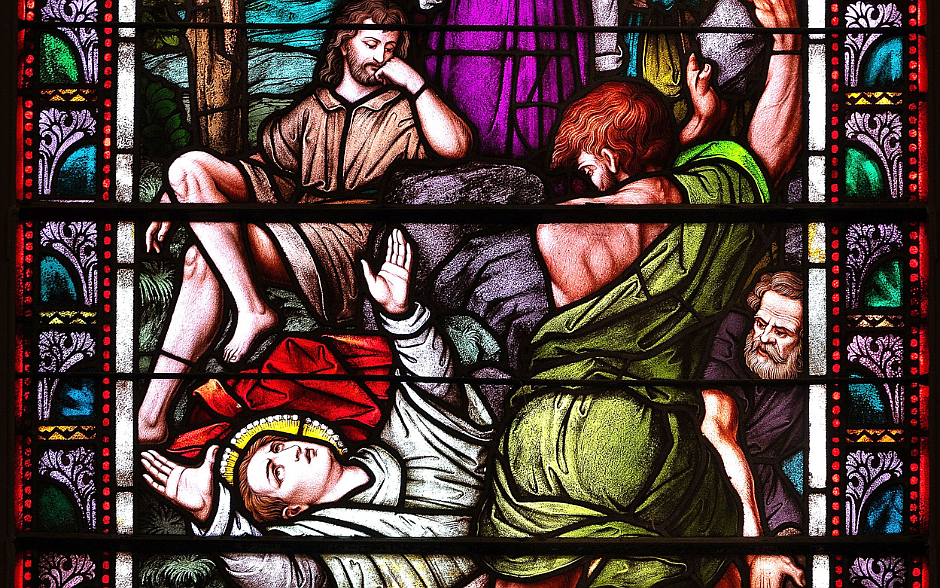
"Protomartyr" is a Greek term that is usually translated as "the first martyr." St. Stephen is called the first martyr because the New Testament portrays him as the first person to have been killed because of the new Christian faith.
We first meet St. Stephen in Chapter 6 of the Acts of the Apostles. In the early Christian community, after there was some dispute over the logistics of how food was distributed to the widows in need, the Apostles concluded: "It is not right for us to neglect the word of God to serve at table. Brothers, select from among you seven reputable men, filled with the Spirit and wisdom, whom we shall appoint to this task, whereas we shall devote ourselves to prayer and to the ministry of the word." This was the beginning of the diaconate, and St. Stephen was among those appointed as the first seven deacons (See Acts 6:1-5).
The book of Acts goes on to describe Stephen's ministry, noting that: "Stephen, filled with grace and power, was working great wonders and signs among the people," but that certain religious leaders from the local synagogue "could not withstand the wisdom and the spirit with which he spoke" (Acts 6:8, 10).
Consequently, Stephen was accused of blasphemy and condemned based on the testimony of false witness. Chapter 7 of the book of Acts records a long discourse in which Stephen professes how Jesus is the ultimate fulfillment of the history of salvation from the time of Abraham. This enraged his persecutors, who proceeded to stone Stephen to death.
Mirroring Christ's own passion and death, Stephen died forgiving those who were killing him: "As they were stoning Stephen, he called out, 'Lord Jesus, receive my spirit.' Then he fell to his knees and cried out in a loud voice, "Lord, do not hold this sin against them" (Acts 7: 59-60).
St. Stephen's feast day is Dec. 26. Traditionally, his feast is said to be celebrated the day after Christmas each year as a way to show the "first martyr's" closeness to Christ.
St. Stephen's story is impressive on its own, but we can also find food for reflection in the term "proto-martyr."
In Catholic contexts, the title "martyr" is applied to those who died for the faith. Typically this refers to individuals who professed the doctrinal truths of the faith and were killed because of a hatred for Christianity specifically – although in recent decades, the Church has deemed it fitting for saints who were killed because of their practice of Christian virtue (like St. Maria Goretti) or in the course of heroic acts of Christian charity (as in the case of St. Maximillian Kolbe) to also bear the title "martyr."
But more foundationally, it's worth recalling that the Greek word "martyr" originally means "witnesses." Like the Apostles and the holy women who first witnessed the empty tomb, martyrs have all had a personal encounter with Jesus and the "good news" of His saving mission.
Like any witness, the martyrs communicate that they know and can attest that these certain things are true. Sometimes, like St. Stephen, they attest to the truth using their words or in eloquent speech. But the martyrs always bear witness to the truth in the most convincing way of all, by dying for what they believed and staking their life on the reality of heaven.
The prefix "proto" means first, but it has a specific connotation. That is, it doesn't just mean "first" in a simple numerical sense, but implies serving as a model and foundation for what will follow. And so Stephen as the "protomartyr" shows us a pattern for radical Christian life and witness.
Jenna Marie Cooper, who holds a licentiate in canon law, is a consecrated virgin and a canonist whose column appears weekly at OSV News. Send your questions to [email protected].
Related Stories
Tuesday, December 30, 2025



E-Editions
Events
Q: A Catholic Church near me is named after a certain saint, but has "protomartyr" after the name. What does this term mean? (Indiana)
A: My guess is that the Church you're thinking of was named "St. Stephen," since "protomartyr" is a title specific to him.
"Protomartyr" is a Greek term that is usually translated as "the first martyr." St. Stephen is called the first martyr because the New Testament portrays him as the first person to have been killed because of the new Christian faith.
We first meet St. Stephen in Chapter 6 of the Acts of the Apostles. In the early Christian community, after there was some dispute over the logistics of how food was distributed to the widows in need, the Apostles concluded: "It is not right for us to neglect the word of God to serve at table. Brothers, select from among you seven reputable men, filled with the Spirit and wisdom, whom we shall appoint to this task, whereas we shall devote ourselves to prayer and to the ministry of the word." This was the beginning of the diaconate, and St. Stephen was among those appointed as the first seven deacons (See Acts 6:1-5).
The book of Acts goes on to describe Stephen's ministry, noting that: "Stephen, filled with grace and power, was working great wonders and signs among the people," but that certain religious leaders from the local synagogue "could not withstand the wisdom and the spirit with which he spoke" (Acts 6:8, 10).
Consequently, Stephen was accused of blasphemy and condemned based on the testimony of false witness. Chapter 7 of the book of Acts records a long discourse in which Stephen professes how Jesus is the ultimate fulfillment of the history of salvation from the time of Abraham. This enraged his persecutors, who proceeded to stone Stephen to death.
Mirroring Christ's own passion and death, Stephen died forgiving those who were killing him: "As they were stoning Stephen, he called out, 'Lord Jesus, receive my spirit.' Then he fell to his knees and cried out in a loud voice, "Lord, do not hold this sin against them" (Acts 7: 59-60).
St. Stephen's feast day is Dec. 26. Traditionally, his feast is said to be celebrated the day after Christmas each year as a way to show the "first martyr's" closeness to Christ.
St. Stephen's story is impressive on its own, but we can also find food for reflection in the term "proto-martyr."
In Catholic contexts, the title "martyr" is applied to those who died for the faith. Typically this refers to individuals who professed the doctrinal truths of the faith and were killed because of a hatred for Christianity specifically – although in recent decades, the Church has deemed it fitting for saints who were killed because of their practice of Christian virtue (like St. Maria Goretti) or in the course of heroic acts of Christian charity (as in the case of St. Maximillian Kolbe) to also bear the title "martyr."
But more foundationally, it's worth recalling that the Greek word "martyr" originally means "witnesses." Like the Apostles and the holy women who first witnessed the empty tomb, martyrs have all had a personal encounter with Jesus and the "good news" of His saving mission.
Like any witness, the martyrs communicate that they know and can attest that these certain things are true. Sometimes, like St. Stephen, they attest to the truth using their words or in eloquent speech. But the martyrs always bear witness to the truth in the most convincing way of all, by dying for what they believed and staking their life on the reality of heaven.
The prefix "proto" means first, but it has a specific connotation. That is, it doesn't just mean "first" in a simple numerical sense, but implies serving as a model and foundation for what will follow. And so Stephen as the "protomartyr" shows us a pattern for radical Christian life and witness.
Jenna Marie Cooper, who holds a licentiate in canon law, is a consecrated virgin and a canonist whose column appears weekly at OSV News. Send your questions to [email protected].