


Arriving at the manger through Mary's pondering
December 16, 2025 at 7:24 a.m.
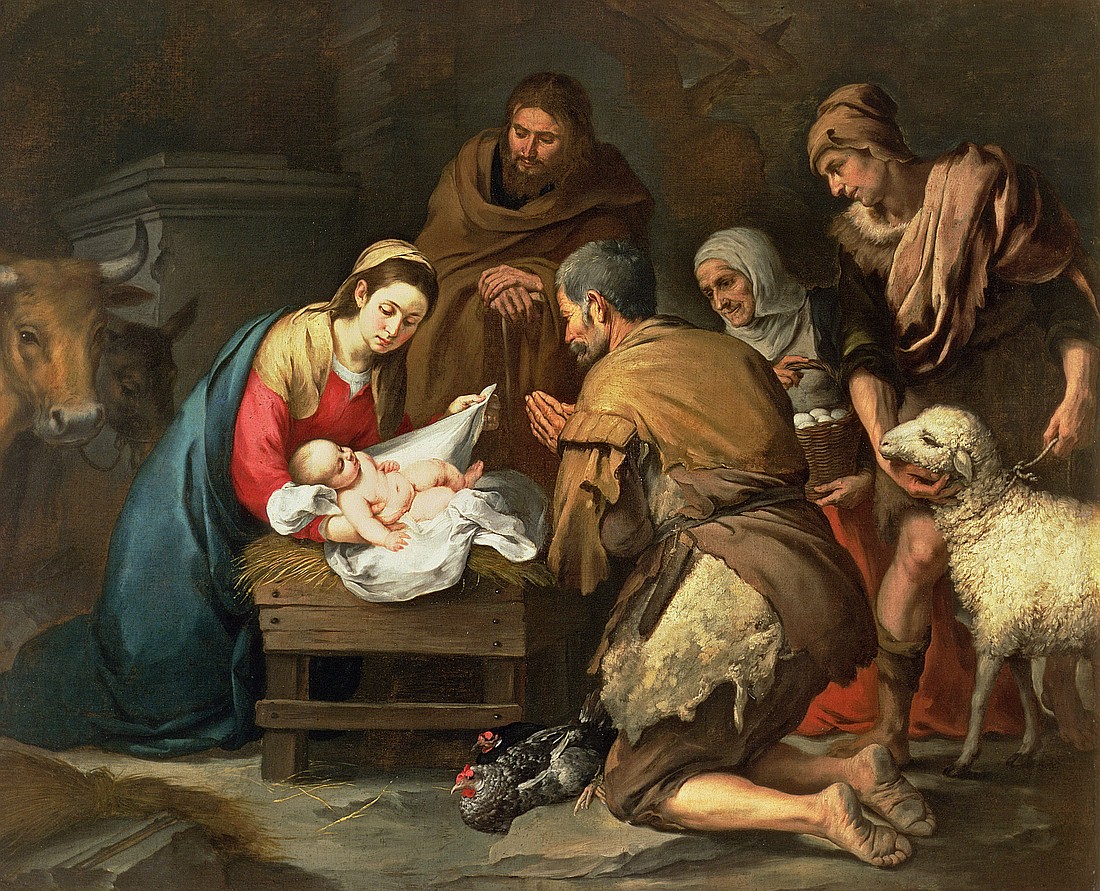
The scriptural scene for this Christmas Sunday is familiar to us all. We encounter it in most Nativity scenes. But there, the scene is calm – they are but statues. But in Scripture, the scene is a busy one: Angels come and go, shepherds come and go – and come again, stories of a newborn King and God’s love-appeared are told, and many are amazed by the marvelous goings-on, for Christ has come. He is born today.
At the center of this activity, there is a contemplative, love-filled stillness. There is the stillness of a swaddled, sleeping babe: Peace on Earth. And the stillness of his mother, reflecting in her heart on the whole scene unfolding around her son.
Have you ever wondered what the course of Mary’s thoughts were on that first Christmas day? How her heart reflected on the swaddled, sleeping babe before her? Just what did her contemplation reveal?
On the one hand, we may know something through Mary’s pondering of Mary’s ponderings. For example, perhaps we have held and wondered at a newborn child. Or maybe, we have tried each Christmas, standing before a manger, to understand the marvelous goings-on of the Incarnation, reflecting on them in our hearts.
On the other hand, we are not privy to the content of Mary’s heart, so pure and free, beholding the fruit of her fiat. As Caryll Houselander once put it in her book, “The Reed of God,” “so little is recorded of (Our Lady’s) personality, so few of her words, so few deeds, that we can form no picture of her, and there is nothing that we can lay hold of to imitate.”
Still, we are drawn to her, especially today; drawn toward the contemplative stillness of her love-struck heart. Perhaps, with Our Lady, then, it is most simply this scene of contemplative adoration that we most need. Her love-struck heart suffices. Looking to her stillness on Christmas morning, “it is Our Lady – and no other saint,” writes Houselander, “whom we can really imitate.”
“Our Lady had to include in her vocation, in her life’s work, the essential thing that was to be hidden in every other vocation, in every life, (ours included) … The one thing that she did and does is the one thing that we all have to do, namely, to bear Christ into the world.”
And so there is something we can lay hold of and imitate: Mary’s pondering. The more deeply we reflect on the wonder of the Incarnation, the more deeply we understand Christ as “the kindness and generous love of God our savior appeared” (Ti 3:4); the mercy of God “richly poured out” upon us. The more intimately we know Christ, the more we love him, and the more we readily bear him into the world in word and deed. This is to imitate Mary’s ponderous, love-struck heart, each of us in our own vocation and in our own lives.
“Christ,” writes Houselander, “must be born from every soul, formed in every life. … In contemplating (Mary), we find intimacy with God … the one irresistible love.”
And so, having followed Mary through the weeks of Advent, we arrive at the manger on Christmas morning. We arrive at this scene of angels and shepherds, coming in adoration, and making the joyful news known. We arrive at the intimate scene of a mother beholding her newborn child.
And not only do we rejoice at the news of the angels and shepherds: This child is our God become flesh, but we are also drawn into the stillness of Mary’s contemplative heart. We sit and ponder God’s “irresistible love.”
Catherine Cavadini, Ph.D., is the assistant chair of the University of Notre Dame’s Department of Theology and director of its master’s program in theology.
Related Stories
Tuesday, January 06, 2026





E-Editions
Events
The scriptural scene for this Christmas Sunday is familiar to us all. We encounter it in most Nativity scenes. But there, the scene is calm – they are but statues. But in Scripture, the scene is a busy one: Angels come and go, shepherds come and go – and come again, stories of a newborn King and God’s love-appeared are told, and many are amazed by the marvelous goings-on, for Christ has come. He is born today.
At the center of this activity, there is a contemplative, love-filled stillness. There is the stillness of a swaddled, sleeping babe: Peace on Earth. And the stillness of his mother, reflecting in her heart on the whole scene unfolding around her son.
Have you ever wondered what the course of Mary’s thoughts were on that first Christmas day? How her heart reflected on the swaddled, sleeping babe before her? Just what did her contemplation reveal?
On the one hand, we may know something through Mary’s pondering of Mary’s ponderings. For example, perhaps we have held and wondered at a newborn child. Or maybe, we have tried each Christmas, standing before a manger, to understand the marvelous goings-on of the Incarnation, reflecting on them in our hearts.
On the other hand, we are not privy to the content of Mary’s heart, so pure and free, beholding the fruit of her fiat. As Caryll Houselander once put it in her book, “The Reed of God,” “so little is recorded of (Our Lady’s) personality, so few of her words, so few deeds, that we can form no picture of her, and there is nothing that we can lay hold of to imitate.”
Still, we are drawn to her, especially today; drawn toward the contemplative stillness of her love-struck heart. Perhaps, with Our Lady, then, it is most simply this scene of contemplative adoration that we most need. Her love-struck heart suffices. Looking to her stillness on Christmas morning, “it is Our Lady – and no other saint,” writes Houselander, “whom we can really imitate.”
“Our Lady had to include in her vocation, in her life’s work, the essential thing that was to be hidden in every other vocation, in every life, (ours included) … The one thing that she did and does is the one thing that we all have to do, namely, to bear Christ into the world.”
And so there is something we can lay hold of and imitate: Mary’s pondering. The more deeply we reflect on the wonder of the Incarnation, the more deeply we understand Christ as “the kindness and generous love of God our savior appeared” (Ti 3:4); the mercy of God “richly poured out” upon us. The more intimately we know Christ, the more we love him, and the more we readily bear him into the world in word and deed. This is to imitate Mary’s ponderous, love-struck heart, each of us in our own vocation and in our own lives.
“Christ,” writes Houselander, “must be born from every soul, formed in every life. … In contemplating (Mary), we find intimacy with God … the one irresistible love.”
And so, having followed Mary through the weeks of Advent, we arrive at the manger on Christmas morning. We arrive at this scene of angels and shepherds, coming in adoration, and making the joyful news known. We arrive at the intimate scene of a mother beholding her newborn child.
And not only do we rejoice at the news of the angels and shepherds: This child is our God become flesh, but we are also drawn into the stillness of Mary’s contemplative heart. We sit and ponder God’s “irresistible love.”
Catherine Cavadini, Ph.D., is the assistant chair of the University of Notre Dame’s Department of Theology and director of its master’s program in theology.