


‘O Antiphons’: Advent prayers even the overscheduled can embrace
December 13, 2025 at 9:00 a.m.
 Preparing the way of the Lord can feel like an insurmountable task in a month filled with countless obligations and demands upon our time.
How can we make ready our hearts and minds for the Christ Child while pulled in so many directions, with the calendar ever announcing another task or event?
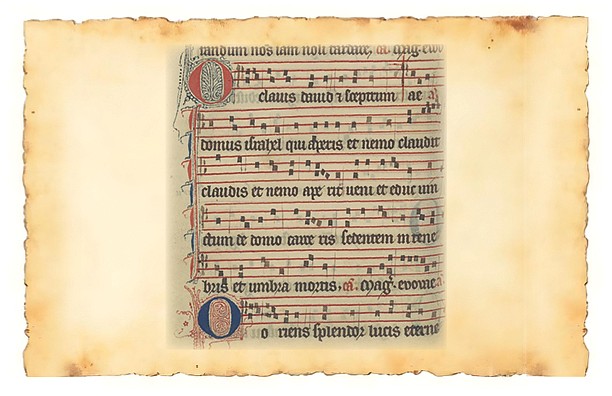
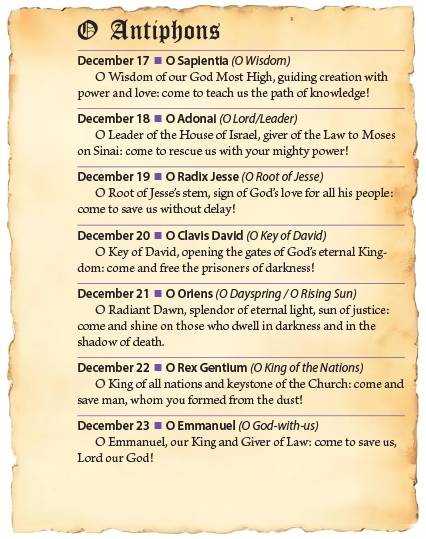
Enter the “O Antiphons” – part of the Church’s ancient evening prayer of the Divine Office – a different title for Christ opening each of seven short verses, with one prayed per day Dec. 17-23. These themes set the tone for remembering the Son’s role throughout salvation history, even leading up to his Incarnation – and they are brief enough to be prayed and remembered in the midst of a demanding schedule.
The Roman Catholic Church has been singing the O Antiphons since the eighth century. Each antiphon begins with a traditional title for Christ: “O Wisdom,” “O sacred Lord,” “O Flower of Jesse’s Stem,” “O Key of David,” “O Radiant Dawn,” “O King of all the nations,” and finally, “O Emmanuel,” which means “God with us.”
“Each of these traditional titles for the Messiah connects the coming of Christ with the prophetic writings of the Old Testament,” notes Paulist Father Larry Rice in a reflection on USCCB.org, which describes the titles as “a magnificent theology that uses ancient biblical imagery drawn from the messianic hopes of the Old Testament to proclaim the coming Christ as the fulfillment not only of Old Testament hopes, but present ones as well.”
Interestingly, the first letter of the Messianic titles in Latin spell out the words “ERO CRAS,” which means “Tomorrow, I will come.”
The O Antiphons are the Alleluia verse before the Gospel at Mass during Advent, and they form the basis for the verses of the hymn “O Come, O Come Emmanuel,” a ubiquitous Advent hymn based on Gregorian Chant that focuses on Jesus’ imminent coming at Christmas.
Father Rice points out that the over-abundance of Christmas music in stores and on the radio before the season begins can be fatiguing by the time the Birth of Jesus finally arrives.
“The ever-present repetition of Christmas carols often serves to point out that the rest of the world is celebrating Christmas, while we’re still in the season of Advent.”
Not so with the ancient hymn of the O Antiphons, he continues.
“The original hymn, with its pleading for Christ’s coming, still serves as a welcome antidote [in] December,” Father Rice says.
As Advent grows ever busier, the Church recalls the need for contemplation – which we can embrace through these brief prayers as Christmas approaches. Keep this list of antiphons in the busiest room of your home, so a bit of calm can pierce the chaos.
The Church needs quality Catholic journalism now more than ever. Please consider supporting this work by signing up for a SUBSCRIPTION (click HERE) or making a DONATION to The Monitor (click HERE). Thank you for your support.
Related Stories
Monday, January 12, 2026


E-Editions
Events
Preparing the way of the Lord can feel like an insurmountable task in a month filled with countless obligations and demands upon our time.
How can we make ready our hearts and minds for the Christ Child while pulled in so many directions, with the calendar ever announcing another task or event?
Enter the “O Antiphons” – part of the Church’s ancient evening prayer of the Divine Office – a different title for Christ opening each of seven short verses, with one prayed per day Dec. 17-23. These themes set the tone for remembering the Son’s role throughout salvation history, even leading up to his Incarnation – and they are brief enough to be prayed and remembered in the midst of a demanding schedule.
The Roman Catholic Church has been singing the O Antiphons since the eighth century. Each antiphon begins with a traditional title for Christ: “O Wisdom,” “O sacred Lord,” “O Flower of Jesse’s Stem,” “O Key of David,” “O Radiant Dawn,” “O King of all the nations,” and finally, “O Emmanuel,” which means “God with us.”
“Each of these traditional titles for the Messiah connects the coming of Christ with the prophetic writings of the Old Testament,” notes Paulist Father Larry Rice in a reflection on USCCB.org, which describes the titles as “a magnificent theology that uses ancient biblical imagery drawn from the messianic hopes of the Old Testament to proclaim the coming Christ as the fulfillment not only of Old Testament hopes, but present ones as well.”
Interestingly, the first letter of the Messianic titles in Latin spell out the words “ERO CRAS,” which means “Tomorrow, I will come.”
The O Antiphons are the Alleluia verse before the Gospel at Mass during Advent, and they form the basis for the verses of the hymn “O Come, O Come Emmanuel,” a ubiquitous Advent hymn based on Gregorian Chant that focuses on Jesus’ imminent coming at Christmas.
Father Rice points out that the over-abundance of Christmas music in stores and on the radio before the season begins can be fatiguing by the time the Birth of Jesus finally arrives.
“The ever-present repetition of Christmas carols often serves to point out that the rest of the world is celebrating Christmas, while we’re still in the season of Advent.”
Not so with the ancient hymn of the O Antiphons, he continues.
“The original hymn, with its pleading for Christ’s coming, still serves as a welcome antidote [in] December,” Father Rice says.
As Advent grows ever busier, the Church recalls the need for contemplation – which we can embrace through these brief prayers as Christmas approaches. Keep this list of antiphons in the busiest room of your home, so a bit of calm can pierce the chaos.
The Church needs quality Catholic journalism now more than ever. Please consider supporting this work by signing up for a SUBSCRIPTION (click HERE) or making a DONATION to The Monitor (click HERE). Thank you for your support.