


'A Question of Faith'
Cardinal Sarah, Peter Carter discuss music’s role in elevating liturgy
December 8, 2025 at 12:17 p.m.
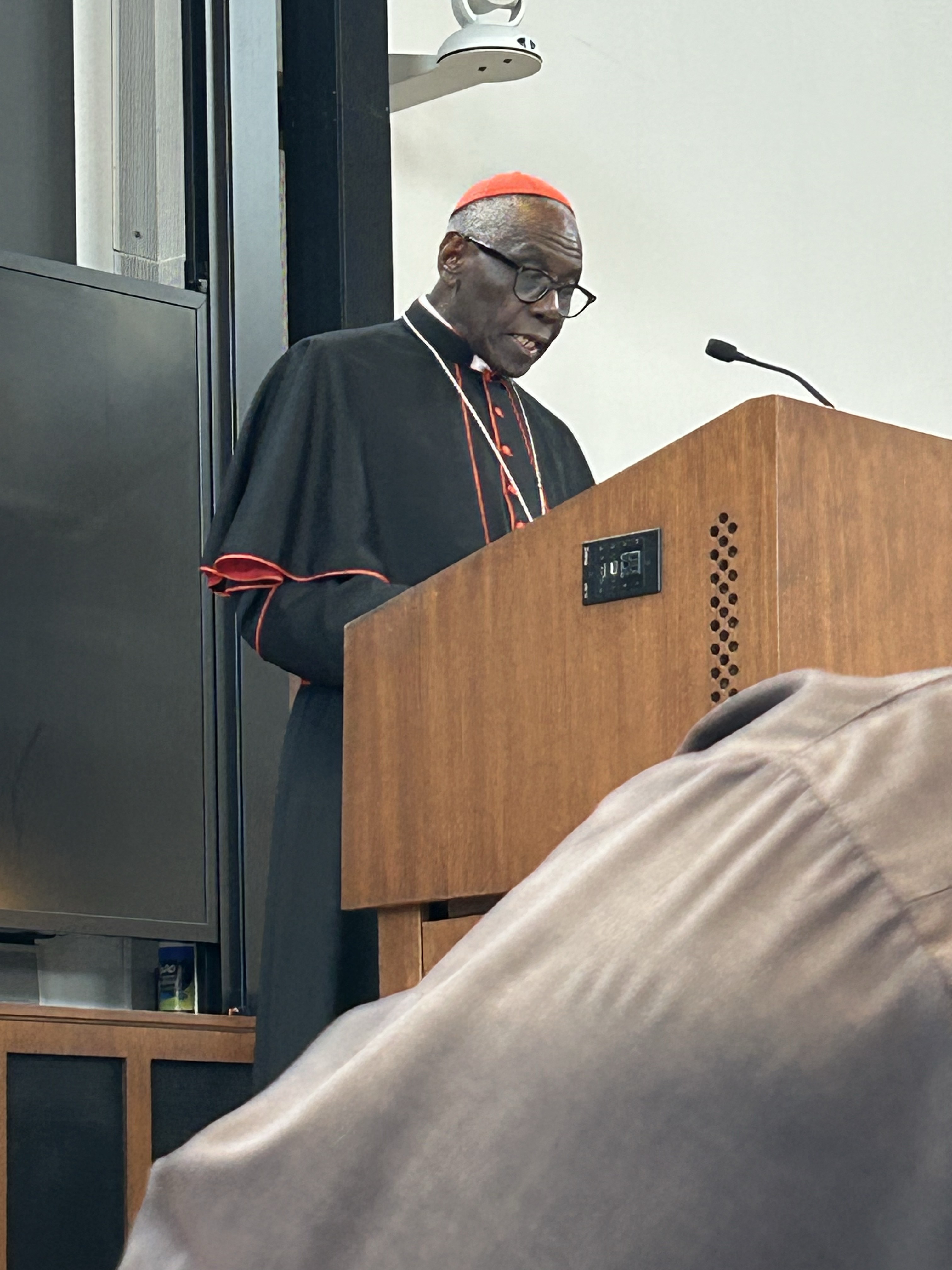 Cardinal Sarah stands at the podium in McCosh Hall on the campus of Princeton University where he speaks about the book he co-authored with Peter Carter. Staff photo
Sacred music is a liturgical vehicle for praising “as beautifully as we possibly can … for sacred music is not a nice addition to the liturgy. It is an essential component of it,” said Guinean Cardinal Robert Sarah, former head of the Vatican Congregation for Divine Worship and the Sacraments.
Students of the Aquinas Institute, Princeton University’s Catholic campus ministry, and others from New Jersey and beyond gathered on campus Nov. 22 to hear Cardinal Sarah speak on his newly released book, “The Song of the Lamb: Sacred Music and the Heavenly Liturgy,” which he co-authored with Peter Carter, Aquinas’ director of sacred music.
From Conversation to Print
The 80-year-old cardinal, who headed the worship congregation from 2014 to 2021, spoke of his personal experience of the state of liturgy around the globe. He then joined Carter for a conversation that included questions explored in their book and some submitted by audience members.
“Music is a way to speak to God without words,” Cardinal Sarah said. “Sometimes before God, we have no words, and we chant.”
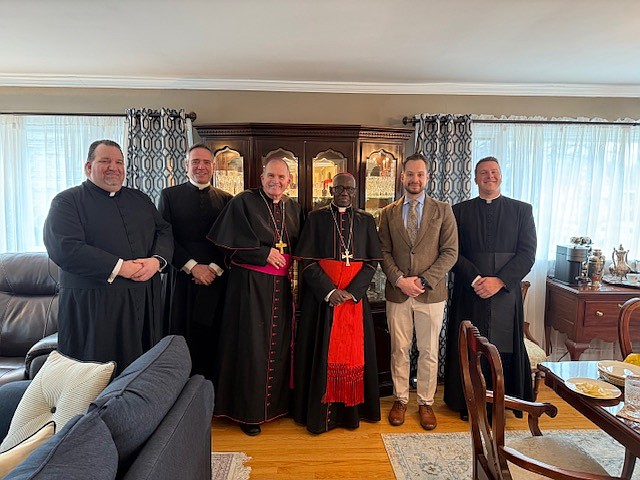
During the Cardinal’s visit, Bishop David M. O’Connell, C.M., welcomed him and shared lunch with him and attending clergy at St. Paul Parish, Princeton. The following day, the Cardinal celebrated Mass in the university chapel and led a procession with the Blessed Sacrament throughout the campus.
Carter said he approached the Cardinal in January 2023 with an idea: a conversation-style book interview on sacred music. Their mutual interest in music and liturgy came after Carter first met the Cardinal in 2017 at a liturgical conference in Milan.
“He had been encouraging in my work in sacred music,” Carter said. “I had interviewed him in 2019 for ‘Square Notes: The Sacred Music Podcast.’” Cardinal Sarah is a patron of Carter’s Catholic Sacred Music Project, which he founded in 2021 “to help train church musicians in their craft so that they might develop and use their artistic gifts for the praise of God and the good of the Church.”
The book combines many topics regarding liturgy and sung praise, and the Church’s teaching on both.
Preservation and Renewal
Cardinal Sarah told the audience: “For some decades now, the Church has been [facing] a serious crisis in respect of her liturgy.”
“We must both seek to be ever more faithful to the intentions of the fathers of the Second Vatican Council in respect of the reform of the liturgy,” Cardinal Sarah said. “What earlier generations held as sacred remains sacred and great for us, too.”
Pointing to his African heritage and the centrality of music in his culture, he shared that French missionaries in his Guinean village introduced him to the faith – and a new type of music.
“We were proud to learn and to pray in the way that Catholics had sung and prayed for centuries all over the world,” he said. “Singing this chant was – and is – a beautiful expression of our catholicity.”
That catholicity, the Cardinal said, can be expressed despite not knowing the language. Ancient hymns in Latin, for example, can promote unity by their recognition across cultures and geographic boundaries.
“We sometimes insist on intellect – but the heart can understand what intellect cannot.” Cardinal Sarah said. Understanding, while important, “is not sufficient; we must believe … I understand the words, but the miracle [of the consecration] – it’s a question of faith.”
Father Richard Osborn, pastor of St. Catherine Laboure Parish, Middletown, was among the attendees who came from throughout the region to hear the Cardinal speak. Father Osborn shared his belief that “the quality and type of music within the liturgy can either make or break it in the sense of people’s ability to really be open and experience the presence of God.”
He pointed to sacred music as something that, like a work of art, “is meant to be beautiful and dispose us to God … because God is present in beauty.”
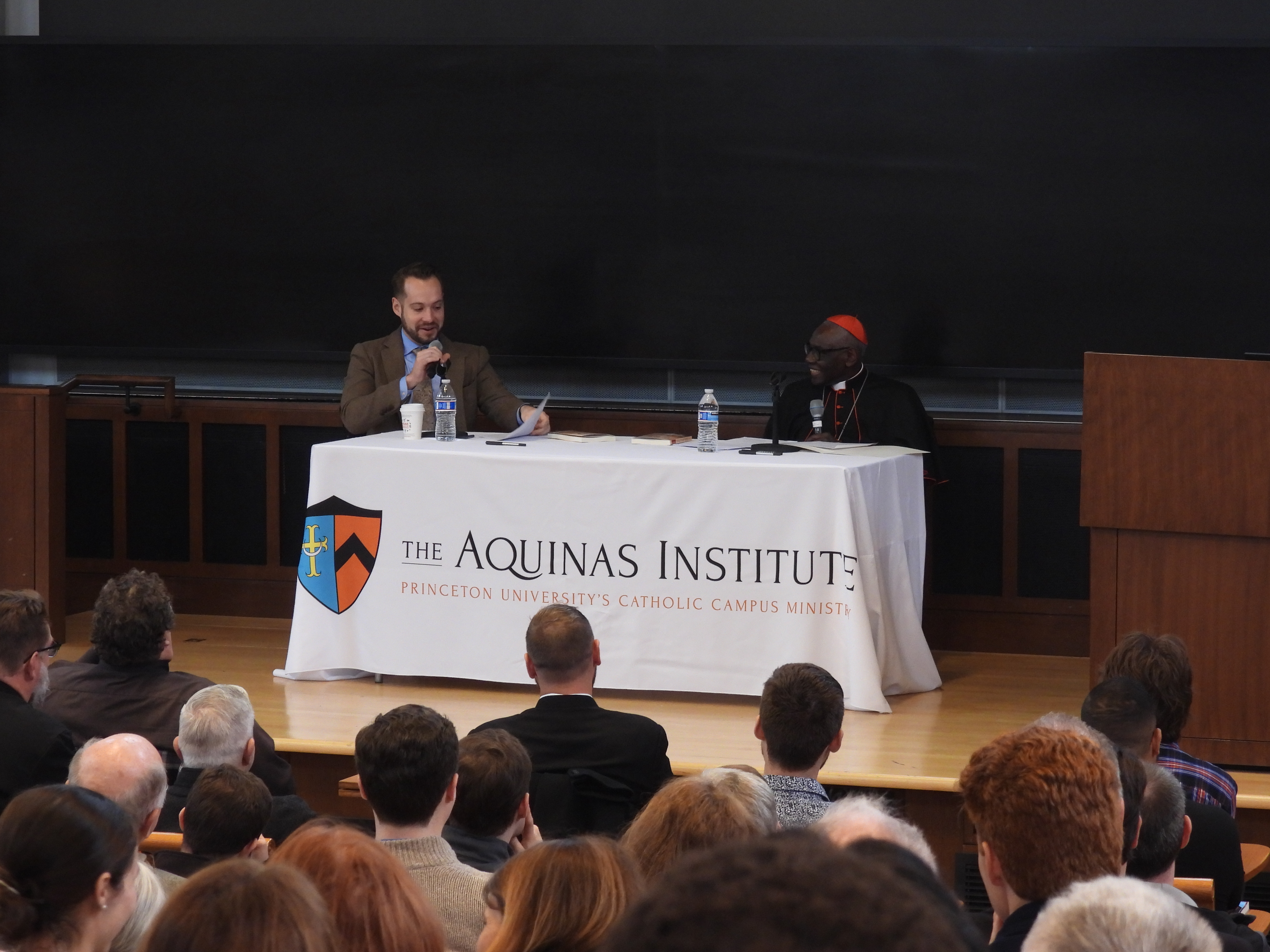 Peter Carter, left, and Cardinal Sarah, field questions from the attendees who gathered to hear the Cardinal’s talk. After the talk, Carter and Cardinal Sarah signed copies of their newly co-authored book. EmmaLee Italia photo
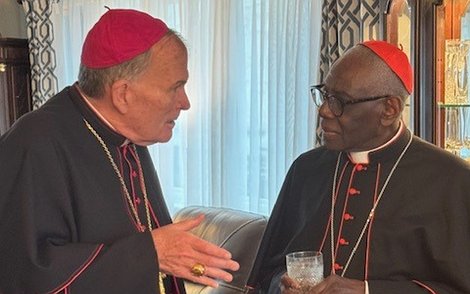 Cardinal Robert Sarah speaks with Bishop David M. O’Connell, C.M., during the Cardinal’s visit to Princeton University. Staff photo
Related Stories
Wednesday, January 07, 2026

E-Editions
Events
Cardinal Sarah stands at the podium in McCosh Hall on the campus of Princeton University where he speaks about the book he co-authored with Peter Carter. Staff photo
Sacred music is a liturgical vehicle for praising “as beautifully as we possibly can … for sacred music is not a nice addition to the liturgy. It is an essential component of it,” said Guinean Cardinal Robert Sarah, former head of the Vatican Congregation for Divine Worship and the Sacraments.
Students of the Aquinas Institute, Princeton University’s Catholic campus ministry, and others from New Jersey and beyond gathered on campus Nov. 22 to hear Cardinal Sarah speak on his newly released book, “The Song of the Lamb: Sacred Music and the Heavenly Liturgy,” which he co-authored with Peter Carter, Aquinas’ director of sacred music.
From Conversation to Print
The 80-year-old cardinal, who headed the worship congregation from 2014 to 2021, spoke of his personal experience of the state of liturgy around the globe. He then joined Carter for a conversation that included questions explored in their book and some submitted by audience members.
“Music is a way to speak to God without words,” Cardinal Sarah said. “Sometimes before God, we have no words, and we chant.”
During the Cardinal’s visit, Bishop David M. O’Connell, C.M., welcomed him and shared lunch with him and attending clergy at St. Paul Parish, Princeton. The following day, the Cardinal celebrated Mass in the university chapel and led a procession with the Blessed Sacrament throughout the campus.
Carter said he approached the Cardinal in January 2023 with an idea: a conversation-style book interview on sacred music. Their mutual interest in music and liturgy came after Carter first met the Cardinal in 2017 at a liturgical conference in Milan.
“He had been encouraging in my work in sacred music,” Carter said. “I had interviewed him in 2019 for ‘Square Notes: The Sacred Music Podcast.’” Cardinal Sarah is a patron of Carter’s Catholic Sacred Music Project, which he founded in 2021 “to help train church musicians in their craft so that they might develop and use their artistic gifts for the praise of God and the good of the Church.”
The book combines many topics regarding liturgy and sung praise, and the Church’s teaching on both.
Preservation and Renewal
Cardinal Sarah told the audience: “For some decades now, the Church has been [facing] a serious crisis in respect of her liturgy.”
“We must both seek to be ever more faithful to the intentions of the fathers of the Second Vatican Council in respect of the reform of the liturgy,” Cardinal Sarah said. “What earlier generations held as sacred remains sacred and great for us, too.”
Pointing to his African heritage and the centrality of music in his culture, he shared that French missionaries in his Guinean village introduced him to the faith – and a new type of music.
“We were proud to learn and to pray in the way that Catholics had sung and prayed for centuries all over the world,” he said. “Singing this chant was – and is – a beautiful expression of our catholicity.”
That catholicity, the Cardinal said, can be expressed despite not knowing the language. Ancient hymns in Latin, for example, can promote unity by their recognition across cultures and geographic boundaries.
“We sometimes insist on intellect – but the heart can understand what intellect cannot.” Cardinal Sarah said. Understanding, while important, “is not sufficient; we must believe … I understand the words, but the miracle [of the consecration] – it’s a question of faith.”
Father Richard Osborn, pastor of St. Catherine Laboure Parish, Middletown, was among the attendees who came from throughout the region to hear the Cardinal speak. Father Osborn shared his belief that “the quality and type of music within the liturgy can either make or break it in the sense of people’s ability to really be open and experience the presence of God.”
He pointed to sacred music as something that, like a work of art, “is meant to be beautiful and dispose us to God … because God is present in beauty.”
Peter Carter, left, and Cardinal Sarah, field questions from the attendees who gathered to hear the Cardinal’s talk. After the talk, Carter and Cardinal Sarah signed copies of their newly co-authored book. EmmaLee Italia photo
Cardinal Robert Sarah speaks with Bishop David M. O’Connell, C.M., during the Cardinal’s visit to Princeton University. Staff photo