


Pope Leo is first pontiff to go to St. Charbel's tomb; visit is source of 'great joy' for Lebanon
December 3, 2025 at 1:36 p.m.
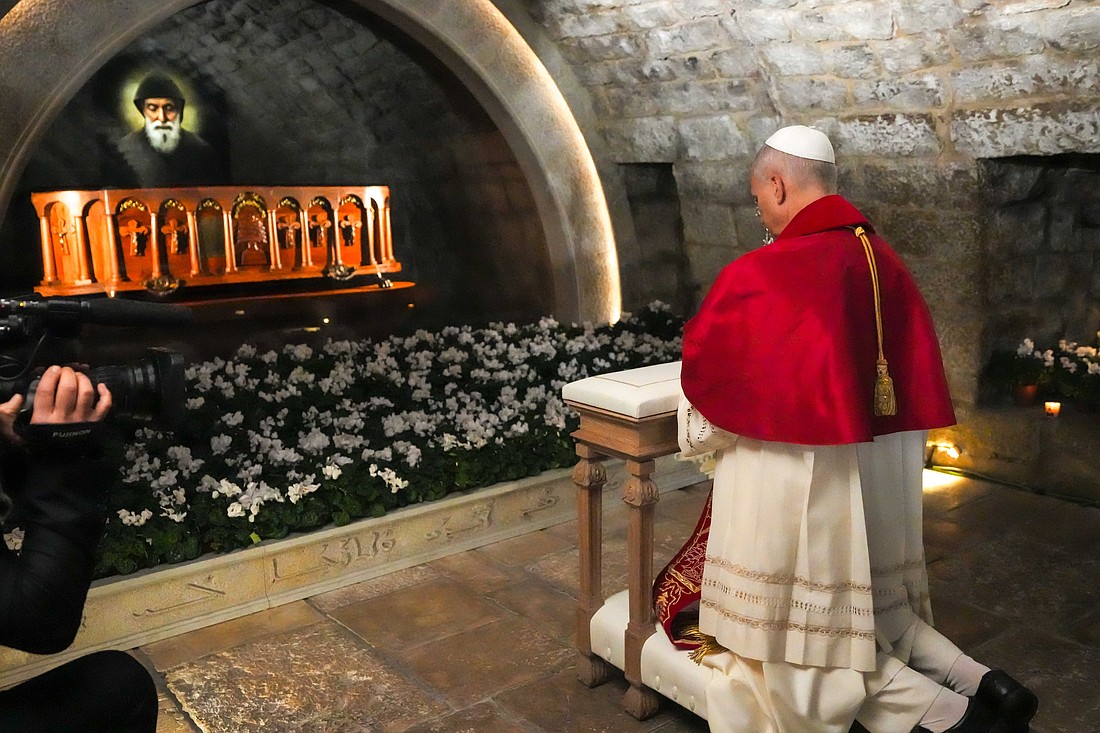
OSV News – In the Mount Lebanon region of Jbeil, perched on top of a hill at an altitude of 1,200 meters, from where in the distance one can see the Mediterranean sea, is the Monastery of St. Maron in Annaya, the final resting place of St. Charbel Makhlouf.
The Lebanese Maronite monk and hermit lived from 1828 to 1898 and led a life of extreme asceticism and devotion to God. Today, he is known for numerous miraculous healings attributed to his intercession, earning him the veneration of not only Christians and Catholics but also Muslims and people of other faiths.
Millions of people visit his resting place every year, and now for the first time, a Pope visited as well. On the second leg of his apostolic journey that took him to Lebanon, Pope Leo XIV prayed at the tomb of St. Charbel on Dec. 1.
For Father Youssef Matta, one of 16 Maronite monks who live in the monastery, the Pope's visit "invokes healing from divisions and corruption, transforming the hope for physical healing from St. Charbel, into hope for healing" for Lebanon as a nation, but also for the Middle East and the whole world and its various conflicts.
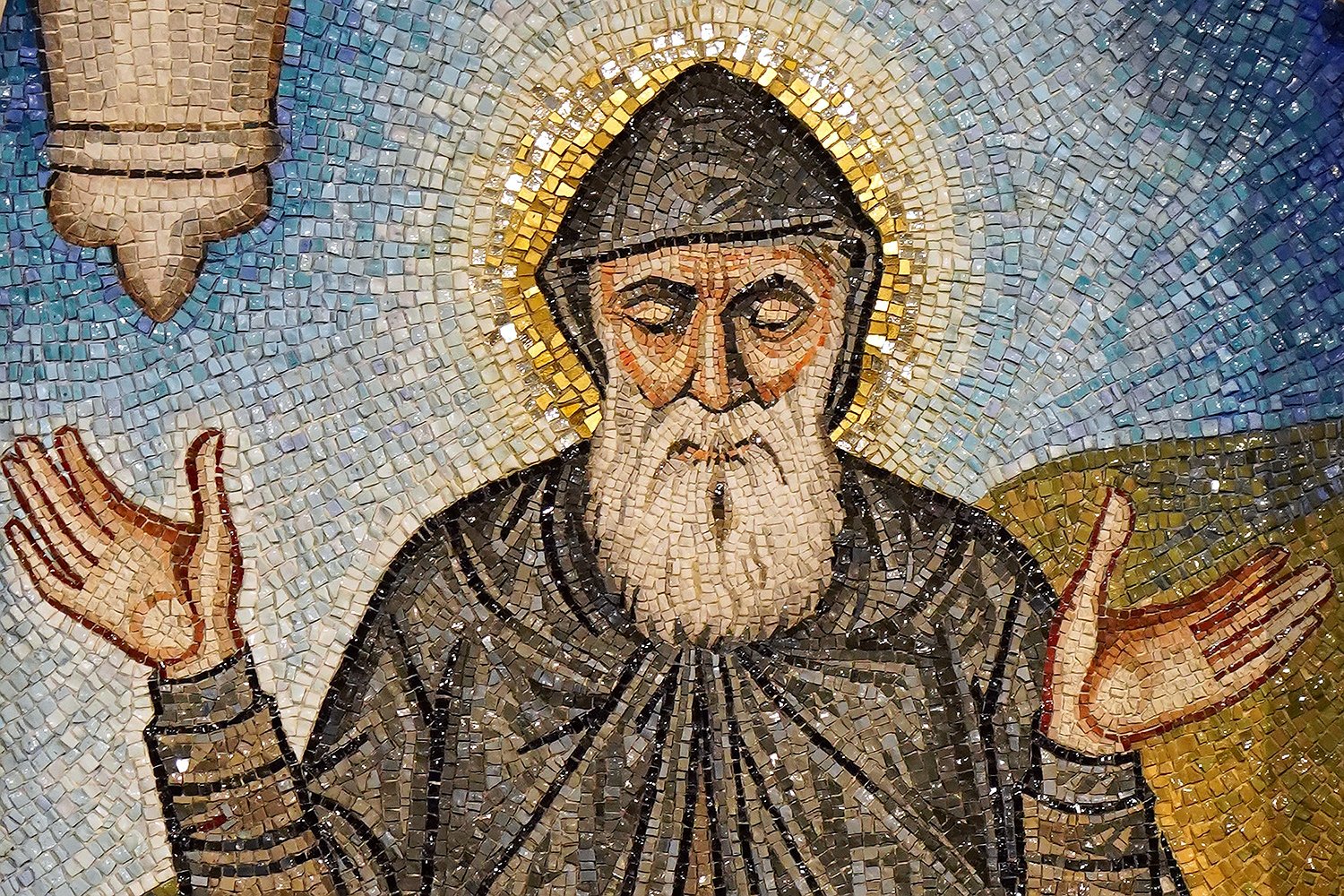 St. Charbel Makhlouf is depicted in a mosaic at St. Patrick's Cathedral in New York City. In Lebanon on Dec. 1. 2025, Pope Leo XIV became the first pontiff to visit the final resting place of St. Charbel Makhlouf at the Monastery of St. Maron in Annaya. His visit came during his first apostolic trip to Turkey and Lebanon Nov. 27-Dec. 2. (OSV News photo/Gregory A. Shemitz)
This saint, he continued, is "a symbol of solidarity and of strengthening of Lebanese interreligious coexistence," and the Pope's visit is "a historic recognition of St. Charbel's role in the world and a powerful message of support and hope for a country in crisis."
Father Matta explained that there are two main reasons for St. Charbel's "interreligious charm." The first is the numerous miraculous healings attributed to his intercession, which are "perceived as a divine intervention that makes no distinction between Christians and Muslims," Father Matta emphasized.
"The concrete result is that grace transcends specific doctrine. He is the miracle worker for humanity, and he does not care so much about religion in the strict sense."
In fact, miracles started occurring as early as a couple of months after his death in 1898, with several monks saying they saw his tomb illuminated by unnatural lights. Later, it was opened, and his body was found to be incorrupt and exuding blood and water. Slowly, his reputation for holiness started spreading, and then St. Paul VI both beatified and canonized him in 1965 and 1977, respectively.
The second reason for his popularity is "his asceticism, his life as a hermit, in poverty, and with a total devotion to God," Father Matta emphasized.
St. Charbel joined the Lebanese Maronite order in 1851, took his vows of obedience, poverty and chastity at the monastery of St. Maron in 1853 and was then ordained in 1859. After 16 years of living in the monastery with the other religious, he became a hermit and stayed in the hermitage for 23 years until his death in 1898 on Christmas Eve.
Father Matta explained that St. Charbel focused on prayer and work, which is "an ideal of spiritual purity revered in all Eastern religious traditions – Christian, Islamic, Druze – and even non-Eastern."
St. Charbel "transcends religious divisions" and "represents a rare point of contact and common hope for all Lebanese denominations," Father Matta highlighted.
In fact, given the difficult context that Lebanon is facing due to successive crises and conflicts that have plagued the nation in the last decades, "St. Charbel conveys hope, representing trust in help from above when earthly solutions fail," he said.
"He is a rare symbol of coexistence and peace, demonstrating that spiritual strength can unite the different religions that politics divides."
The fact that Pope Leo became the first pontiff to visit the tomb of St. Charbel is a source of "great joy and pride in Lebanon," Father Matta underlined. His prayer at this saint's resting place "transmits transcendent hope. It shows that Lebanon has not been abandoned, that there is a divine force that goes beyond politics and is capable of resolving crises."
The visit "communicates spiritual unity," he continued. "His Holiness's prayer exalts St. Charbel as a symbol of coexistence, as he is venerated by all faiths. It reinforces Lebanon's role as a land of dialogue and peace among all religions."
It is a "strong call to simple faith and a gesture of solidarity for the ethical and spiritual reconstruction of Lebanon," Father Matta said. He explained how the visit to the tomb will shed light and bring attention to a "country in difficulty."
He said he believed that on a national level, the journey will strengthen "Lebanon's role as a land of dialogue between Christians and Muslims and a message of peace for the region and for all the places where there is war."
Internationally, instead, it will put a spotlight on the nation, "reigniting international attention on the crisis-stricken country" and "urging the global community not to forget it and encouraging internal stability, not only in Lebanon but throughout the Middle East."
"It will reaffirm the historical importance of these communities in the Middle East, because there are so many young Lebanese who are leaving the country to seek work elsewhere in order to survive," he insisted.
Isabella H. de Carvalho writes for Vatican News, where the story was originally published.
Catholic journalism is needed now more than ever. Please consider supporting this work by signing up for a SUBSCRIPTION (click HERE) or making a DONATION to The Monitor (click HERE). Thank you for your contribution.
Related Stories
Monday, December 29, 2025




E-Editions
Events
OSV News – In the Mount Lebanon region of Jbeil, perched on top of a hill at an altitude of 1,200 meters, from where in the distance one can see the Mediterranean sea, is the Monastery of St. Maron in Annaya, the final resting place of St. Charbel Makhlouf.
The Lebanese Maronite monk and hermit lived from 1828 to 1898 and led a life of extreme asceticism and devotion to God. Today, he is known for numerous miraculous healings attributed to his intercession, earning him the veneration of not only Christians and Catholics but also Muslims and people of other faiths.
Millions of people visit his resting place every year, and now for the first time, a Pope visited as well. On the second leg of his apostolic journey that took him to Lebanon, Pope Leo XIV prayed at the tomb of St. Charbel on Dec. 1.
For Father Youssef Matta, one of 16 Maronite monks who live in the monastery, the Pope's visit "invokes healing from divisions and corruption, transforming the hope for physical healing from St. Charbel, into hope for healing" for Lebanon as a nation, but also for the Middle East and the whole world and its various conflicts.
St. Charbel Makhlouf is depicted in a mosaic at St. Patrick's Cathedral in New York City. In Lebanon on Dec. 1. 2025, Pope Leo XIV became the first pontiff to visit the final resting place of St. Charbel Makhlouf at the Monastery of St. Maron in Annaya. His visit came during his first apostolic trip to Turkey and Lebanon Nov. 27-Dec. 2. (OSV News photo/Gregory A. Shemitz)This saint, he continued, is "a symbol of solidarity and of strengthening of Lebanese interreligious coexistence," and the Pope's visit is "a historic recognition of St. Charbel's role in the world and a powerful message of support and hope for a country in crisis."
Father Matta explained that there are two main reasons for St. Charbel's "interreligious charm." The first is the numerous miraculous healings attributed to his intercession, which are "perceived as a divine intervention that makes no distinction between Christians and Muslims," Father Matta emphasized.
"The concrete result is that grace transcends specific doctrine. He is the miracle worker for humanity, and he does not care so much about religion in the strict sense."
In fact, miracles started occurring as early as a couple of months after his death in 1898, with several monks saying they saw his tomb illuminated by unnatural lights. Later, it was opened, and his body was found to be incorrupt and exuding blood and water. Slowly, his reputation for holiness started spreading, and then St. Paul VI both beatified and canonized him in 1965 and 1977, respectively.
The second reason for his popularity is "his asceticism, his life as a hermit, in poverty, and with a total devotion to God," Father Matta emphasized.
St. Charbel joined the Lebanese Maronite order in 1851, took his vows of obedience, poverty and chastity at the monastery of St. Maron in 1853 and was then ordained in 1859. After 16 years of living in the monastery with the other religious, he became a hermit and stayed in the hermitage for 23 years until his death in 1898 on Christmas Eve.
Father Matta explained that St. Charbel focused on prayer and work, which is "an ideal of spiritual purity revered in all Eastern religious traditions – Christian, Islamic, Druze – and even non-Eastern."
St. Charbel "transcends religious divisions" and "represents a rare point of contact and common hope for all Lebanese denominations," Father Matta highlighted.
In fact, given the difficult context that Lebanon is facing due to successive crises and conflicts that have plagued the nation in the last decades, "St. Charbel conveys hope, representing trust in help from above when earthly solutions fail," he said.
"He is a rare symbol of coexistence and peace, demonstrating that spiritual strength can unite the different religions that politics divides."
The fact that Pope Leo became the first pontiff to visit the tomb of St. Charbel is a source of "great joy and pride in Lebanon," Father Matta underlined. His prayer at this saint's resting place "transmits transcendent hope. It shows that Lebanon has not been abandoned, that there is a divine force that goes beyond politics and is capable of resolving crises."
The visit "communicates spiritual unity," he continued. "His Holiness's prayer exalts St. Charbel as a symbol of coexistence, as he is venerated by all faiths. It reinforces Lebanon's role as a land of dialogue and peace among all religions."
It is a "strong call to simple faith and a gesture of solidarity for the ethical and spiritual reconstruction of Lebanon," Father Matta said. He explained how the visit to the tomb will shed light and bring attention to a "country in difficulty."
He said he believed that on a national level, the journey will strengthen "Lebanon's role as a land of dialogue between Christians and Muslims and a message of peace for the region and for all the places where there is war."
Internationally, instead, it will put a spotlight on the nation, "reigniting international attention on the crisis-stricken country" and "urging the global community not to forget it and encouraging internal stability, not only in Lebanon but throughout the Middle East."
"It will reaffirm the historical importance of these communities in the Middle East, because there are so many young Lebanese who are leaving the country to seek work elsewhere in order to survive," he insisted.
Isabella H. de Carvalho writes for Vatican News, where the story was originally published.
Catholic journalism is needed now more than ever. Please consider supporting this work by signing up for a SUBSCRIPTION (click HERE) or making a DONATION to The Monitor (click HERE). Thank you for your contribution.