


Labor Day Statement: Promoting The Dignity of Workers in the Rise of AI
August 29, 2025 at 4:50 p.m.
September 1, 2025
By Most Reverend Borys Gudziak, Archbishop of Ukrainian Catholic Archeparchy of Philadelphia and chairman of the Committee on Domestic Justice and Human Development
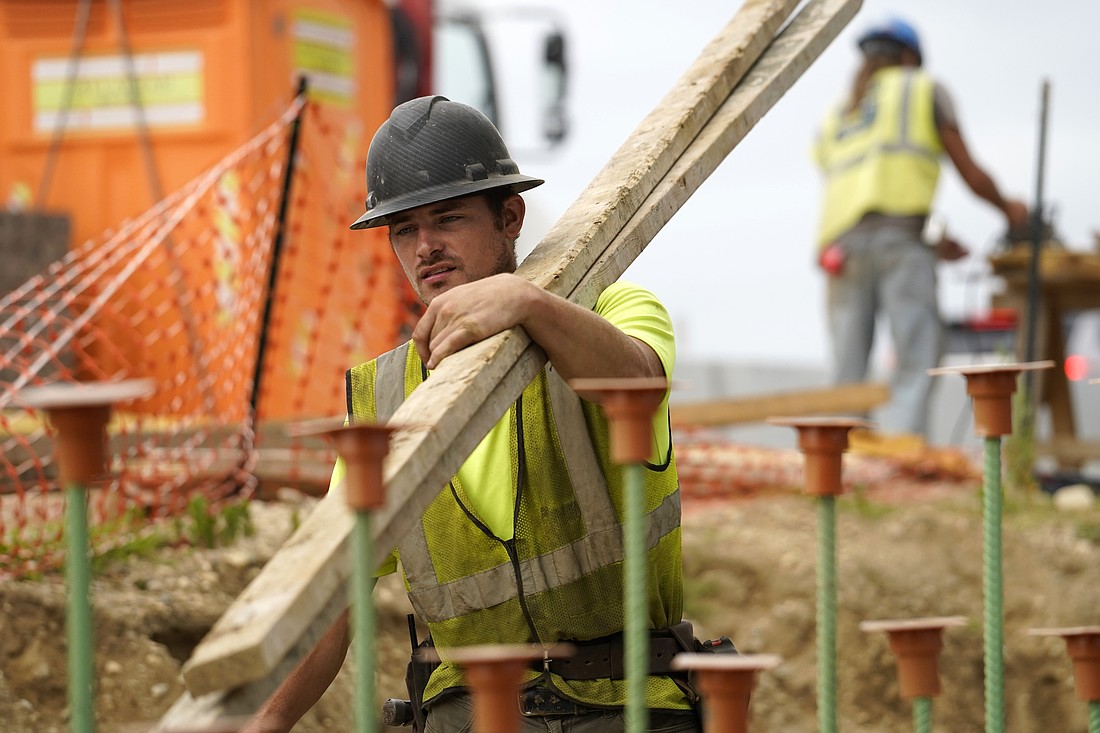
Each Labor Day, Americans reflect on the sacred dignity of work and those who perform it. All are seeing the rise of artificial intelligence in our lives – at home and at work. People wonder what impact AI will have on their jobs or those of loved ones. While technological advances offer great promises, as followers of Christ, we believe that technology should enrich the sacredness and dignity of human labor.
From the beginning, Scripture tells us that God placed humans in the garden to “cultivate and care for it” (Gn 2:15). Ever since, work has been a form of continued participation in God’s creation. AI can be a tool to enhance our work, making it more efficient and creative. To offer one example from healthcare, AI could very well aid in the important development of vaccines, medicines, and even the diagnosis of disease. Yet this should never happen at the expense of human dignity. In patient care, there is a risk that AI could attempt to replace human compassion, or supplant human expertise in medical evaluation. In many industries, a number of workers could lose their jobs, impacting families and communities. Such scenarios will need to be carefully considered in virtually every sector of the economy.
Pope Leo XIV has underscored this priority. He has encouraged people to approach AI with “responsibility and discernment,” ensuring it serves the common good and benefits all people. History warns us of the consequences when rapid technological advances are used without ethical discernment. In Rerum Novarum, Pope Leo XIII cautioned that the Industrial Revolution led to a troubling gap in wealth and power, deepening inequality and fueling social instability. Today, as we experience an “AI revolution,” we must learn from the past. Indeed, this is one of the very reasons our Holy Father chose the name Leo XIV.
In many industries, current approaches to AI are already reshaping the world of work. The Holy See’s document on AI, Antiqua et Nova, highlights two threats AI poses to the dignity of labor. First, AI can “deskill” workers, reducing them to rigid and repetitive tasks and eroding their ability to carry out creative or complex work independently. Second, AI can displace workers altogether. These risks touch every level of employment – from customer service workers and young people seeking entry-level jobs to knowledge-based professionals in white-collar roles. Given AI’s potential to transform entire sectors of the economy, now is the time for deeper dialogue between workers and decision makers to discern common causes and shared solutions.
My brother bishops and I are particularly mindful those among us who are already vulnerable – immigrant workers, farm laborers, low-wage earners, and young people – who often suffer the greatest effects of economic disruptions. Catholics should insist that the benefits of emerging technology are shared equitably. Workers themselves – especially through labor unions and worker centers – should be included in the business and policy decisions that will shape the world of work going forward. Wealth and power should not become concentrated in the hands of a privileged few, leaving others excluded or discarded.
We must advocate for the responsible use of technology, robust protection for those vulnerable to exploitation, a social safety net that allows people to avoid the cycle of poverty, and fair treatment of all workers. The government should address the challenges of AI with a sound legal and regulatory framework.
As we celebrate this Labor Day, let us turn in prayer to Saint Joseph the Worker, the humble carpenter who modeled dignity, diligence, and care through his daily labor and love of family. Through his intercession, may we protect the rights of all workers, advocate courageously for the vulnerable, and ensure that technological progress always honors the sacredness of human work.
Let us commit ourselves, through prayer and action, to building a future in which every worker finds dignity, security, and purpose. Saint Joseph the Worker, pray for us!
Related Stories
Saturday, December 27, 2025



E-Editions

Events
September 1, 2025
By Most Reverend Borys Gudziak, Archbishop of Ukrainian Catholic Archeparchy of Philadelphia and chairman of the Committee on Domestic Justice and Human Development
Each Labor Day, Americans reflect on the sacred dignity of work and those who perform it. All are seeing the rise of artificial intelligence in our lives – at home and at work. People wonder what impact AI will have on their jobs or those of loved ones. While technological advances offer great promises, as followers of Christ, we believe that technology should enrich the sacredness and dignity of human labor.
From the beginning, Scripture tells us that God placed humans in the garden to “cultivate and care for it” (Gn 2:15). Ever since, work has been a form of continued participation in God’s creation. AI can be a tool to enhance our work, making it more efficient and creative. To offer one example from healthcare, AI could very well aid in the important development of vaccines, medicines, and even the diagnosis of disease. Yet this should never happen at the expense of human dignity. In patient care, there is a risk that AI could attempt to replace human compassion, or supplant human expertise in medical evaluation. In many industries, a number of workers could lose their jobs, impacting families and communities. Such scenarios will need to be carefully considered in virtually every sector of the economy.
Pope Leo XIV has underscored this priority. He has encouraged people to approach AI with “responsibility and discernment,” ensuring it serves the common good and benefits all people. History warns us of the consequences when rapid technological advances are used without ethical discernment. In Rerum Novarum, Pope Leo XIII cautioned that the Industrial Revolution led to a troubling gap in wealth and power, deepening inequality and fueling social instability. Today, as we experience an “AI revolution,” we must learn from the past. Indeed, this is one of the very reasons our Holy Father chose the name Leo XIV.
In many industries, current approaches to AI are already reshaping the world of work. The Holy See’s document on AI, Antiqua et Nova, highlights two threats AI poses to the dignity of labor. First, AI can “deskill” workers, reducing them to rigid and repetitive tasks and eroding their ability to carry out creative or complex work independently. Second, AI can displace workers altogether. These risks touch every level of employment – from customer service workers and young people seeking entry-level jobs to knowledge-based professionals in white-collar roles. Given AI’s potential to transform entire sectors of the economy, now is the time for deeper dialogue between workers and decision makers to discern common causes and shared solutions.
My brother bishops and I are particularly mindful those among us who are already vulnerable – immigrant workers, farm laborers, low-wage earners, and young people – who often suffer the greatest effects of economic disruptions. Catholics should insist that the benefits of emerging technology are shared equitably. Workers themselves – especially through labor unions and worker centers – should be included in the business and policy decisions that will shape the world of work going forward. Wealth and power should not become concentrated in the hands of a privileged few, leaving others excluded or discarded.
We must advocate for the responsible use of technology, robust protection for those vulnerable to exploitation, a social safety net that allows people to avoid the cycle of poverty, and fair treatment of all workers. The government should address the challenges of AI with a sound legal and regulatory framework.
As we celebrate this Labor Day, let us turn in prayer to Saint Joseph the Worker, the humble carpenter who modeled dignity, diligence, and care through his daily labor and love of family. Through his intercession, may we protect the rights of all workers, advocate courageously for the vulnerable, and ensure that technological progress always honors the sacredness of human work.
Let us commit ourselves, through prayer and action, to building a future in which every worker finds dignity, security, and purpose. Saint Joseph the Worker, pray for us!