


Catholic legislators must help build 'city of God,' Pope says
August 25, 2025 at 1:08 p.m.
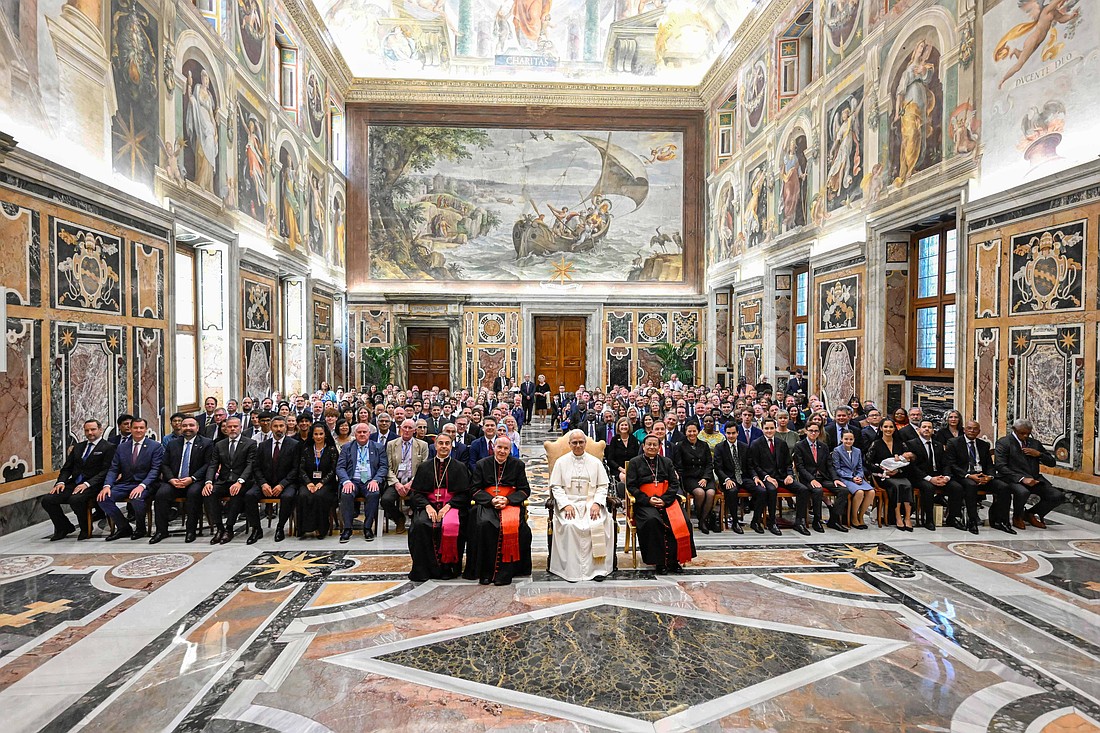
VATICAN CITY CNS – Catholic legislators are called to enact laws that reflect love of God and love of neighbor, Pope Leo XIV told an international group of lawmakers.
"The future of human flourishing depends on which 'love' we choose to organize our society around – a selfish love, the love of self, or the love of God and neighbor," he told members of the International Catholic Legislators Network when he welcomed them to the Vatican Aug. 23.
Holding their annual meeting in Rome, members were discussing the theme "The New World Order: Major Power Politics, Corporate Dominions and the Future of Human Flourishing."
Pope Leo told them that the theme expressed both a concern and a longing.
"We are all concerned about the direction our world is taking, and yet, we long for authentic human flourishing," he said. And "we long for a world where every person can live in peace, freedom and fulfillment according to God's plan."
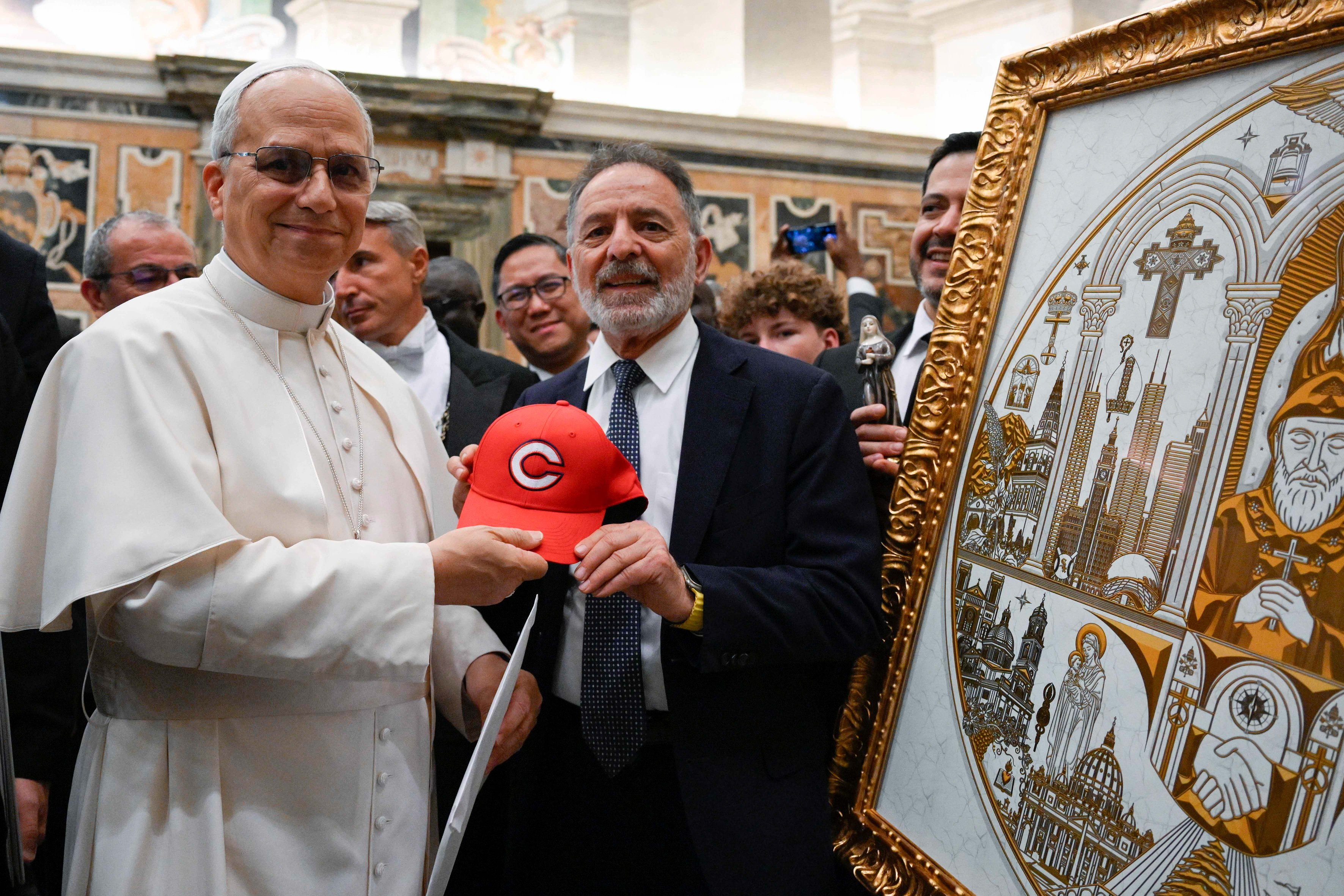 Pope Leo XIV receives a Cincinnati Reds baseball cap and framed artwork from a delegate during a meeting with members of the International Catholic Legislators Network in the Clementine Hall of the Vatican Apostolic Palace Aug. 23, 2025. (CNS photo/Vatican Media)
The Pope, a member of the Augustinian order, turned to one of St. Augustine's most famous works, "The City of God," to help the legislators understand the task facing them and the way Christians are expected to work in the world to help build the kingdom of God.
St. Augustine, he told them, was "a leading voice of the Church in the late Roman era" and "witnessed immense upheavals and social disintegration."
"The City of God," written in the early fifth century, the Pope said, "offers a vision of hope, a vision of meaning that can still speak to us today."
St. Augustine knew that in human history "two 'cities' are intertwined: the City of Man and the City of God," he said. "These signify spiritual realities – two orientations of the human heart and, therefore, of human civilization."
"The City of Man, built on pride and love of oneself, is marked by the pursuit of power, prestige and pleasure," the Pope said, while the City of God is "built on love of God unto selflessness (and) is characterized by justice, charity and humility."
St. Augustine encouraged Christians to infuse the earthly society with the values of God's kingdom, which would simultaneously direct human history toward its fulfilment in God while promoting human flourishing in this life, the Pope said.
"This theological vision can anchor us in the face of today's changing currents," he said, particularly "the emergence of new centers of gravity, the shifting of old alliances and the unprecedented influence of global corporations and technologies, not to mention numerous violent conflicts."
But what is human flourishing, the Pope asked. "Today, a flourishing life is often confused with a materially wealthy life or a life of unrestricted individual autonomy and pleasure. The so-called ideal future presented to us is often one of technological convenience and consumer satisfaction. Yet we know that this is not enough. We see this in affluent societies where many people struggle with loneliness, with despair and a sense of meaninglessness."
"Authentic human flourishing," he said, is what the Church often calls "integral human development," which is concerned with each person's physical, social, cultural, moral and spiritual well-being.
"Natural law," or "the moral order that God has written on the human heart," would describe human flourishing as a situation where "individuals live virtuously, when they live in healthy communities, enjoying not only what they have, what they possess, but also who they are as children of God," the Pope said.
Human flourishing must include "the freedom to seek truth, to worship God and to raise families in peace," Pope Leo said. "It also includes a harmony with creation and a sense of solidarity across social classes and nations."
Pope Leo told the legislators their vocation is to "be bridge-builders between the City of God and the City of Man," working "for a world where power is tamed by conscience, and law is at the service of human dignity."
In January the late Pope Francis asked ambassadors serving at the Vatican to promote a "diplomacy of hope," he said. "I would add that we also need a 'politics of hope,' an 'economics of hope,' anchored in the conviction that even now, through the grace of Christ, we can reflect his light in the earthly city."
Catholic journalism is needed now more than ever. Please consider supporting this work by signing up for a SUBSCRIPTION (click HERE) or making a DONATION to The Monitor (click HERE). Thank you for your support.
Related Stories
Saturday, December 27, 2025



E-Editions
Events
VATICAN CITY CNS – Catholic legislators are called to enact laws that reflect love of God and love of neighbor, Pope Leo XIV told an international group of lawmakers.
"The future of human flourishing depends on which 'love' we choose to organize our society around – a selfish love, the love of self, or the love of God and neighbor," he told members of the International Catholic Legislators Network when he welcomed them to the Vatican Aug. 23.
Holding their annual meeting in Rome, members were discussing the theme "The New World Order: Major Power Politics, Corporate Dominions and the Future of Human Flourishing."
Pope Leo told them that the theme expressed both a concern and a longing.
"We are all concerned about the direction our world is taking, and yet, we long for authentic human flourishing," he said. And "we long for a world where every person can live in peace, freedom and fulfillment according to God's plan."
Pope Leo XIV receives a Cincinnati Reds baseball cap and framed artwork from a delegate during a meeting with members of the International Catholic Legislators Network in the Clementine Hall of the Vatican Apostolic Palace Aug. 23, 2025. (CNS photo/Vatican Media)The Pope, a member of the Augustinian order, turned to one of St. Augustine's most famous works, "The City of God," to help the legislators understand the task facing them and the way Christians are expected to work in the world to help build the kingdom of God.
St. Augustine, he told them, was "a leading voice of the Church in the late Roman era" and "witnessed immense upheavals and social disintegration."
"The City of God," written in the early fifth century, the Pope said, "offers a vision of hope, a vision of meaning that can still speak to us today."
St. Augustine knew that in human history "two 'cities' are intertwined: the City of Man and the City of God," he said. "These signify spiritual realities – two orientations of the human heart and, therefore, of human civilization."
"The City of Man, built on pride and love of oneself, is marked by the pursuit of power, prestige and pleasure," the Pope said, while the City of God is "built on love of God unto selflessness (and) is characterized by justice, charity and humility."
St. Augustine encouraged Christians to infuse the earthly society with the values of God's kingdom, which would simultaneously direct human history toward its fulfilment in God while promoting human flourishing in this life, the Pope said.
"This theological vision can anchor us in the face of today's changing currents," he said, particularly "the emergence of new centers of gravity, the shifting of old alliances and the unprecedented influence of global corporations and technologies, not to mention numerous violent conflicts."
But what is human flourishing, the Pope asked. "Today, a flourishing life is often confused with a materially wealthy life or a life of unrestricted individual autonomy and pleasure. The so-called ideal future presented to us is often one of technological convenience and consumer satisfaction. Yet we know that this is not enough. We see this in affluent societies where many people struggle with loneliness, with despair and a sense of meaninglessness."
"Authentic human flourishing," he said, is what the Church often calls "integral human development," which is concerned with each person's physical, social, cultural, moral and spiritual well-being.
"Natural law," or "the moral order that God has written on the human heart," would describe human flourishing as a situation where "individuals live virtuously, when they live in healthy communities, enjoying not only what they have, what they possess, but also who they are as children of God," the Pope said.
Human flourishing must include "the freedom to seek truth, to worship God and to raise families in peace," Pope Leo said. "It also includes a harmony with creation and a sense of solidarity across social classes and nations."
Pope Leo told the legislators their vocation is to "be bridge-builders between the City of God and the City of Man," working "for a world where power is tamed by conscience, and law is at the service of human dignity."
In January the late Pope Francis asked ambassadors serving at the Vatican to promote a "diplomacy of hope," he said. "I would add that we also need a 'politics of hope,' an 'economics of hope,' anchored in the conviction that even now, through the grace of Christ, we can reflect his light in the earthly city."
Catholic journalism is needed now more than ever. Please consider supporting this work by signing up for a SUBSCRIPTION (click HERE) or making a DONATION to The Monitor (click HERE). Thank you for your support.