


Father Koch: Are you saved? A powerful question with no easy answer
August 22, 2025 at 11:08 a.m.
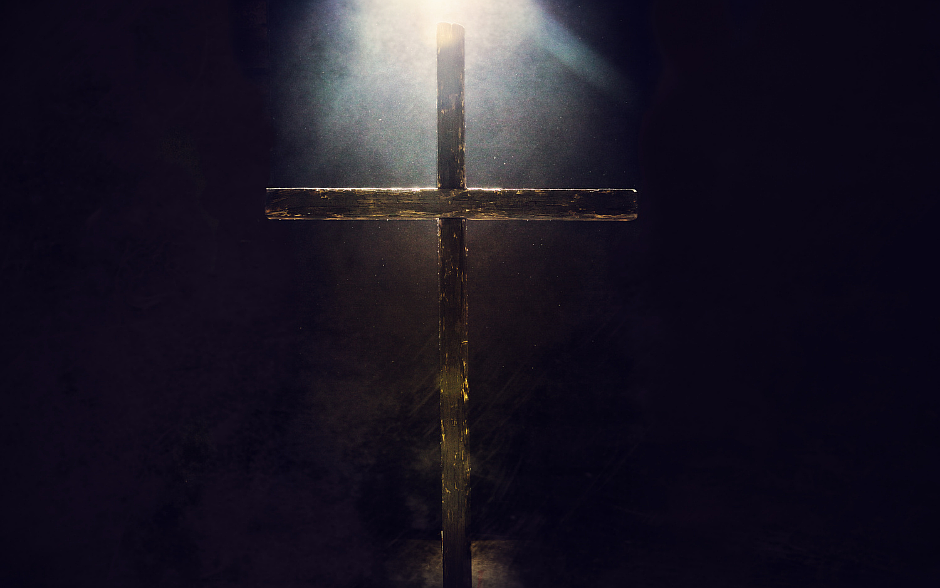
Gospel reflection for Aug. 24, 2025 – 21st Sunday in Ordinary Time
Although perhaps much less common now, during the height of what was called the Jesus Movement, it was not unusual to be confronted by a stranger wielding a Bible who asked the question, “Are you saved?” Catholics always found this question a bit confusing as it dovetails into a terminology that we do not use. Capitalizing on that confusion, and given the gravity of the question, many were out of the Church and into various forms of independent Christianity where the answer is made very simple, and the demands of discipleship are much less apparent.
Indeed, at the heart of the Christian message is the promise of salvation. Jesus is our savior. This is one of the earliest titles given to Jesus, expressed clearly in the symbol of the fish – expressing the word Greek ichthys – where used as an acronym means Jesus Christ Son of God, Savior. Yet, the very meaning and mechanism of this salvation has confused and divided Christians from the very beginning. The journey from Jews alone to the inclusion of Gentiles took decades to be realized. One of the hallmarks of the Protestant Reformation was raising the question as to the meaning of salvation. It remains a challenge that each Christian faces during life.
Of course, the question of salvation was a matter of controversy for centuries prior to Luther and Calvin. In the fourth century the theologian, Pelagius, argued that one was, by virtue of freewill, to achieve salvation on one’s own, absent the need for grace or a divine act. This places the entire onus of salvation on the individual, separates them from the community, almost makes a life of faith irrelevant, and diminishes the Paschal Mystery. St. Augustine was the most prominent opponent of Pelagius, arguing instead for the necessity of cooperation with grace and the divine will.
One of the difficulties in modern society is the sense that we don’t really need to be saved from anything. In our daily lives most of us do not experience the kind of trauma from which we need rescue. We have turned the sense of salvation into a superhero situation, where the hero swoops in and saves the town from the villainous monger who has brought terror and destruction to the world. The fodder of the cinematic realm, the imagery posed reduces salvation to heroism.
The need for salvation is experienced within the depth of our souls and our psyches. Our longing to be united with God. We all have those moments of uncertainty about our own lives, the very meaning of life, the meaning of death, and the anxiety that comes from navigating the world in which we live. We discover our existential aloneness and the emptiness of all that we have sought to achieve with our own lives.
A relationship with Jesus Christ in and through his Church provides a deeper sense of belonging and connectedness to that which is outside of oneself. This demands much more than just an affirmation of faith, the recitation of the name of Jesus, or the memorized prayers of our youth.
Faith is an encounter with the Divine in such a way that we are compelled to live a life filled with love. Our faith takes its deepest expression as we become the conduit for justice, mercy, peace, love and compassion in the world in which we live. We live passionately because we love deeply. This is the truest expression of faith.
Our Catholic tradition teaches us that faith is a gift from God that then leads us into living that faith according to our own unique vocation. We do not, as some accuse us, work in order to merit salvation. Instead, we live out our faith in the “sure and certain hope” that the Lord will lead us into the life promised through the Passion, Death and Resurrection of Jesus Christ.
We cannot take salvation for granted – as the Church recognizes this as the great sin of presumption – rather we continually seek repentance, reconciliation, and justice, as we live that faith each and every day, always knowing that sin becomes the obstacle that is ever present lurking to lead us away from our relationship with Christ.
Father Garry Koch is pastor of St. Benedict Parish, Holmdel.
Related Stories
Saturday, December 27, 2025

E-Editions
Events
Gospel reflection for Aug. 24, 2025 – 21st Sunday in Ordinary Time
Although perhaps much less common now, during the height of what was called the Jesus Movement, it was not unusual to be confronted by a stranger wielding a Bible who asked the question, “Are you saved?” Catholics always found this question a bit confusing as it dovetails into a terminology that we do not use. Capitalizing on that confusion, and given the gravity of the question, many were out of the Church and into various forms of independent Christianity where the answer is made very simple, and the demands of discipleship are much less apparent.
Indeed, at the heart of the Christian message is the promise of salvation. Jesus is our savior. This is one of the earliest titles given to Jesus, expressed clearly in the symbol of the fish – expressing the word Greek ichthys – where used as an acronym means Jesus Christ Son of God, Savior. Yet, the very meaning and mechanism of this salvation has confused and divided Christians from the very beginning. The journey from Jews alone to the inclusion of Gentiles took decades to be realized. One of the hallmarks of the Protestant Reformation was raising the question as to the meaning of salvation. It remains a challenge that each Christian faces during life.
Of course, the question of salvation was a matter of controversy for centuries prior to Luther and Calvin. In the fourth century the theologian, Pelagius, argued that one was, by virtue of freewill, to achieve salvation on one’s own, absent the need for grace or a divine act. This places the entire onus of salvation on the individual, separates them from the community, almost makes a life of faith irrelevant, and diminishes the Paschal Mystery. St. Augustine was the most prominent opponent of Pelagius, arguing instead for the necessity of cooperation with grace and the divine will.
One of the difficulties in modern society is the sense that we don’t really need to be saved from anything. In our daily lives most of us do not experience the kind of trauma from which we need rescue. We have turned the sense of salvation into a superhero situation, where the hero swoops in and saves the town from the villainous monger who has brought terror and destruction to the world. The fodder of the cinematic realm, the imagery posed reduces salvation to heroism.
The need for salvation is experienced within the depth of our souls and our psyches. Our longing to be united with God. We all have those moments of uncertainty about our own lives, the very meaning of life, the meaning of death, and the anxiety that comes from navigating the world in which we live. We discover our existential aloneness and the emptiness of all that we have sought to achieve with our own lives.
A relationship with Jesus Christ in and through his Church provides a deeper sense of belonging and connectedness to that which is outside of oneself. This demands much more than just an affirmation of faith, the recitation of the name of Jesus, or the memorized prayers of our youth.
Faith is an encounter with the Divine in such a way that we are compelled to live a life filled with love. Our faith takes its deepest expression as we become the conduit for justice, mercy, peace, love and compassion in the world in which we live. We live passionately because we love deeply. This is the truest expression of faith.
Our Catholic tradition teaches us that faith is a gift from God that then leads us into living that faith according to our own unique vocation. We do not, as some accuse us, work in order to merit salvation. Instead, we live out our faith in the “sure and certain hope” that the Lord will lead us into the life promised through the Passion, Death and Resurrection of Jesus Christ.
We cannot take salvation for granted – as the Church recognizes this as the great sin of presumption – rather we continually seek repentance, reconciliation, and justice, as we live that faith each and every day, always knowing that sin becomes the obstacle that is ever present lurking to lead us away from our relationship with Christ.
Father Garry Koch is pastor of St. Benedict Parish, Holmdel.