


Helping children connect to Scripture
August 18, 2025 at 3:24 p.m.
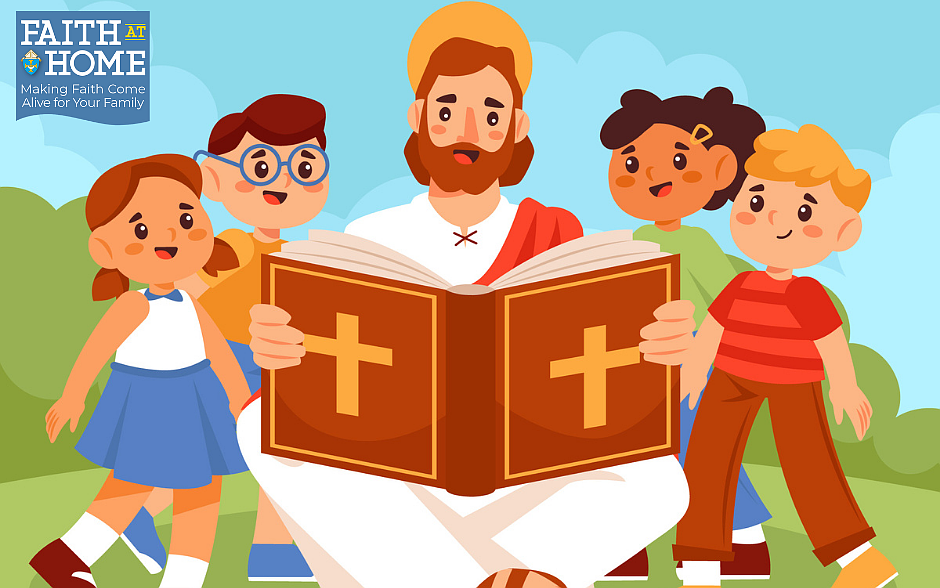
I started teaching religious education in St. Gabriel’s in Marlboro when my youngest child was in first grade. Each year, I moved up with her class until they reached eighth grade. Along the way, I discovered a passion for both learning about and teaching the faith. For the past seven years, I have served as a middle school religion teacher and religion coordinator in St. Leo the Great School in Lincroft.
In all my years teaching religion, I have learned something fascinating. Children want to learn about Jesus. And the more they learn about him, the more they want to know. One of the best ways to encounter Jesus is through Scripture, especially the Gospels. Helping children learn about and connect to Scripture is one of the most priceless gifts you can give them.
I’d like to share several strategies to help your children connect to Scripture on a deeper level. Through prayer, reflection, role-playing and creative expression you will discover practical ways to make the Bible come alive. These strategies I use with my middle school students but can easily be modified for all ages.
Why is this Important?
In an age of social media, busy schedules and countless distractions, helping children develop a meaningful connection with Scripture is more important, and more challenging, than ever. While young people may attend religion classes or Mass on Sundays, many still struggle to see the Bible as more than just an old book of rules and stories. As parents, you have the opportunity to help your children discover Scripture not as something outdated and irrelevant, but as a living message, one that connects directly to their lives and the world around them.
Practical ways to make Scripture meaningful and relevant
Imaginative Prayer (Ignatian Meditation)
This method, from St. Ignatius of Loyola, invites children to place themselves in a Gospel story. Read a passage from the Bible together and ask questions like:
- What do you see, hear, or feel in this scene?
- Where are you in the story?
- What do you think Jesus is saying to you?
To learn more about Ignatian Meditation visit Catholic Central:
www.catholiccentral.com/catholic-central-episodes/praying-with-the-bible
Reflection Over Recap
Instead of simply asking your child to retell a Bible story, encourage them to reflect on it:
- What word or phrase jumped out to you? Why do you think that specific word or phrase jumped out?
- What do you think this passage is really about? What is Jesus trying to teach us?
- Can you connect something in the passage to your own life or modern times?
Role-Playing and Creative Expression
Children love to move, act and create. Have them:
- Act out a parable in a modern setting.
- Write a modern-day short story based on one of the Beatitudes.
- Create a comic strip version of a Bible story.
Faith Starts at Home
Luckily, you don’t need a master of theology degree to guide your children through Scripture. Start small but be consistent. Additional ideas:
- Start a family tradition of reading and reflecting on the Sunday Gospel.
- Keep a Bible verse jar on the table and reflect on a verse each day.
- Pick one of the Gospels and read and discuss one chapter per day.
- Journal together. Write or draw responses to Scripture readings.
- Let your children see you reading, reflecting on, and living Scripture.
Scripture isn’t just something we read; it’s something we live. When children see the Bible as something that speaks to them personally, it becomes more than just words. It becomes the foundation for a lifelong friendship with Christ.
Kerry Wyrovsky is a catechist in St. Gabriel Parish, Marlboro, and a middle school religion teacher in St. Leo the Great School, Lincroft.
Faith at Home is a monthly column coordinated by the Diocese of Trenton’s Departments of Catechesis, Evangelization and Family Life, and Youth and Young Adult Ministry. For additional Faith at Home resources, visit dioceseoftrenton.org/faith-at-home.
Related Stories
Friday, January 09, 2026




E-Editions
Events
I started teaching religious education in St. Gabriel’s in Marlboro when my youngest child was in first grade. Each year, I moved up with her class until they reached eighth grade. Along the way, I discovered a passion for both learning about and teaching the faith. For the past seven years, I have served as a middle school religion teacher and religion coordinator in St. Leo the Great School in Lincroft.
In all my years teaching religion, I have learned something fascinating. Children want to learn about Jesus. And the more they learn about him, the more they want to know. One of the best ways to encounter Jesus is through Scripture, especially the Gospels. Helping children learn about and connect to Scripture is one of the most priceless gifts you can give them.
I’d like to share several strategies to help your children connect to Scripture on a deeper level. Through prayer, reflection, role-playing and creative expression you will discover practical ways to make the Bible come alive. These strategies I use with my middle school students but can easily be modified for all ages.
Why is this Important?
In an age of social media, busy schedules and countless distractions, helping children develop a meaningful connection with Scripture is more important, and more challenging, than ever. While young people may attend religion classes or Mass on Sundays, many still struggle to see the Bible as more than just an old book of rules and stories. As parents, you have the opportunity to help your children discover Scripture not as something outdated and irrelevant, but as a living message, one that connects directly to their lives and the world around them.
Practical ways to make Scripture meaningful and relevant
Imaginative Prayer (Ignatian Meditation)
This method, from St. Ignatius of Loyola, invites children to place themselves in a Gospel story. Read a passage from the Bible together and ask questions like:
- What do you see, hear, or feel in this scene?
- Where are you in the story?
- What do you think Jesus is saying to you?
To learn more about Ignatian Meditation visit Catholic Central:
www.catholiccentral.com/catholic-central-episodes/praying-with-the-bible
Reflection Over Recap
Instead of simply asking your child to retell a Bible story, encourage them to reflect on it:
- What word or phrase jumped out to you? Why do you think that specific word or phrase jumped out?
- What do you think this passage is really about? What is Jesus trying to teach us?
- Can you connect something in the passage to your own life or modern times?
Role-Playing and Creative Expression
Children love to move, act and create. Have them:
- Act out a parable in a modern setting.
- Write a modern-day short story based on one of the Beatitudes.
- Create a comic strip version of a Bible story.
Faith Starts at Home
Luckily, you don’t need a master of theology degree to guide your children through Scripture. Start small but be consistent. Additional ideas:
- Start a family tradition of reading and reflecting on the Sunday Gospel.
- Keep a Bible verse jar on the table and reflect on a verse each day.
- Pick one of the Gospels and read and discuss one chapter per day.
- Journal together. Write or draw responses to Scripture readings.
- Let your children see you reading, reflecting on, and living Scripture.
Scripture isn’t just something we read; it’s something we live. When children see the Bible as something that speaks to them personally, it becomes more than just words. It becomes the foundation for a lifelong friendship with Christ.
Kerry Wyrovsky is a catechist in St. Gabriel Parish, Marlboro, and a middle school religion teacher in St. Leo the Great School, Lincroft.
Faith at Home is a monthly column coordinated by the Diocese of Trenton’s Departments of Catechesis, Evangelization and Family Life, and Youth and Young Adult Ministry. For additional Faith at Home resources, visit dioceseoftrenton.org/faith-at-home.