


Things My Father Taught Me
Reclaiming and restoring our homes as sacred places
August 13, 2025 at 1:03 p.m.
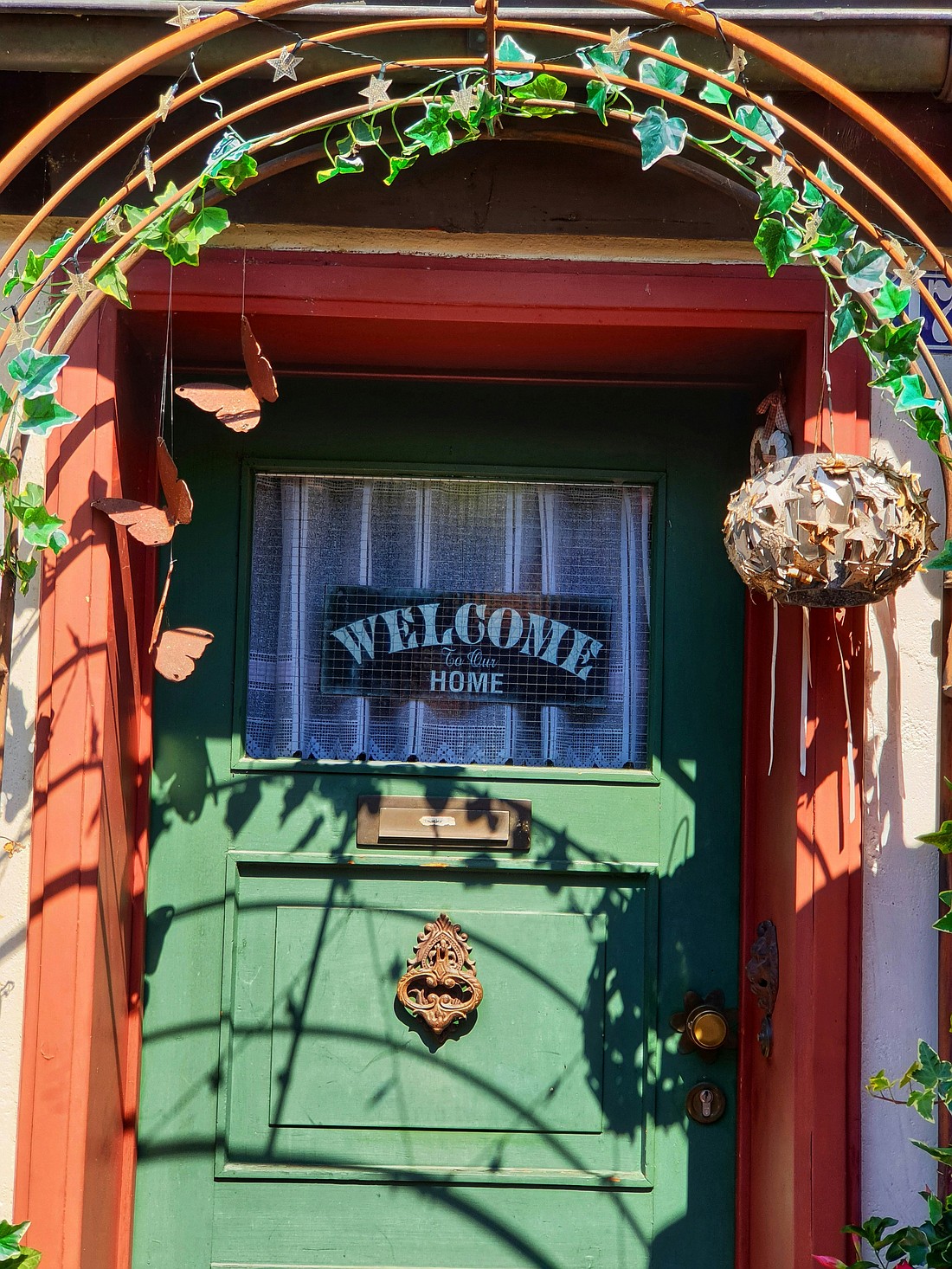
Lately, I have been thinking a lot about home, what it means, what it is, and the power imbued in the experience that is home. The poet T. S. Eliot wrote often of home, speaking of it as “the place from where we start.”
In his poem, East Coker, he writes, “In my beginning is my end. In succession, houses rise and fall, crumble, are extended, are removed, destroyed, restored, or in their place is an open field, or a factory, or a by-pass. … Houses live and die: there is a time for building and a time for living and for generation.” And, over time, “the houses are all gone under the sea.”
Since Superstorm Sandy ravaged New Jersey shore towns in 2012, Eliot’s poem reminds me of the devastation in my Ortley Beach neighborhood. My neighbors’ houses swept off their foundations into the ocean, others thrust into the street, half of one house perched precariously on the bottom of another. When we were allowed back into the town, we wandered like nomads up and down the streets, stunned into silence. These were not just our houses gone. They were our homes.
Our Ortley home was not among those lifted from its foundation and washed into the ocean or ripped apart like a house of cards. But five feet of water inside caused us to lose all our possessions, many which held significant meaning.
Among them was an oil painting of a ship, sails unfurled, coming into harbor. A gift from my father, it represented the sacredness of home – a harbor where love brought refuge, respite and peace of mind. I grew up believing that’s what home should be. And it starts with a house.
So, it’s no surprise that among my passions is a love of old houses. An old, abandoned house is like a siren of Greek mythology, enticing me to stop and investigate.
It took me years to understand that it’s never just the age of the house that calls to me, or imagining the beauty of what once was, or the chance of finding left-behind antiques.
It is always the mystery of the house. What happened there? What memories are held within its walls from times past when it served as a home, a place made sacred by the love that lived there.
It was a hard lesson for me to learn that not every home is built with love.
A loving home, even when it’s not ours, can be a place of comfort, hospitality, joy and safety as we journey through life. An open door may be a refuge for someone who has wandered far from home or a life-line for those who have no home, and there are many.
Joyce Kilmer’s moving poem, “The House With Nobody In It,” is a lament for those houses that have done what houses are meant to do, to “have sheltered life” and are now empty, abandoned with no one to care for and no people to care for them?
What makes a house a home if not the people who live within its walls? Certainly, family relationships can get messy, but when home is a place where love dwells it becomes a haven, where each person is known and respected for who they are, even in cluttered, noisy spaces that might not be selected for an HGTV special.
But some homes are not the place where love dwells, where forgiveness finds a room. They are not the places from which we embark on the adventures of life and return to rest, safe and embraced by peace of mind.
Building a home can only be done with intention. Sometimes, we may get caught up in the niceties of our houses and let nurturing our homes fall by the wayside. Sometimes, we need reminding that our homes are sacred ground and need adequate tending.
The Jewish faith teaches that the essence of every Jewish home is to serve as a sanctuary and dwelling place for the divine presence of God, and that every Jewish person is a sanctuary and dwelling place for God’s divine presence, as well. It is a beautiful image for every family to hold on to, and one that gives rise to this Jewish blessing for a home:
“May this home be a place of happiness and health, of contentment, generosity and hope, a home of creativity and kindness. May those who visit and those who live here know only blessing and peace.”
Shalom.
Mary Morrell is editor-in-chief of The Catholic Spirit, newspaper of the Metuchen Diocese.
Related Stories
Sunday, December 14, 2025



E-Editions

Events
Lately, I have been thinking a lot about home, what it means, what it is, and the power imbued in the experience that is home. The poet T. S. Eliot wrote often of home, speaking of it as “the place from where we start.”
In his poem, East Coker, he writes, “In my beginning is my end. In succession, houses rise and fall, crumble, are extended, are removed, destroyed, restored, or in their place is an open field, or a factory, or a by-pass. … Houses live and die: there is a time for building and a time for living and for generation.” And, over time, “the houses are all gone under the sea.”
Since Superstorm Sandy ravaged New Jersey shore towns in 2012, Eliot’s poem reminds me of the devastation in my Ortley Beach neighborhood. My neighbors’ houses swept off their foundations into the ocean, others thrust into the street, half of one house perched precariously on the bottom of another. When we were allowed back into the town, we wandered like nomads up and down the streets, stunned into silence. These were not just our houses gone. They were our homes.
Our Ortley home was not among those lifted from its foundation and washed into the ocean or ripped apart like a house of cards. But five feet of water inside caused us to lose all our possessions, many which held significant meaning.
Among them was an oil painting of a ship, sails unfurled, coming into harbor. A gift from my father, it represented the sacredness of home – a harbor where love brought refuge, respite and peace of mind. I grew up believing that’s what home should be. And it starts with a house.
So, it’s no surprise that among my passions is a love of old houses. An old, abandoned house is like a siren of Greek mythology, enticing me to stop and investigate.
It took me years to understand that it’s never just the age of the house that calls to me, or imagining the beauty of what once was, or the chance of finding left-behind antiques.
It is always the mystery of the house. What happened there? What memories are held within its walls from times past when it served as a home, a place made sacred by the love that lived there.
It was a hard lesson for me to learn that not every home is built with love.
A loving home, even when it’s not ours, can be a place of comfort, hospitality, joy and safety as we journey through life. An open door may be a refuge for someone who has wandered far from home or a life-line for those who have no home, and there are many.
Joyce Kilmer’s moving poem, “The House With Nobody In It,” is a lament for those houses that have done what houses are meant to do, to “have sheltered life” and are now empty, abandoned with no one to care for and no people to care for them?
What makes a house a home if not the people who live within its walls? Certainly, family relationships can get messy, but when home is a place where love dwells it becomes a haven, where each person is known and respected for who they are, even in cluttered, noisy spaces that might not be selected for an HGTV special.
But some homes are not the place where love dwells, where forgiveness finds a room. They are not the places from which we embark on the adventures of life and return to rest, safe and embraced by peace of mind.
Building a home can only be done with intention. Sometimes, we may get caught up in the niceties of our houses and let nurturing our homes fall by the wayside. Sometimes, we need reminding that our homes are sacred ground and need adequate tending.
The Jewish faith teaches that the essence of every Jewish home is to serve as a sanctuary and dwelling place for the divine presence of God, and that every Jewish person is a sanctuary and dwelling place for God’s divine presence, as well. It is a beautiful image for every family to hold on to, and one that gives rise to this Jewish blessing for a home:
“May this home be a place of happiness and health, of contentment, generosity and hope, a home of creativity and kindness. May those who visit and those who live here know only blessing and peace.”
Shalom.
Mary Morrell is editor-in-chief of The Catholic Spirit, newspaper of the Metuchen Diocese.