


Mary's assumption: The long-held belief was declared dogma 75 years ago
August 11, 2025 at 6:40 p.m.
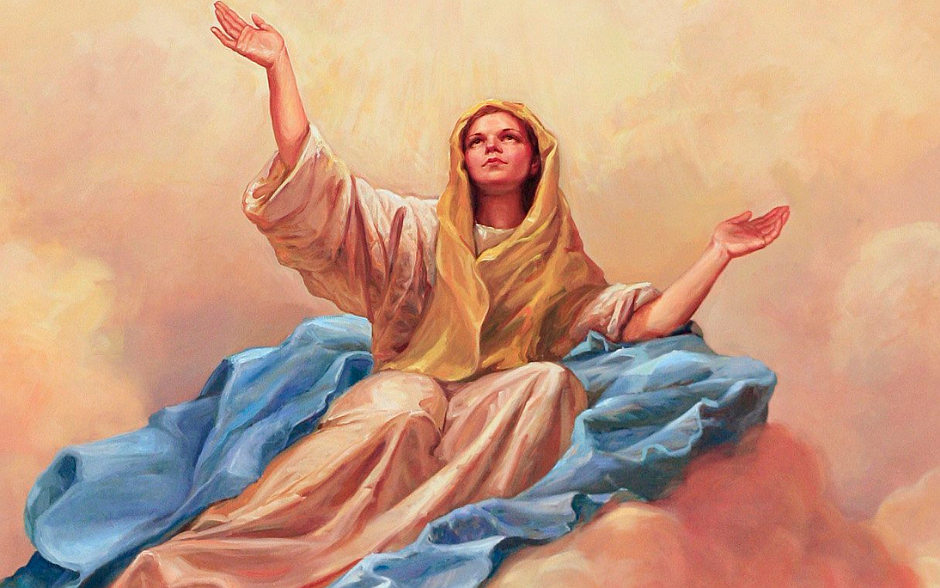
OSV News – Linked integrally with Scripture and the magisterium, the Church's tradition is God's revelation. Thus, it acts as a source from which our knowledge and practice of the faith is drawn. The feast of the Assumption, possibly the oldest celebration of the Virgin Mary, is rooted in the tradition of Christian practice, supported by magisterial teaching and defined as one of four Marian dogmas.
As ancient as this belief is, however, 2025 marks only the 75th anniversary of the Assumption being declared a Catholic dogma.
Scripture makes no direct reference to the bodily ascension of Mary to heaven, but several passages speak of the great dignity of her life, lending support to the idea that Jesus would have continued to reveal his glory by removing the corruption of the grave and extending the privilege of the Assumption to his mother.
In the Hebrew Scriptures, the Song of Songs contains passages which some scholars today say are prophetical references to Mary. We read, "Arise, my friend, my beautiful one, and come!" (2:10). Also, "Daughters see her and call her happy, queens and concubines, and they praise her" (6:9). The New Testament also provides evidence supportive of Mary's special privilege. Gabriel's greeting, "Hail, favored one! The Lord is with you. Blessed are you among women" (Lk 1:28,42), and Revelation 12:1, in its description of "a woman clothed with the sun," are illustrative.
The silence of history and Scripture concerning the death of Mary, coupled with the definition at the Council of Ephesus (431) of Mary as the "Theotokos" (Mother of God), most probably were the catalysts behind the rise of a wealth of apocryphal literature descriptive of the dormition (falling asleep) of the Virgin.
The title and the idea of "the sleep of Mary" is more formally known as "the Dormition of Mary." (Dormition comes from the Latin "dormire," meaning "to sleep.") The title "dormition" can be misleading because it seems to focus more on the death and burial of Mary. However, the belief surrounding the dormition is intrinsically linked with the assumption of our Blessed Mother, body and soul, into heaven.
One body of apocrypha from the fourth and fifth centuries, attributed to Leucius (whom Pope Gelasius I condemned in 494 as "a pupil of the devil") is titled "De transitu Mariae" ("The Passing of Mary"). "Transitus Beatae Mariae Virginis," falsely attributed to St. Melito of Sardis, was another popular account of the Virgin's death.
The chief authority for information on Mary's death comes from St. John Damascene (who died around 750), who used the otherwise unknown scholar Euthymius for his data. Pulcheria, the wife of Emperor Marcian (450-457), ordered the construction of a Church in a suburb of Constantinople called Blachenae, to where she wanted brought the earthly remains of Mary. In speaking with Bishop Juvenal of Jerusalem during the Council of Chalcedon (451), the empress was informed that the Virgin's body was not in Jerusalem.
Buried in the Garden of Gethsemane in the presence of the apostles, with the exception of Thomas, it was discovered three days later, when the apostles came to venerate her body, that the tomb was empty. It was concluded that Jesus had taken his mother to heaven. These apocryphal accounts, although they contain no historical foundation, nevertheless serve an important function in demonstrating what the people believed, which became important for the development of the tradition of the Church.
As with many Church feasts, the liturgical celebration of the Assumption began its evolution in the East. That led to the introduction of the feast at Rome in the mid-seventh century.
Proclaimed as "Natale Sanctae Mariae," this celebration was held, again as in the East, on Aug. 15. Pope Sergius I (r. 687-701), a Syrian who was instrumental in the introduction of many Eastern customs to the Roman Church, made the celebration a principal feast and added a procession to its liturgy.
During the medieval period, recognized scholars and leading Church officials continued to promote the celebration of the Assumption. St. Thomas Aquinas referenced Psalm 131:8 (132:8 in modern translations), "Arise, Lord, come to your resting place, you and your mighty ark," in promoting belief in the assumption of Mary, the true ark of God.
St. Anthony of Padua, in a 13th-century sermon, stated: "The Lord arose when he ascended to the right hand of the Father. The Ark which he has sanctified arose when the Virgin Mother was assumed to the Heavenly bridal chamber." Albert the Great, mentor to Aquinas, in commenting upon Luke, Chapter 1, wrote: "It is plain that the Most Blessed Mother of God has been assumed in body and soul beyond the choirs of Angels. And this in every way we believe to be true."
The feast of the Assumption was a major feast of the 1570 Sacramentary published by Pope Pius V during the Counter-Reformation. Thus the Church, in eliminating abuse and defending Catholic teaching and tradition, reaffirmed its belief in this long-standing feast.
The final page to the evolution of the Assumption, however, was written on Nov. 1, 1950, when Pope Pius XII, in the apostolic constitution "Munificentissimus Deus," stated, "We pronounce, declare and define it to be a divinely revealed dogma: that the Immaculate Mother of God, the ever Virgin Mary, having completed the course of her earthly life, was assumed body and soul into heavenly glory."
Father Richard Gribble is a member of the Congregation of Holy Cross. He holds a doctorate from The Catholic University of America in Washington.
Related Stories
Sunday, December 14, 2025

E-Editions
Events
OSV News – Linked integrally with Scripture and the magisterium, the Church's tradition is God's revelation. Thus, it acts as a source from which our knowledge and practice of the faith is drawn. The feast of the Assumption, possibly the oldest celebration of the Virgin Mary, is rooted in the tradition of Christian practice, supported by magisterial teaching and defined as one of four Marian dogmas.
As ancient as this belief is, however, 2025 marks only the 75th anniversary of the Assumption being declared a Catholic dogma.
Scripture makes no direct reference to the bodily ascension of Mary to heaven, but several passages speak of the great dignity of her life, lending support to the idea that Jesus would have continued to reveal his glory by removing the corruption of the grave and extending the privilege of the Assumption to his mother.
In the Hebrew Scriptures, the Song of Songs contains passages which some scholars today say are prophetical references to Mary. We read, "Arise, my friend, my beautiful one, and come!" (2:10). Also, "Daughters see her and call her happy, queens and concubines, and they praise her" (6:9). The New Testament also provides evidence supportive of Mary's special privilege. Gabriel's greeting, "Hail, favored one! The Lord is with you. Blessed are you among women" (Lk 1:28,42), and Revelation 12:1, in its description of "a woman clothed with the sun," are illustrative.
The silence of history and Scripture concerning the death of Mary, coupled with the definition at the Council of Ephesus (431) of Mary as the "Theotokos" (Mother of God), most probably were the catalysts behind the rise of a wealth of apocryphal literature descriptive of the dormition (falling asleep) of the Virgin.
The title and the idea of "the sleep of Mary" is more formally known as "the Dormition of Mary." (Dormition comes from the Latin "dormire," meaning "to sleep.") The title "dormition" can be misleading because it seems to focus more on the death and burial of Mary. However, the belief surrounding the dormition is intrinsically linked with the assumption of our Blessed Mother, body and soul, into heaven.
One body of apocrypha from the fourth and fifth centuries, attributed to Leucius (whom Pope Gelasius I condemned in 494 as "a pupil of the devil") is titled "De transitu Mariae" ("The Passing of Mary"). "Transitus Beatae Mariae Virginis," falsely attributed to St. Melito of Sardis, was another popular account of the Virgin's death.
The chief authority for information on Mary's death comes from St. John Damascene (who died around 750), who used the otherwise unknown scholar Euthymius for his data. Pulcheria, the wife of Emperor Marcian (450-457), ordered the construction of a Church in a suburb of Constantinople called Blachenae, to where she wanted brought the earthly remains of Mary. In speaking with Bishop Juvenal of Jerusalem during the Council of Chalcedon (451), the empress was informed that the Virgin's body was not in Jerusalem.
Buried in the Garden of Gethsemane in the presence of the apostles, with the exception of Thomas, it was discovered three days later, when the apostles came to venerate her body, that the tomb was empty. It was concluded that Jesus had taken his mother to heaven. These apocryphal accounts, although they contain no historical foundation, nevertheless serve an important function in demonstrating what the people believed, which became important for the development of the tradition of the Church.
As with many Church feasts, the liturgical celebration of the Assumption began its evolution in the East. That led to the introduction of the feast at Rome in the mid-seventh century.
Proclaimed as "Natale Sanctae Mariae," this celebration was held, again as in the East, on Aug. 15. Pope Sergius I (r. 687-701), a Syrian who was instrumental in the introduction of many Eastern customs to the Roman Church, made the celebration a principal feast and added a procession to its liturgy.
During the medieval period, recognized scholars and leading Church officials continued to promote the celebration of the Assumption. St. Thomas Aquinas referenced Psalm 131:8 (132:8 in modern translations), "Arise, Lord, come to your resting place, you and your mighty ark," in promoting belief in the assumption of Mary, the true ark of God.
St. Anthony of Padua, in a 13th-century sermon, stated: "The Lord arose when he ascended to the right hand of the Father. The Ark which he has sanctified arose when the Virgin Mother was assumed to the Heavenly bridal chamber." Albert the Great, mentor to Aquinas, in commenting upon Luke, Chapter 1, wrote: "It is plain that the Most Blessed Mother of God has been assumed in body and soul beyond the choirs of Angels. And this in every way we believe to be true."
The feast of the Assumption was a major feast of the 1570 Sacramentary published by Pope Pius V during the Counter-Reformation. Thus the Church, in eliminating abuse and defending Catholic teaching and tradition, reaffirmed its belief in this long-standing feast.
The final page to the evolution of the Assumption, however, was written on Nov. 1, 1950, when Pope Pius XII, in the apostolic constitution "Munificentissimus Deus," stated, "We pronounce, declare and define it to be a divinely revealed dogma: that the Immaculate Mother of God, the ever Virgin Mary, having completed the course of her earthly life, was assumed body and soul into heavenly glory."
Father Richard Gribble is a member of the Congregation of Holy Cross. He holds a doctorate from The Catholic University of America in Washington.