


CRS staff working in Gaza see danger, disease and dire need
August 1, 2025 at 11:00 a.m.
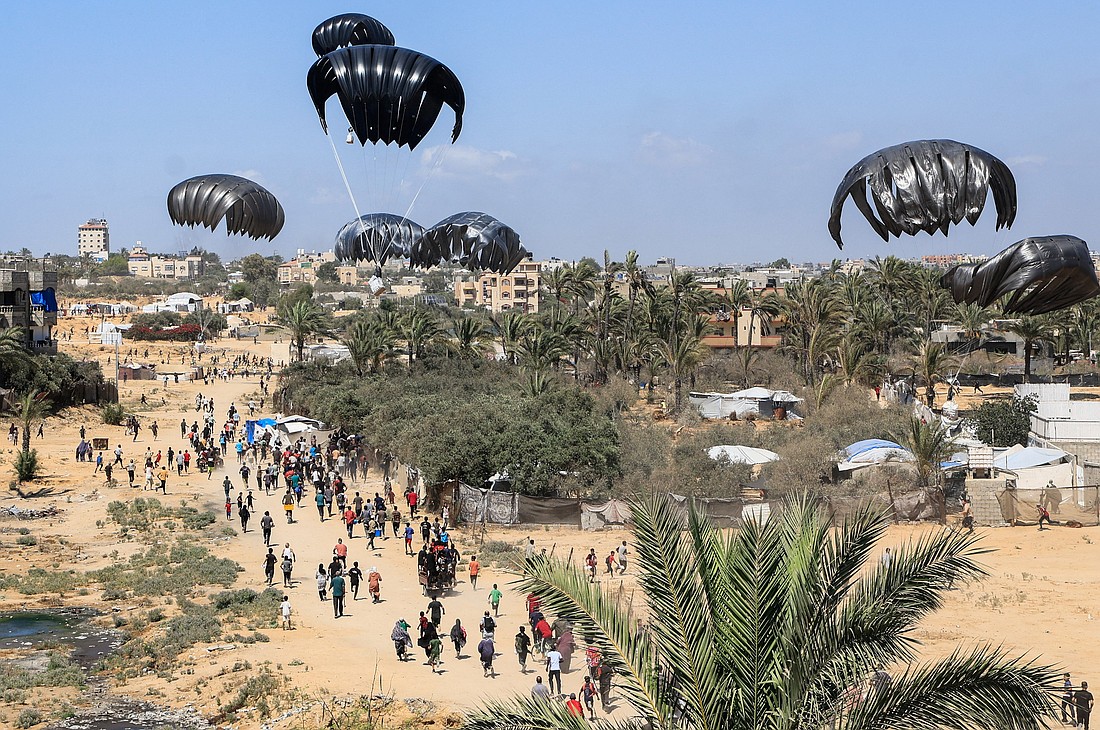
OSV News – As hunger deepens in Gaza amid the Israel-Hamas war – with controversy and challenges surrounding aid distribution – OSV News consulted Jennifer Poidatz, acting representative for Catholic Relief Services in Jerusalem, West Bank and Gaza, for an on-the-ground perspective.
CRS is the official overseas relief and development agency of the U.S. Conference of Catholic Bishops.
Currently in Israel, Poidatz emailed OSV News July 31 after contacting CRS staff in Gaza for responses to our questions.
(Answers have been lightly edited to conform with OSV News style.)
OSV News: What specific food supplies are most critically needed at this point in Gaza?
Poidatz: Ensuring that we meet individual energy requirements is the priority.
Humanitarian standards recommend 2,100 kcals/person/day, and include 10-12% of total energy provided by protein and 17% provided by fat. These standards still apply for groups that are not acutely malnourished, which means we need to prioritize food going in that gives as many calories as possible for (available) space on trucks/volume, and ensuring this includes protein and healthy fat (olive oil, for example).
Food supplies should include both dry food (to be cooked) and canned goods, and (should) provide greater dietary variety and nutritional balance, which is especially critical for sustained recovery in protracted crises like Gaza.
This includes staple carbohydrate sources such as rice, dry pasta, bulghur wheat, wheat flour (fortified). Protein sources are sorely needed, such as red (and) brown lentils, canned tuna (or other canned meat).
Other prioritized items have been canned hummus and olive oil. If we were to de-prioritize items, it would be anything with "empty calories" (like sugar).
Access to water and fuel should also be provided, but households and communities have found ways to cook food thus far, although far below the required levels.
OSV News: How are you able to use market-based solutions to address at least some of the food needs – for example, by supporting local vendors?
Poidatz: We continue to provide cash-based assistance in partnership with our network of local vendors throughout the Gaza Strip, and this modality of assistance (is) the most effective way of ensuring access to critical food items to Gazans.
CRS' partnerships with private sector actors has been a key enabler for last-mile delivery of assistance throughout the war, as they continue to provide digital (and) cash-in-hand services for selected beneficiaries even during times of near complete blockade and active hostilities.
Ninety percent of our program participants report spending cash assistance on food, with an average of 77% of the cash assistance going to food purchases.
We have also worked to reactivate e-voucher programs, which directly benefit vendors. Vouchers help vendors provide food items to vulnerable Gazans and ensure a steady demand for goods allowing them to stabilize their business. Due to the limited amount of commercial items and irregularity of supply chains, this modality is no longer feasible, but can be resumed at scale once market conditions improve.
OSV News: How have you been able to work around the damage to infrastructure and the energy grid to continue your mission?
Poidatz: We continue to access very minimal quantities of diesel fuel and rely on solar panels to help meet energy gaps to power offices.
There is no electricity in Gaza other than (that provided by) solar (sources) and very limited generator power.
We have had to rely on e-SIMs (a digital version of the subscriber identity module, or SIM, card that connects a user's device to a wireless carrier network) to support internet access, and have had to broaden financial service providers to secure staff and partner salaries and costs at different times in the response.
OSV News: Are there any functioning agricultural sites in Gaza right now, and if so, are they able to supply any fresh fruits and vegetables?
Poidatz: While agricultural land has been extensively damaged (83% estimated damaged or inaccessible), there is continued local production of fruits and vegetables but (it) remains very limited.
Fruits and vegetables available on the market include zucchinis, tomatoes ($24 per kilo, the equivalent of just over 2.20 pounds, or almost $11 per pound), onions ($30 per kilo, or more than $13 per pound), potatoes ($16 per kilo, or about $7.25 per pound), peppers ($24 per kilo, or just under $11 per pound), eggplant ($10 per kilo, or a little over $4.50 per pound), cucumbers ($21 per kilo, or more than $9.50 per pound).
Worth noting that access to agricultural land remains very dangerous as they are largely located in areas under evacuation notices. Farmers take significant risks to harvest their crops, in addition to struggling to afford seeds and other agricultural inputs.
OSV News: What are the sanitation and hygiene conditions in Gaza at the moment?
Poidatz: Sanitation and hygiene conditions in Gaza are dire, with over half the population lacking adequate access to sanitation.
Since October 2023, all sewage treatment plants have been nonoperational due to extensive damage, forcing communities to rely on unsafe makeshift cesspits.
Vulnerable groups, especially malnourished children under 5, face increased risk of WASH-related (water, sanitation and hygiene-related) diseases like acute diarrhea, hepatitis and meningitis. Skin diseases continue to plague the population without hygiene and clean water.
Access to clean water and hygiene items continues to deteriorate, with 75% of households worried about drinking water, 40% lacking soap, and many unable to afford essentials like diapers, highlighting a heavy dependence on humanitarian aid.
Sanitation services are being overtaxed with sewage running openly in urban areas.
Families are moving close to the seashore to have access to sea water for domestic purposes.
Fuel in Gaza is a lifeline, needed for desalination plants, water pumping and water trucking. Without access to fuel, desalination plants have shut down, water pumping is reduced and trucking is limited – all hindering delivery and access to drinking water for large swaths of the population.
Gina Christian is a multimedia reporter for OSV News. Follow her on X @GinaJesseReina.
Please consider supporting this work by signing up for a SUBSCRIPTION (click HERE) or making a DONATION to The Monitor (click HERE). Thank you for your support.
Related Stories
Sunday, December 14, 2025







E-Editions

Events
OSV News – As hunger deepens in Gaza amid the Israel-Hamas war – with controversy and challenges surrounding aid distribution – OSV News consulted Jennifer Poidatz, acting representative for Catholic Relief Services in Jerusalem, West Bank and Gaza, for an on-the-ground perspective.
CRS is the official overseas relief and development agency of the U.S. Conference of Catholic Bishops.
Currently in Israel, Poidatz emailed OSV News July 31 after contacting CRS staff in Gaza for responses to our questions.
(Answers have been lightly edited to conform with OSV News style.)
OSV News: What specific food supplies are most critically needed at this point in Gaza?
Poidatz: Ensuring that we meet individual energy requirements is the priority.
Humanitarian standards recommend 2,100 kcals/person/day, and include 10-12% of total energy provided by protein and 17% provided by fat. These standards still apply for groups that are not acutely malnourished, which means we need to prioritize food going in that gives as many calories as possible for (available) space on trucks/volume, and ensuring this includes protein and healthy fat (olive oil, for example).
Food supplies should include both dry food (to be cooked) and canned goods, and (should) provide greater dietary variety and nutritional balance, which is especially critical for sustained recovery in protracted crises like Gaza.
This includes staple carbohydrate sources such as rice, dry pasta, bulghur wheat, wheat flour (fortified). Protein sources are sorely needed, such as red (and) brown lentils, canned tuna (or other canned meat).
Other prioritized items have been canned hummus and olive oil. If we were to de-prioritize items, it would be anything with "empty calories" (like sugar).
Access to water and fuel should also be provided, but households and communities have found ways to cook food thus far, although far below the required levels.
OSV News: How are you able to use market-based solutions to address at least some of the food needs – for example, by supporting local vendors?
Poidatz: We continue to provide cash-based assistance in partnership with our network of local vendors throughout the Gaza Strip, and this modality of assistance (is) the most effective way of ensuring access to critical food items to Gazans.
CRS' partnerships with private sector actors has been a key enabler for last-mile delivery of assistance throughout the war, as they continue to provide digital (and) cash-in-hand services for selected beneficiaries even during times of near complete blockade and active hostilities.
Ninety percent of our program participants report spending cash assistance on food, with an average of 77% of the cash assistance going to food purchases.
We have also worked to reactivate e-voucher programs, which directly benefit vendors. Vouchers help vendors provide food items to vulnerable Gazans and ensure a steady demand for goods allowing them to stabilize their business. Due to the limited amount of commercial items and irregularity of supply chains, this modality is no longer feasible, but can be resumed at scale once market conditions improve.
OSV News: How have you been able to work around the damage to infrastructure and the energy grid to continue your mission?
Poidatz: We continue to access very minimal quantities of diesel fuel and rely on solar panels to help meet energy gaps to power offices.
There is no electricity in Gaza other than (that provided by) solar (sources) and very limited generator power.
We have had to rely on e-SIMs (a digital version of the subscriber identity module, or SIM, card that connects a user's device to a wireless carrier network) to support internet access, and have had to broaden financial service providers to secure staff and partner salaries and costs at different times in the response.
OSV News: Are there any functioning agricultural sites in Gaza right now, and if so, are they able to supply any fresh fruits and vegetables?
Poidatz: While agricultural land has been extensively damaged (83% estimated damaged or inaccessible), there is continued local production of fruits and vegetables but (it) remains very limited.
Fruits and vegetables available on the market include zucchinis, tomatoes ($24 per kilo, the equivalent of just over 2.20 pounds, or almost $11 per pound), onions ($30 per kilo, or more than $13 per pound), potatoes ($16 per kilo, or about $7.25 per pound), peppers ($24 per kilo, or just under $11 per pound), eggplant ($10 per kilo, or a little over $4.50 per pound), cucumbers ($21 per kilo, or more than $9.50 per pound).
Worth noting that access to agricultural land remains very dangerous as they are largely located in areas under evacuation notices. Farmers take significant risks to harvest their crops, in addition to struggling to afford seeds and other agricultural inputs.
OSV News: What are the sanitation and hygiene conditions in Gaza at the moment?
Poidatz: Sanitation and hygiene conditions in Gaza are dire, with over half the population lacking adequate access to sanitation.
Since October 2023, all sewage treatment plants have been nonoperational due to extensive damage, forcing communities to rely on unsafe makeshift cesspits.
Vulnerable groups, especially malnourished children under 5, face increased risk of WASH-related (water, sanitation and hygiene-related) diseases like acute diarrhea, hepatitis and meningitis. Skin diseases continue to plague the population without hygiene and clean water.
Access to clean water and hygiene items continues to deteriorate, with 75% of households worried about drinking water, 40% lacking soap, and many unable to afford essentials like diapers, highlighting a heavy dependence on humanitarian aid.
Sanitation services are being overtaxed with sewage running openly in urban areas.
Families are moving close to the seashore to have access to sea water for domestic purposes.
Fuel in Gaza is a lifeline, needed for desalination plants, water pumping and water trucking. Without access to fuel, desalination plants have shut down, water pumping is reduced and trucking is limited – all hindering delivery and access to drinking water for large swaths of the population.
Gina Christian is a multimedia reporter for OSV News. Follow her on X @GinaJesseReina.
Please consider supporting this work by signing up for a SUBSCRIPTION (click HERE) or making a DONATION to The Monitor (click HERE). Thank you for your support.