


Pope was a pastor first, which is lasting gift to Church, cardinal says
April 8, 2025 at 1:59 p.m.
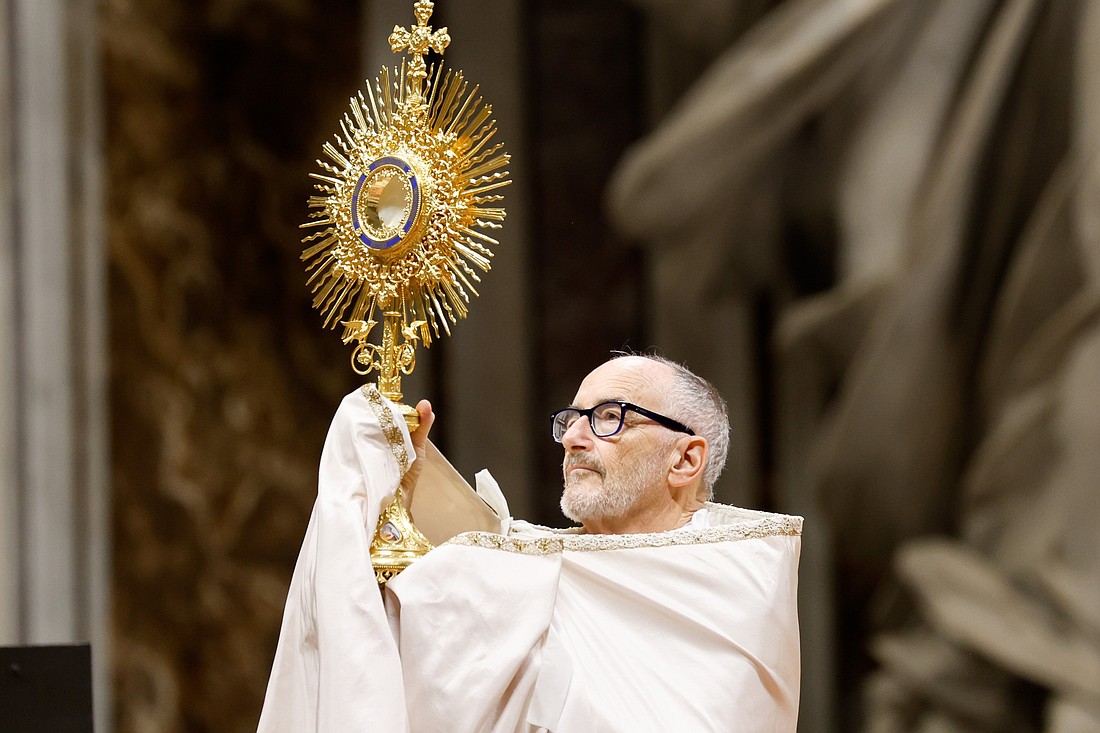
VATICAN CITY CNS – Pope Francis was a pastor first, "so consistently, so spontaneously and with such deep conviction," that it will remain a gift to the Catholic Church, said Cardinal Michael Czerny.
The cardinal, who served as prefect of the Dicastery for Promoting Integral Human Development, spoke with Catholic News Service April 22, the day after Pope Francis died at the age of 88.
"Pope Francis will be remembered as a pastoral Pope," he said. "The word 'pastoral' is easy to use, and you can apply it to many things, but to see it lived consistently by the person with the highest responsibility in the Church is a really important contribution."
Cardinal Czerny, 78, said it is not that previous Popes were not pastoral, but Pope Francis excelled at "showing how the Church was first and foremost interested in the welfare, the salvation, the happiness, the development of people and ready to reach out as far as possible, to accompany people in their path of salvation and of development."
Making the pastoral a priority – learning "to go out and bring the Gospel to reality, to all creation" – is something the Church needs "to relearn" with every generation, the cardinal said. "And Pope Francis showed us how."
Cardinal Czerny, a Jesuit like Pope Francis, said the late Pope clearly embodied the Jesuit ideal of "finding God in all things."
"He was able to find God and to hope to meet God in every circumstance and in every person," the cardinal said. "He never gave up on 'these people' or on 'that situation,' and that's also a gift of our spirituality, which, in a sense, overcomes a false distinction between what's religious and what isn't."
One of the aims of the spiritual exercises of St. Ignatius of Loyola, founder of the Jesuit order, is to help believers focus on finding "the freedom to serve God and to serve people free from the forces, the powers, the confusions that can lead us in the wrong way," the cardinal said.
"I will personally remember him for his freedom," he said. "I found him so free in his attitudes, in his reactions and his responses."
Unlike his two predecessors, St. John Paul II and Pope Benedict XVI, Pope Francis did not participate in the Second Vatican Council. He was ordained to the priesthood in 1969, four years after the council ended.
But, Cardinal Czerny said, "his legacy to the Church at large will be his renewal of the implementation of Vatican II, and precisely the implementation of Vatican II as a pastoral council. This is something that we urgently needed, and which he began wholeheartedly and developed in many interesting directions, but always very, very faithful to the council, always rooted in the council."
Pope Francis advocated tirelessly for the people and issues Cardinal Czerny's dicastery focuses on most: migrants, refugees, the poor, peace and the environment.
Asked if people accepted the Pope's teaching on the Christian requirement to "listen to the cry of the poor and the cry of the earth," the cardinal said, "In fact, the people have accepted it. The governments haven't."
"I think he has reached people – ordinary people, parishes, other communities, Christian movements, and also groupings and movements of people outside the Church," the cardinal said. "He has reached them widely and deeply."
"And it's a real pity that governments are opting for short term gain, populism, with their eye only on the next election and on the bottom line," the Cardinal Czerny said. "It's up to people to correct their governments, and I really hope this will happen."
The cardinal said the migrants, refugees and poor people he works with have reacted to Pope Francis' death much like he has.
"First of all, we're shocked because we didn't expect it; seeing the Holy Father on Sunday doesn't prepare you for hearing that he died on Monday morning," he said.
But "at the same time, the real feeling is not the shock or even the sorrow, but gratitude," he said. "We can't help thinking of him without gratitude, without thanking God for this pastor, this pastor with the smell of the sheep, who has guided and encouraged the Church so much over the past 12 years and who leaves us with hope and with a lot to do."
The Church needs quality Catholic journalism now more than ever. Please consider supporting this work by signing up for a SUBSCRIPTION (click HERE) or making a DONATION to The Monitor (click HERE). Thank you for your support.
Related Stories
Friday, December 05, 2025
E-Editions
Events
VATICAN CITY CNS – Pope Francis was a pastor first, "so consistently, so spontaneously and with such deep conviction," that it will remain a gift to the Catholic Church, said Cardinal Michael Czerny.
The cardinal, who served as prefect of the Dicastery for Promoting Integral Human Development, spoke with Catholic News Service April 22, the day after Pope Francis died at the age of 88.
"Pope Francis will be remembered as a pastoral Pope," he said. "The word 'pastoral' is easy to use, and you can apply it to many things, but to see it lived consistently by the person with the highest responsibility in the Church is a really important contribution."
Cardinal Czerny, 78, said it is not that previous Popes were not pastoral, but Pope Francis excelled at "showing how the Church was first and foremost interested in the welfare, the salvation, the happiness, the development of people and ready to reach out as far as possible, to accompany people in their path of salvation and of development."
Making the pastoral a priority – learning "to go out and bring the Gospel to reality, to all creation" – is something the Church needs "to relearn" with every generation, the cardinal said. "And Pope Francis showed us how."
Cardinal Czerny, a Jesuit like Pope Francis, said the late Pope clearly embodied the Jesuit ideal of "finding God in all things."
"He was able to find God and to hope to meet God in every circumstance and in every person," the cardinal said. "He never gave up on 'these people' or on 'that situation,' and that's also a gift of our spirituality, which, in a sense, overcomes a false distinction between what's religious and what isn't."
One of the aims of the spiritual exercises of St. Ignatius of Loyola, founder of the Jesuit order, is to help believers focus on finding "the freedom to serve God and to serve people free from the forces, the powers, the confusions that can lead us in the wrong way," the cardinal said.
"I will personally remember him for his freedom," he said. "I found him so free in his attitudes, in his reactions and his responses."
Unlike his two predecessors, St. John Paul II and Pope Benedict XVI, Pope Francis did not participate in the Second Vatican Council. He was ordained to the priesthood in 1969, four years after the council ended.
But, Cardinal Czerny said, "his legacy to the Church at large will be his renewal of the implementation of Vatican II, and precisely the implementation of Vatican II as a pastoral council. This is something that we urgently needed, and which he began wholeheartedly and developed in many interesting directions, but always very, very faithful to the council, always rooted in the council."
Pope Francis advocated tirelessly for the people and issues Cardinal Czerny's dicastery focuses on most: migrants, refugees, the poor, peace and the environment.
Asked if people accepted the Pope's teaching on the Christian requirement to "listen to the cry of the poor and the cry of the earth," the cardinal said, "In fact, the people have accepted it. The governments haven't."
"I think he has reached people – ordinary people, parishes, other communities, Christian movements, and also groupings and movements of people outside the Church," the cardinal said. "He has reached them widely and deeply."
"And it's a real pity that governments are opting for short term gain, populism, with their eye only on the next election and on the bottom line," the Cardinal Czerny said. "It's up to people to correct their governments, and I really hope this will happen."
The cardinal said the migrants, refugees and poor people he works with have reacted to Pope Francis' death much like he has.
"First of all, we're shocked because we didn't expect it; seeing the Holy Father on Sunday doesn't prepare you for hearing that he died on Monday morning," he said.
But "at the same time, the real feeling is not the shock or even the sorrow, but gratitude," he said. "We can't help thinking of him without gratitude, without thanking God for this pastor, this pastor with the smell of the sheep, who has guided and encouraged the Church so much over the past 12 years and who leaves us with hope and with a lot to do."
The Church needs quality Catholic journalism now more than ever. Please consider supporting this work by signing up for a SUBSCRIPTION (click HERE) or making a DONATION to The Monitor (click HERE). Thank you for your support.