


Does marriage transcend death?
December 2, 2024 at 2:24 p.m.
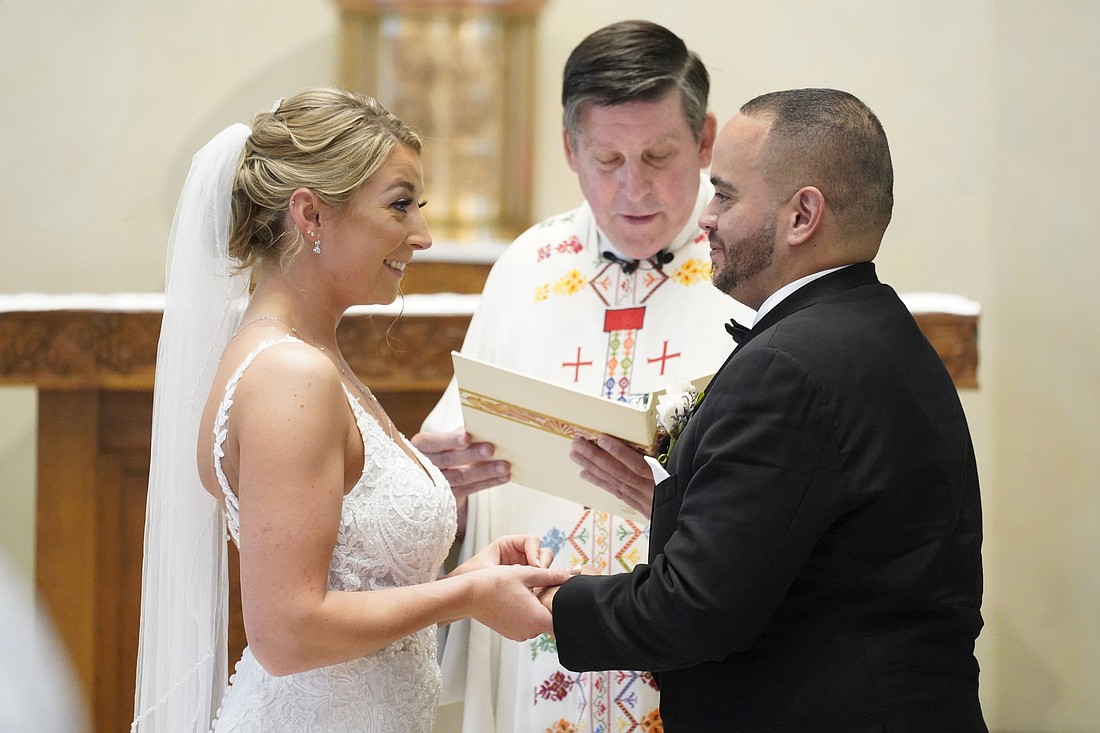
Q: I have a question about the vocation of marriage. I'm very moved by the examples of widowed family and friends who continue to be very devoted to their deceased spouse, praying for them daily and visiting their graves often. Often they speak of looking forward to seeing their spouse again in heaven. Does the Church teach that marriage can transcend death in this way? How can you give your whole heart to someone and then have that just end?
A: Practically speaking, praying daily for the repose of a deceased spouse's soul is an act of Christian charity and a very Catholic thing to do. And it is beautiful to keep our departed loved ones' memories alive.
But the real core of your question is a little bit more complicated. Although the Church teaches that we will be united with our loved ones in heaven (including spouses who have died before us) the Church does not teach that marriage lasts into eternity.
That is, we as Catholics believe that marriage ends with death, full stop, which is why remarriage after the death of one's spouse is a non-issue in the eyes of the Church.
One major scriptural point of reference for the Church's teaching on the nature of marriage can be found in Chapter 22 of the Gospel of Matthew. In this passage, the Sadducees asked Jesus whom a woman, married and widowed seven times, would be married to in the afterlife. Jesus responds:
"You are misled because you do not know the scriptures or the power of God. At the resurrection they neither marry nor are given in marriage but are like the angels in heaven" (Mt 22:29-30).
Here, Jesus is making clear that marriage is something specifically tied to earthly life, and not something that was intended to endure into eternity. In heaven, we will all be unmarried "like the angels," that is, totally and completely fulfilled by the love of God alone.
Incidentally, this is one reason why priests and men and women in consecrated life embrace a call to celibacy. By renouncing earthly marriage, they strive to live now, here on earth, the kind of life that all the faithful will eventually have in heaven. As Pope St. John Paul II wrote in the 1996 document "Vita Consecrata": "The Second Vatican Council proposes this teaching anew when it states that consecration better 'foretells the resurrected state and the glory of the heavenly Kingdom.' It does this above all by means of the vow of virginity, which tradition has always understood as an anticipation of the world to come, already at work for the total transformation of [mankind]" (Vita Consecrata 26).
Theologically, the purpose of married love – even sacramental married love where the spouses reflect God's love toward each other – is to be temporary and ordered to an even higher end. The ultimate goal for every human being is to love God with a singular purpose, and to let this undividedly focused love of God overflow into a radical, disinterested love of neighbor. Most people are not at a point in their spiritual life where they are able to live this reality during their time on earth, so the majority are called to love a mortal spouse as a sort of "training ground" for the angelic, heavenly love we will experience in heaven.
Even with this in mind, it may still be emotionally difficult to think of a happy marriage ending with death. But as our Catholic funeral liturgy reminds us, for God's faithful "life is changed, not ended" with bodily death; and by analogy we can also conclude that although the love of spouses may be changed into something different from specifically married love, this does not mean that this love no longer exists. Indeed, once subsumed into the love of God, it may become something even stronger in the life of the world to come.
Jenna Marie Cooper, who holds a licentiate in canon law, is a consecrated virgin and a canonist whose column appears weekly at OSV News. Send your questions to [email protected].
The Church needs quality Catholic journalism now more than ever. Please consider supporting this work by signing up for a SUBSCRIPTION (click HERE) or making a DONATION to The Monitor (click HERE). Thank you for your support.
Related Stories
Friday, December 05, 2025

E-Editions
Events
Q: I have a question about the vocation of marriage. I'm very moved by the examples of widowed family and friends who continue to be very devoted to their deceased spouse, praying for them daily and visiting their graves often. Often they speak of looking forward to seeing their spouse again in heaven. Does the Church teach that marriage can transcend death in this way? How can you give your whole heart to someone and then have that just end?
A: Practically speaking, praying daily for the repose of a deceased spouse's soul is an act of Christian charity and a very Catholic thing to do. And it is beautiful to keep our departed loved ones' memories alive.
But the real core of your question is a little bit more complicated. Although the Church teaches that we will be united with our loved ones in heaven (including spouses who have died before us) the Church does not teach that marriage lasts into eternity.
That is, we as Catholics believe that marriage ends with death, full stop, which is why remarriage after the death of one's spouse is a non-issue in the eyes of the Church.
One major scriptural point of reference for the Church's teaching on the nature of marriage can be found in Chapter 22 of the Gospel of Matthew. In this passage, the Sadducees asked Jesus whom a woman, married and widowed seven times, would be married to in the afterlife. Jesus responds:
"You are misled because you do not know the scriptures or the power of God. At the resurrection they neither marry nor are given in marriage but are like the angels in heaven" (Mt 22:29-30).
Here, Jesus is making clear that marriage is something specifically tied to earthly life, and not something that was intended to endure into eternity. In heaven, we will all be unmarried "like the angels," that is, totally and completely fulfilled by the love of God alone.
Incidentally, this is one reason why priests and men and women in consecrated life embrace a call to celibacy. By renouncing earthly marriage, they strive to live now, here on earth, the kind of life that all the faithful will eventually have in heaven. As Pope St. John Paul II wrote in the 1996 document "Vita Consecrata": "The Second Vatican Council proposes this teaching anew when it states that consecration better 'foretells the resurrected state and the glory of the heavenly Kingdom.' It does this above all by means of the vow of virginity, which tradition has always understood as an anticipation of the world to come, already at work for the total transformation of [mankind]" (Vita Consecrata 26).
Theologically, the purpose of married love – even sacramental married love where the spouses reflect God's love toward each other – is to be temporary and ordered to an even higher end. The ultimate goal for every human being is to love God with a singular purpose, and to let this undividedly focused love of God overflow into a radical, disinterested love of neighbor. Most people are not at a point in their spiritual life where they are able to live this reality during their time on earth, so the majority are called to love a mortal spouse as a sort of "training ground" for the angelic, heavenly love we will experience in heaven.
Even with this in mind, it may still be emotionally difficult to think of a happy marriage ending with death. But as our Catholic funeral liturgy reminds us, for God's faithful "life is changed, not ended" with bodily death; and by analogy we can also conclude that although the love of spouses may be changed into something different from specifically married love, this does not mean that this love no longer exists. Indeed, once subsumed into the love of God, it may become something even stronger in the life of the world to come.
Jenna Marie Cooper, who holds a licentiate in canon law, is a consecrated virgin and a canonist whose column appears weekly at OSV News. Send your questions to [email protected].
The Church needs quality Catholic journalism now more than ever. Please consider supporting this work by signing up for a SUBSCRIPTION (click HERE) or making a DONATION to The Monitor (click HERE). Thank you for your support.