


Church called to address stigma associated with mental illness, advocates say
January 30, 2023 at 4:11 p.m.
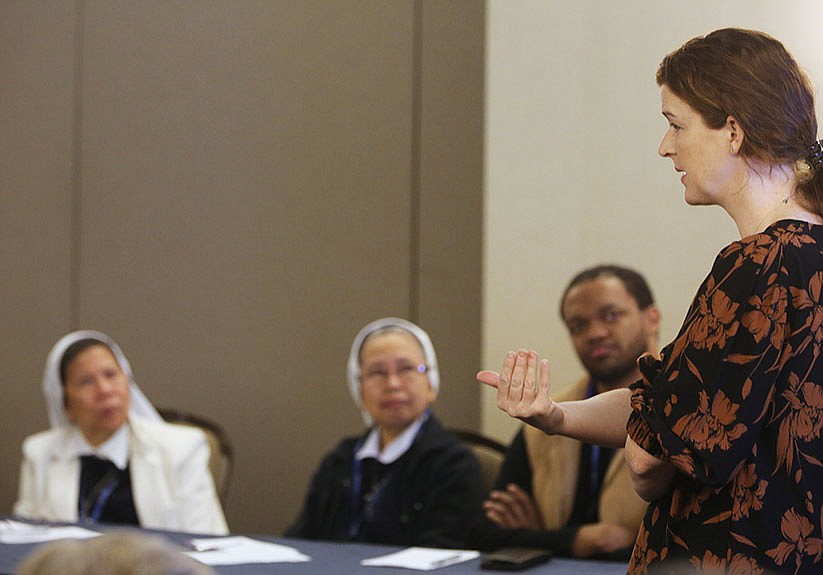
WASHINGTON • The Church is called to address taboos associated with mental illness both within society and within its own ranks, advocates at the Catholic Social Ministry Gathering said on Jan. 28.
"It's a continuum we are all on at different times in our life," Charleen Katra, executive director of the National Catholic Partnership on Disability, said in opening remarks.
A program at the annual conference was sponsored by the National Catholic Partnership on Disability, a group that works with dioceses, schools and ministries "to promote the full and meaningful participation of persons with disabilities in the life of the Church," on addressing the stigma associated with mental illness. The meeting was held prior to the official start of the gathering.
Katra said that the full conference room for the discussion "Mental Health: Moving Past the Taboo to a Culture of Acceptance" spoke to the need of the Church to respond to these issues.
Jennifer L.K. Charles, an assistant professor at the National Catholic School of Social Service at The Catholic University of America, who studies issues related to the stigma of mental illness and how that stigma can impact patient outcomes, said there is often a cultural understanding of mental illness as binary. She said people often think of mental illness as something a person either has or does not have, but it is better understood as a spectrum that can fluctuate throughout one's life.
"Mental health is a state of being, something that needs to be maintained and attended to," Charles said, adding that an estimated one in five adults in the United States will experience some form of mental illness in their lifetime.
[[In-content Ad]]
Societal stigma associated with mental illness can often adversely affect patient outcomes, Charles said, like when friends, relatives or employers downplay mental illness, even including a patient not taking needed medications out of an unwillingness to accept their own diagnosis out of shame or embarrassment.
Charles cited a study from 2000 which found that although involvement in a faith-based community was tied to positive effects on mental health, individual congregants of faith communities living with mental health conditions reported feeling shame and isolation about their mental health conditions.
"They feel abandoned," she said.
The National Catholic Partnership on Disability has a list of resources for ministering to individuals with mental illness, including that their faith community should acknowledge that their pain is real, but so is hope.
Charles said a good first step to addressing taboos about mental illness within the Church is self-reflection.
"The first step is a core self-appraisal about how I think about people with mental health conditions and the contributions of those individuals," she said. "Examining our own attitudes, beliefs, and behaviors is important."
In closing, Katra suggested those who work in Catholic mental health ministries "be curious, not judgmental," a sentiment recently popularized by the television program "Ted Lasso."
Kate Scanlon is a national reporter for OSV News covering Washington.
The National Catholic Partnership on Disability resources for ministering to individuals with mental illness can be found here: https://ncpd.org/disability-mental-illness/mental-illness-theological-framework.
Related Stories
Thursday, December 25, 2025



E-Editions
Events
WASHINGTON • The Church is called to address taboos associated with mental illness both within society and within its own ranks, advocates at the Catholic Social Ministry Gathering said on Jan. 28.
"It's a continuum we are all on at different times in our life," Charleen Katra, executive director of the National Catholic Partnership on Disability, said in opening remarks.
A program at the annual conference was sponsored by the National Catholic Partnership on Disability, a group that works with dioceses, schools and ministries "to promote the full and meaningful participation of persons with disabilities in the life of the Church," on addressing the stigma associated with mental illness. The meeting was held prior to the official start of the gathering.
Katra said that the full conference room for the discussion "Mental Health: Moving Past the Taboo to a Culture of Acceptance" spoke to the need of the Church to respond to these issues.
Jennifer L.K. Charles, an assistant professor at the National Catholic School of Social Service at The Catholic University of America, who studies issues related to the stigma of mental illness and how that stigma can impact patient outcomes, said there is often a cultural understanding of mental illness as binary. She said people often think of mental illness as something a person either has or does not have, but it is better understood as a spectrum that can fluctuate throughout one's life.
"Mental health is a state of being, something that needs to be maintained and attended to," Charles said, adding that an estimated one in five adults in the United States will experience some form of mental illness in their lifetime.
[[In-content Ad]]
Societal stigma associated with mental illness can often adversely affect patient outcomes, Charles said, like when friends, relatives or employers downplay mental illness, even including a patient not taking needed medications out of an unwillingness to accept their own diagnosis out of shame or embarrassment.
Charles cited a study from 2000 which found that although involvement in a faith-based community was tied to positive effects on mental health, individual congregants of faith communities living with mental health conditions reported feeling shame and isolation about their mental health conditions.
"They feel abandoned," she said.
The National Catholic Partnership on Disability has a list of resources for ministering to individuals with mental illness, including that their faith community should acknowledge that their pain is real, but so is hope.
Charles said a good first step to addressing taboos about mental illness within the Church is self-reflection.
"The first step is a core self-appraisal about how I think about people with mental health conditions and the contributions of those individuals," she said. "Examining our own attitudes, beliefs, and behaviors is important."
In closing, Katra suggested those who work in Catholic mental health ministries "be curious, not judgmental," a sentiment recently popularized by the television program "Ted Lasso."
Kate Scanlon is a national reporter for OSV News covering Washington.
The National Catholic Partnership on Disability resources for ministering to individuals with mental illness can be found here: https://ncpd.org/disability-mental-illness/mental-illness-theological-framework.