


Pope Benedict XVI: A committed but principled ecumenist
January 11, 2023 at 5:03 p.m.
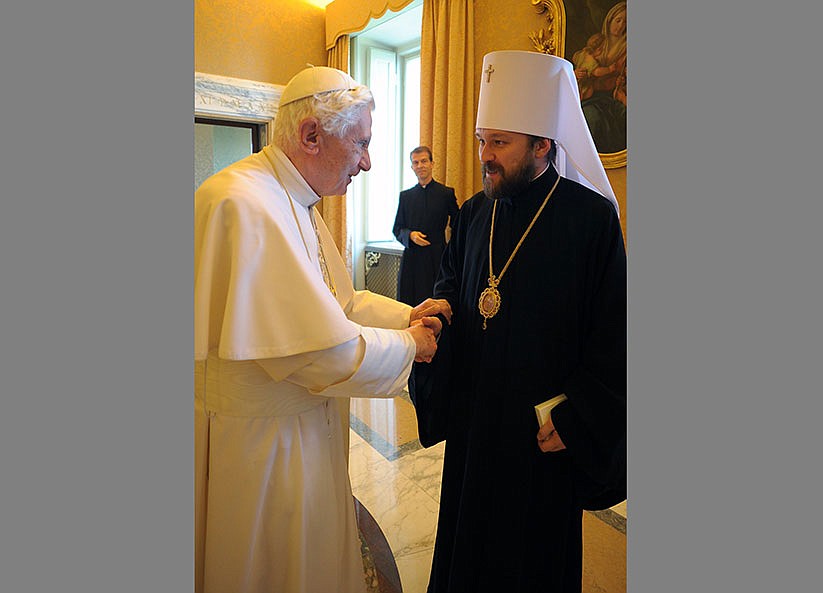
Pope Benedict XVI was a notable contributor to the ecumenical scene from the beginning of the Catholic Church’s dramatic entry into the Ecumenical Movement at the time of the Second Vatican Council. As one of the periti, or consultants, at the Council, then-Father Joseph Ratzinger's subsequent writings and speeches reveal his involvement with several of the Council’s documents including Lumen Gentium (Constitution on the Church), Unitatis Redintegratio (Decree on Ecumenism) and Dei Verbum (On Divine Revelation).
In differing ways and degrees, he carefully balanced both the ecclesiality of Christian communities separated from the Catholic Church and concerns over what they lack due to this separation, all whilst acknowledging how such separation affects the Catholic Church, itself, in expressing its catholicity in its fullness. He also demonstrated how close attention to the Word of God can draw Christians, of different kinds, closer together.
As Prefect of the Congregation for the Doctrine of the Faith throughout the 1980s and ‘90s, then-Cardinal Joseph Ratzinger was responsible for the congregation's responses to the ecumenical agreements of the Anglican Roman Catholic International Commission (ARCIC) on a range of doctrinal, ecclesial and moral issues that were seen as obstacles to restoring sacramental communion between the Catholic Church and the Anglican Communion – including agreements on Eucharistic doctrine, the ministerial priesthood, the Blessed Virgin Mary, authority in the Church and moral issues. The CDF’s responses affirmed what had truly been achieved in the dialogue but did not flinch from questioning ambiguity or lack of clarity. They also foresaw fresh difficulties arising from a lack of a proper ecclesiology in the Anglican Communion, the unilateral decision to ordain women to the presbyterate (and, later, to the episcopate itself), as well as fresh disagreement within the Anglican Communion and with the Catholic Church on a host of moral issues having to do with the beginning and end of life, marriage and divorce, sexuality and other matters.
[[In-content Ad]]
The landmark, carefully researched agreement on the nature and application of the doctrine of Justification by Faith with the Lutheran World Federation took place under Pope Benedict XVI's watch. Here, both sides acknowledged their common faith in this keystone doctrine, whilst recognizing the differences in language and emphases which continue in each tradition. In Pope Benedict’s little book Paul of Tarsus, originally presented as addresses during his Wednesday General Audiences in 2006, he uses Martin Luther’s insights creatively whilst setting out a fully Catholic view of the relation between Faith and Love.
Those orthodox Anglicans who found themselves distressed by the theologically and morally revisionist attitudes beginning to prevail in their provinces, found a ready and sympathetic ear in Cardinal Ratzinger, who sent them a message of solidarity at one of their first gatherings in Plano, Texas. It was this sympathy with their plight which led him to establish a commission, with two Anglican bishops as full members, to consider how Anglicans desiring full communion with the See of Peter could be accommodated. The commission offered some very far reaching recommendations, only some of which were found acceptable to the whole Roman Curia. The resulting Apostolic Constitution, Anglicanorum Coetibus, provided for Anglicans to enter into full communion with the Catholic Church through personal ordinariates, whilst keeping their legitimate patrimony of liturgy, music, pastoral method, ways of doing theology and much else intact. It is yet a work in progress as some of its provisions have not been fully implemented, and it needs further development if it is to be witness to what early ecumenists in the Catholic Church saw as a "united but not absorbed" model of future unity.
The constitution is, nevertheless, an important milestone in achieving Pope St. Paul VI’s vision that nothing of the full legitimate patrimony of the Anglican Communion would be lost in the cause of greater unity between Anglicans and Catholics.
The document Dominus Iesus, produced by the CDF under Ratzinger, acknowledges the ecclesial reality of the separated Christian communities, especially of the West whilst noting what prevents them from being fully ‘church’ in the Catholic sense of the term. As Pope Benedict is supposed to have said to an Anglican bishop, “It is never nothing.” This is fully in accord with the teaching of Vatican II which recognises the reality of life and worship in these communities, whilst also noting what, from a Catholic point of view, remains lacking.
As both cardinal and pope, Benedict was especially interested in healing the breach with the Eastern Orthodox and the Ancient Oriental churches, which Vatican II recognized as having a very close relationship with the Catholic Church in terms of ministry, sacramental life and devotion to the Blessed Virgin Mary and the saints. In this connection, his remark that nothing should be required for full communion with the Orthodox – a position rejected in the first Christian Millennium – should be considered by ecumenists in dialogue with different Christian traditions.
Pope Benedict was a committed but principled ecumenist who didn’t believe in a shallow ecumenism but one that was firmly grounded in the Scriptures, the Fathers and the ancient Councils of the Church. Let us pray that such principles will continue to guide the Catholic Church’s ecumenical relations in the years to come.
Msgr. Michael Nazier-Ali is a Roman Catholic priest of the Ordinariate of Our Lady of Walsingham, and former Anglican Church of England bishop of Rochester who participated in the ARCIC dialogues. He is currently the director of the Oxford Centre for Training, Research, Advocacy and Dialogue.
Related Stories
Sunday, January 11, 2026



E-Editions
Events
Pope Benedict XVI was a notable contributor to the ecumenical scene from the beginning of the Catholic Church’s dramatic entry into the Ecumenical Movement at the time of the Second Vatican Council. As one of the periti, or consultants, at the Council, then-Father Joseph Ratzinger's subsequent writings and speeches reveal his involvement with several of the Council’s documents including Lumen Gentium (Constitution on the Church), Unitatis Redintegratio (Decree on Ecumenism) and Dei Verbum (On Divine Revelation).
In differing ways and degrees, he carefully balanced both the ecclesiality of Christian communities separated from the Catholic Church and concerns over what they lack due to this separation, all whilst acknowledging how such separation affects the Catholic Church, itself, in expressing its catholicity in its fullness. He also demonstrated how close attention to the Word of God can draw Christians, of different kinds, closer together.
As Prefect of the Congregation for the Doctrine of the Faith throughout the 1980s and ‘90s, then-Cardinal Joseph Ratzinger was responsible for the congregation's responses to the ecumenical agreements of the Anglican Roman Catholic International Commission (ARCIC) on a range of doctrinal, ecclesial and moral issues that were seen as obstacles to restoring sacramental communion between the Catholic Church and the Anglican Communion – including agreements on Eucharistic doctrine, the ministerial priesthood, the Blessed Virgin Mary, authority in the Church and moral issues. The CDF’s responses affirmed what had truly been achieved in the dialogue but did not flinch from questioning ambiguity or lack of clarity. They also foresaw fresh difficulties arising from a lack of a proper ecclesiology in the Anglican Communion, the unilateral decision to ordain women to the presbyterate (and, later, to the episcopate itself), as well as fresh disagreement within the Anglican Communion and with the Catholic Church on a host of moral issues having to do with the beginning and end of life, marriage and divorce, sexuality and other matters.
[[In-content Ad]]
The landmark, carefully researched agreement on the nature and application of the doctrine of Justification by Faith with the Lutheran World Federation took place under Pope Benedict XVI's watch. Here, both sides acknowledged their common faith in this keystone doctrine, whilst recognizing the differences in language and emphases which continue in each tradition. In Pope Benedict’s little book Paul of Tarsus, originally presented as addresses during his Wednesday General Audiences in 2006, he uses Martin Luther’s insights creatively whilst setting out a fully Catholic view of the relation between Faith and Love.
Those orthodox Anglicans who found themselves distressed by the theologically and morally revisionist attitudes beginning to prevail in their provinces, found a ready and sympathetic ear in Cardinal Ratzinger, who sent them a message of solidarity at one of their first gatherings in Plano, Texas. It was this sympathy with their plight which led him to establish a commission, with two Anglican bishops as full members, to consider how Anglicans desiring full communion with the See of Peter could be accommodated. The commission offered some very far reaching recommendations, only some of which were found acceptable to the whole Roman Curia. The resulting Apostolic Constitution, Anglicanorum Coetibus, provided for Anglicans to enter into full communion with the Catholic Church through personal ordinariates, whilst keeping their legitimate patrimony of liturgy, music, pastoral method, ways of doing theology and much else intact. It is yet a work in progress as some of its provisions have not been fully implemented, and it needs further development if it is to be witness to what early ecumenists in the Catholic Church saw as a "united but not absorbed" model of future unity.
The constitution is, nevertheless, an important milestone in achieving Pope St. Paul VI’s vision that nothing of the full legitimate patrimony of the Anglican Communion would be lost in the cause of greater unity between Anglicans and Catholics.
The document Dominus Iesus, produced by the CDF under Ratzinger, acknowledges the ecclesial reality of the separated Christian communities, especially of the West whilst noting what prevents them from being fully ‘church’ in the Catholic sense of the term. As Pope Benedict is supposed to have said to an Anglican bishop, “It is never nothing.” This is fully in accord with the teaching of Vatican II which recognises the reality of life and worship in these communities, whilst also noting what, from a Catholic point of view, remains lacking.
As both cardinal and pope, Benedict was especially interested in healing the breach with the Eastern Orthodox and the Ancient Oriental churches, which Vatican II recognized as having a very close relationship with the Catholic Church in terms of ministry, sacramental life and devotion to the Blessed Virgin Mary and the saints. In this connection, his remark that nothing should be required for full communion with the Orthodox – a position rejected in the first Christian Millennium – should be considered by ecumenists in dialogue with different Christian traditions.
Pope Benedict was a committed but principled ecumenist who didn’t believe in a shallow ecumenism but one that was firmly grounded in the Scriptures, the Fathers and the ancient Councils of the Church. Let us pray that such principles will continue to guide the Catholic Church’s ecumenical relations in the years to come.
Msgr. Michael Nazier-Ali is a Roman Catholic priest of the Ordinariate of Our Lady of Walsingham, and former Anglican Church of England bishop of Rochester who participated in the ARCIC dialogues. He is currently the director of the Oxford Centre for Training, Research, Advocacy and Dialogue.