


Faith leaders recognized as having vital role in world's pandemic response
March 17, 2021 at 7:47 p.m.
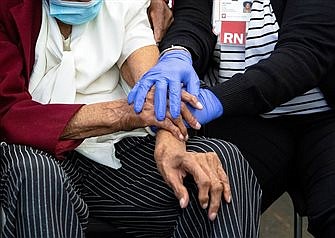
That role is based on trust and accurately sharing information, said Kathryn Kraft, senior research adviser for faith and development at World Vision International.
Kraft told the March 16 webinar, which was coordinated by Georgetown University's Berkley Center for Religion, Peace and World Affairs, that faith leaders are essential players in the campaign to end the pandemic.
She described the findings of a World Vision report that identified faith leaders as being as important as health care workers in providing information and modeling appropriate behavior in the pandemic response.
"As trusted community members with vital social, access and spiritual capital, faith leaders can exercise considerable positive influence in many communities during the current crisis," said the report, titled "Faith in Action: Power of faith leaders to fight a pandemic."
Like earlier efforts in response to HIV and AIDS, Ebola and Zika, faith leaders are on the front line of responding to COVID-19, Kraft said. In addition, she explained, because of their importance to local communities, faith leaders can help their congregations navigate through the massive amount of information – and disinformation – surrounding the pandemic.
In February 2020, prior to declaring a pandemic March 11, 2020, the World Health Organization warned that a "massive infodemic" stemming from the spread of false statements posed a danger to an effective coronavirus response.
In contrast, Kraft added, the overwhelming amount of fact-based information on the coronavirus has led people to become so "paralyzed" that they think that no action in response to COVID-19 is the best course, leading to reduced adherence to safety protocols and to greater doubts about the effectiveness of the vaccines.
Faith leaders can be "very meaningful" in modeling appropriate behavior themselves, including receiving one of the vaccines, Kraft explained. Such action "helps people think through decisions for themselves," she said.
The webinar was the most recent in a series developed by the center to bring professionals together to discuss how to improve the national and international response to the pandemic.
Katherine Marshall, executive director of the center's World Faiths Development Dialogue and the event's moderator, said the pandemic has exposed the inequalities between rich nations and those with high levels of poverty.
She acknowledged how care for people who have become seriously ill from COVID-19 varies greatly around the world and even in the United States, where poor communities and people of color have experienced higher death rates from the illness.
Marshall urged the rollout of the vaccine be based on equity so all people who are eligible to receive a vaccine can do so, that the logistics of distribution be leveled and that messaging be developed for people of all backgrounds so they understand the importance of being vaccinated.
Olivia Wilkinson, director of research at the Washington-based Joint Leaning Initiative on Faith and Local Communities, posed a series of questions for health care professionals and religious leaders alike to consider as they address questions surrounding vaccine distribution.
The questions are included in a document the initiative developed to guide health care workers, nongovernmental agency workers and religious in forming their response to the pandemic.
Topics addressed include religious concerns about receiving the vaccine, identifying key faith leaders, building networks, establishing common ground and coordination of the pandemic response across the broader community.
Wilkinson, who studies secular and religious influences in humanitarian action in response to global concerns, also said women can play an important role in the pandemic fight because they are the caregivers in the home and often are the most active participants in religious congregations.
[[In-content Ad]]
As for women religious leaders, Kraft said the World Vision report indicated that they often are more acutely tuned in to people's psychosocial needs, allowing them to more readily listen, talk and pray with people – all key elements to building trust in accepting the vaccine.
Any efforts to address misinformation circulating in local communities that the vaccines are unsafe because of their rapid development are key to realizing the eventual end of the pandemic, explained Andrea Kaufmann, senior adviser for faith and external engagement at World Vision International and the report's co-author.
Government health officials and nongovernment organizations can overcome such obstacles by working with faith leaders, Kaufmann said.
"We know that faith leaders need to be involved at all levels," she said.
Presenter Deepa Risal Pokharel, communication for development specialist at UNICEF, agreed. She said the organization is working with faith leaders and local stakeholders and influencers to understand what is driving hesitancy in accepting the vaccine in some communities globally.
"Is it fear (of the vaccine) or are services too far away?" Pokharel asked.
Pokharel also commended religious leaders for recognizing the shortcomings in health care and the vaccine rollout and their response. She urged professionals in other sectors responding to the pandemic to follow their lead.
The full World Vision report is online at bit.ly/3ts6vhc.
Follow Sadowski on Twitter: @DennisSadowski
Related Stories
Wednesday, December 31, 2025
E-Editions
Events
That role is based on trust and accurately sharing information, said Kathryn Kraft, senior research adviser for faith and development at World Vision International.
Kraft told the March 16 webinar, which was coordinated by Georgetown University's Berkley Center for Religion, Peace and World Affairs, that faith leaders are essential players in the campaign to end the pandemic.
She described the findings of a World Vision report that identified faith leaders as being as important as health care workers in providing information and modeling appropriate behavior in the pandemic response.
"As trusted community members with vital social, access and spiritual capital, faith leaders can exercise considerable positive influence in many communities during the current crisis," said the report, titled "Faith in Action: Power of faith leaders to fight a pandemic."
Like earlier efforts in response to HIV and AIDS, Ebola and Zika, faith leaders are on the front line of responding to COVID-19, Kraft said. In addition, she explained, because of their importance to local communities, faith leaders can help their congregations navigate through the massive amount of information – and disinformation – surrounding the pandemic.
In February 2020, prior to declaring a pandemic March 11, 2020, the World Health Organization warned that a "massive infodemic" stemming from the spread of false statements posed a danger to an effective coronavirus response.
In contrast, Kraft added, the overwhelming amount of fact-based information on the coronavirus has led people to become so "paralyzed" that they think that no action in response to COVID-19 is the best course, leading to reduced adherence to safety protocols and to greater doubts about the effectiveness of the vaccines.
Faith leaders can be "very meaningful" in modeling appropriate behavior themselves, including receiving one of the vaccines, Kraft explained. Such action "helps people think through decisions for themselves," she said.
The webinar was the most recent in a series developed by the center to bring professionals together to discuss how to improve the national and international response to the pandemic.
Katherine Marshall, executive director of the center's World Faiths Development Dialogue and the event's moderator, said the pandemic has exposed the inequalities between rich nations and those with high levels of poverty.
She acknowledged how care for people who have become seriously ill from COVID-19 varies greatly around the world and even in the United States, where poor communities and people of color have experienced higher death rates from the illness.
Marshall urged the rollout of the vaccine be based on equity so all people who are eligible to receive a vaccine can do so, that the logistics of distribution be leveled and that messaging be developed for people of all backgrounds so they understand the importance of being vaccinated.
Olivia Wilkinson, director of research at the Washington-based Joint Leaning Initiative on Faith and Local Communities, posed a series of questions for health care professionals and religious leaders alike to consider as they address questions surrounding vaccine distribution.
The questions are included in a document the initiative developed to guide health care workers, nongovernmental agency workers and religious in forming their response to the pandemic.
Topics addressed include religious concerns about receiving the vaccine, identifying key faith leaders, building networks, establishing common ground and coordination of the pandemic response across the broader community.
Wilkinson, who studies secular and religious influences in humanitarian action in response to global concerns, also said women can play an important role in the pandemic fight because they are the caregivers in the home and often are the most active participants in religious congregations.
[[In-content Ad]]
As for women religious leaders, Kraft said the World Vision report indicated that they often are more acutely tuned in to people's psychosocial needs, allowing them to more readily listen, talk and pray with people – all key elements to building trust in accepting the vaccine.
Any efforts to address misinformation circulating in local communities that the vaccines are unsafe because of their rapid development are key to realizing the eventual end of the pandemic, explained Andrea Kaufmann, senior adviser for faith and external engagement at World Vision International and the report's co-author.
Government health officials and nongovernment organizations can overcome such obstacles by working with faith leaders, Kaufmann said.
"We know that faith leaders need to be involved at all levels," she said.
Presenter Deepa Risal Pokharel, communication for development specialist at UNICEF, agreed. She said the organization is working with faith leaders and local stakeholders and influencers to understand what is driving hesitancy in accepting the vaccine in some communities globally.
"Is it fear (of the vaccine) or are services too far away?" Pokharel asked.
Pokharel also commended religious leaders for recognizing the shortcomings in health care and the vaccine rollout and their response. She urged professionals in other sectors responding to the pandemic to follow their lead.
The full World Vision report is online at bit.ly/3ts6vhc.
Follow Sadowski on Twitter: @DennisSadowski