


Workshop aids pastoral care workers in ministering to the suffering
July 29, 2019 at 12:37 p.m.
By David Kilby | Correspondent
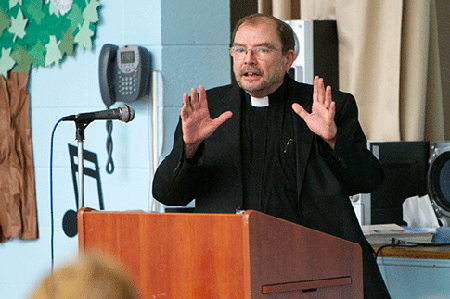
Pastoral care workers and volunteers were empowered at the eighth annual Pastoral Care Workshop in the St. John of God Community Service Campus, Westville, Oct. 18, where they deepened their understanding of their “Journey with the Suffering.”
Sponsored by the nonsectarian Samaritan Healthcare and Hospice and presented by Via Lucis, the Samaritan ministry for Catholic patients and families in collaboration with the Dioceses of Trenton and Camden, the day featured presentations by La Salle University’s Father Francis Berna and Marge McGinley, pastoral administrator in Sacred Heart Parish, Mount Holly, and a hospital chaplain.
Father Berna is the director of the Master of Arts and Doctor of Theology programs in La Salle University, Philadelphia. He had also developed course curriculum for the Diocese’s Institute for Lay Ecclesial Ministry.
“Caring for the sick is a ministry of the Church and belongs to all members of the Church,” he said in opening.
Throughout his presentation he explained the meaning behind the three rituals pertaining to caring for the sick: the Sacrament of Anointing of the Sick, Holy Communion for the journey and prayers for the dying.
“All three are about reconciliation, which depends upon indentifying, naming and accepting the truth,” he said.
In illness, there is a sense of an absence of control, which often leads to depression and anger. There is also fear about those we leave behind, and a feeling of isolation in hospital settings, he said.
As he explained the wisdom behind the rituals, he quoted Michael Barnes who said in his book, “In the Presence of Mystery,” that “rituals make reality more real.”
“The ritual of burial,” he said, for example, “is designed to help us acknowledge that death is real and help us find our way through it.”
Father Berna also spoke of how the Sacrament of Reconciliation is meant to be not just a chance to reconcile with God, but also with the Church.
He shared that St. Thomas Aquinas said the purpose of Extreme Unction is
“to strength-
en the body and spirit for passing into glory.”
The Anointing of the Sick, on the other hand, is a little different, he explained – saying it is about recovery and is not for the dying. It is not the same as the Last Rites, also known as Viaticum or “food and drink for the journey.”
He commented that parish celebrations of the Anointing of the Sick “can remind us that we’re in this together.”
John Scanlon of Our Lady of Good Counsel Parish, Moorestown, said Father Berna helped him see the communal aspect of the rituals for the dying. “It’s not just for the sick or dying person. It’s for the family and the Church as a whole.”
Following Father Berna’s presentation, McGinley spoke about “Finding Blessing and Hope in Suffering.”
“When you listen to the theology of the Church, you can fall in love with it,” she said. “Then you get to the bedside and things change sometimes. You don’t always have a priest, and that’s just the reality sometimes.”
McGinley emphasized that just being there for the sick and dying is an important ministry. She suggested the prayer of St. Francis and the Hail Mary as good prayers to pray with the dying since they confront death.
McGinley also suggested using music in their ministry, saying, “Music has the power to embed words deep within our minds.”
Serving the dying, she said, is “the greatest gift of ministry,” since one gets to reverence that person’s life. “It’s such a blessing that God would allow me to be a part of that person’s life at that time,” she said.
McGinley also stressed that it’s important to give the sick and dying an opportunity to share rituals, especially rituals they create themselves.
She told a story of a patient who was dying, who asked McGinley to bend down so she can kiss the cross around her neck every time they met. Then she would kiss McGinley’s cheek. On the day this patient was dying, she called for McGinley so she could kiss the cross one last time.
[[In-content Ad]]
Related Stories
Saturday, December 20, 2025



E-Editions
Events
By David Kilby | Correspondent
Pastoral care workers and volunteers were empowered at the eighth annual Pastoral Care Workshop in the St. John of God Community Service Campus, Westville, Oct. 18, where they deepened their understanding of their “Journey with the Suffering.”
Sponsored by the nonsectarian Samaritan Healthcare and Hospice and presented by Via Lucis, the Samaritan ministry for Catholic patients and families in collaboration with the Dioceses of Trenton and Camden, the day featured presentations by La Salle University’s Father Francis Berna and Marge McGinley, pastoral administrator in Sacred Heart Parish, Mount Holly, and a hospital chaplain.
Father Berna is the director of the Master of Arts and Doctor of Theology programs in La Salle University, Philadelphia. He had also developed course curriculum for the Diocese’s Institute for Lay Ecclesial Ministry.
“Caring for the sick is a ministry of the Church and belongs to all members of the Church,” he said in opening.
Throughout his presentation he explained the meaning behind the three rituals pertaining to caring for the sick: the Sacrament of Anointing of the Sick, Holy Communion for the journey and prayers for the dying.
“All three are about reconciliation, which depends upon indentifying, naming and accepting the truth,” he said.
In illness, there is a sense of an absence of control, which often leads to depression and anger. There is also fear about those we leave behind, and a feeling of isolation in hospital settings, he said.
As he explained the wisdom behind the rituals, he quoted Michael Barnes who said in his book, “In the Presence of Mystery,” that “rituals make reality more real.”
“The ritual of burial,” he said, for example, “is designed to help us acknowledge that death is real and help us find our way through it.”
Father Berna also spoke of how the Sacrament of Reconciliation is meant to be not just a chance to reconcile with God, but also with the Church.
He shared that St. Thomas Aquinas said the purpose of Extreme Unction is
“to strength-
en the body and spirit for passing into glory.”
The Anointing of the Sick, on the other hand, is a little different, he explained – saying it is about recovery and is not for the dying. It is not the same as the Last Rites, also known as Viaticum or “food and drink for the journey.”
He commented that parish celebrations of the Anointing of the Sick “can remind us that we’re in this together.”
John Scanlon of Our Lady of Good Counsel Parish, Moorestown, said Father Berna helped him see the communal aspect of the rituals for the dying. “It’s not just for the sick or dying person. It’s for the family and the Church as a whole.”
Following Father Berna’s presentation, McGinley spoke about “Finding Blessing and Hope in Suffering.”
“When you listen to the theology of the Church, you can fall in love with it,” she said. “Then you get to the bedside and things change sometimes. You don’t always have a priest, and that’s just the reality sometimes.”
McGinley emphasized that just being there for the sick and dying is an important ministry. She suggested the prayer of St. Francis and the Hail Mary as good prayers to pray with the dying since they confront death.
McGinley also suggested using music in their ministry, saying, “Music has the power to embed words deep within our minds.”
Serving the dying, she said, is “the greatest gift of ministry,” since one gets to reverence that person’s life. “It’s such a blessing that God would allow me to be a part of that person’s life at that time,” she said.
McGinley also stressed that it’s important to give the sick and dying an opportunity to share rituals, especially rituals they create themselves.
She told a story of a patient who was dying, who asked McGinley to bend down so she can kiss the cross around her neck every time they met. Then she would kiss McGinley’s cheek. On the day this patient was dying, she called for McGinley so she could kiss the cross one last time.
[[In-content Ad]]