


With help from Catholic Charities Disaster Response Program, Little Egg Harbor family finally home
July 29, 2019 at 12:37 p.m.
By Lois Rogers | Correspondent
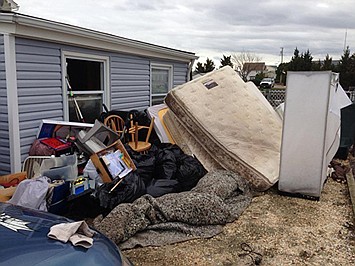
Under bright blue skies, in a neighborhood where many houses are still under reconstruction because of Superstorm Sandy, Marita Axten and her family – six strong – reclaimed their Little Egg Harbor Township home May 20.
With words of thanks and prayers for all those who strove so mightily to bring them to this moment, Axten, sons Joseph, Jason and James and daughter, Jennifer, stood in front of their newly reconstructed home on Navasink Drive, sharing their joy with those who helped them navigate a journey that began with a perilous storm on the night of Oct. 29, 2012.
In a warm and emotional speech before community, friends, officials and representatives from Catholic Charities and other agencies, including the Red Cross that helped in the recovery – Marita recalled that night.
“I don’t think anyone expected what happened,” she said.
Three days later, they were able to “get home to assess the damage,” and realized that damage was severe and that all of their personal belongings were swept away.
Thus began life after Sandy. More than two years of struggle would ensue to reclaim the home that had been the center of family life since 1998. The struggle would endure while she coped with her own serious illnesses and ongoing grief over the loss of her husband from cancer only the year before. And through it all, Marita, who attends St. Theresa Parish, Little Egg Harbor, reflected, that she and her children functioned as a team.
Their journey back home, she said, began with a team. And, as the door to the house opened for the first time to admit extended family, friends, visitors and those who’d helped to make it possible, she spoke lovingly of the fact that it was ending the same way.
During that journey, everyone agreed, Marita led the way, grappling with mountains of paper work, with adjustors, contractors and engineers who had varying views on the state and prospective fate of the battered house. Some said it could be repaired, others certified its need to be demolished. In the end, those recommending demolition won the day.
Through all of this, while shuttling from one temporary home to another – she and the family continued to forge ahead, seeking and applying for any and all programs – including FEMA – that could help them in what had become a quest to go home again.
In an interview several days after the “homecoming” ceremony on the traditional shore front “lawn” of sand colored pebbles, she would say that along the way, she prayed without ceasing.
And perhaps those prayers finally smoothed the path to the Catholic Charities Disaster Relief Program based in the busy Visitation Relief Center, Brick.
There, her persistence, and that of her children, in seeking out programs that could help really paid off. It came in July, 2013, where she was connected by way of FEMA to the Catholic Charities Disaster Relief Program.
Randy Widrick, who would become her case manager, spoke of how Catholic Charities Disaster Relief works closely with FEMA. In Marita’s case, the disaster relief program stepped up to help move her cause along for funding for temporary housing is finite.
Disaster case management, such as Widrick was able to offer, is available to anyone impacted by Sandy, regardless of the amount of funds or assistance that may have already been received regardless of prior enrollment with FEMA.
Catholic Charities, Diocese of Trenton, was named by the Christie administration as the managing agency for the statewide delivery of these services.
Widrick and Axten noted that the turningpoint in her case came on July 22, 2013.
“I was able to meet with her and her family to do the intake, gather information, go over the financial goals” that would get her back in her house. “We needed to go over her present situation, get information about the pre-disaster home, get an idea of how to help,” he said. “Unfortunately, this took a lot longer than anyone had hoped. But her perseverance, the way she stayed with the plan with the help of her children – her true supporters –” never wavered, said Widrick.
Marita, her children and Widrick worked well together and though the process took longer than anyone of them hoped, after months of frustration, it did begin to move. Widrick shared his insights on everything from the mortgage to the complex permitting process and it helped greatly, Marita said.
In an interview, Widrick, Maria. S. Nikolatos, the disaster relief program director, and Arnold Valentin Jr., assistant program director, spoke about the challenges Marita faced and her determination in moving forward.
With Axten’s own health issues and contractor and permitting delays complicating the situation, Nikolatos said it was a very difficult road for a family with no experience to take. Dealing with emotional upheaval, and being hit from every direction,” it was hard, she declared.
Still, when that key turned in the lock on Navasink Drive, it was clear it had all been worth it, they agreed.
“She’s a survivor on so many different levels,” Nikolatos said of Marita Axten. Because of her faith and strength, she made it.”
[[In-content Ad]]
Related Stories
Sunday, December 21, 2025






E-Editions

Events
By Lois Rogers | Correspondent
Under bright blue skies, in a neighborhood where many houses are still under reconstruction because of Superstorm Sandy, Marita Axten and her family – six strong – reclaimed their Little Egg Harbor Township home May 20.
With words of thanks and prayers for all those who strove so mightily to bring them to this moment, Axten, sons Joseph, Jason and James and daughter, Jennifer, stood in front of their newly reconstructed home on Navasink Drive, sharing their joy with those who helped them navigate a journey that began with a perilous storm on the night of Oct. 29, 2012.
In a warm and emotional speech before community, friends, officials and representatives from Catholic Charities and other agencies, including the Red Cross that helped in the recovery – Marita recalled that night.
“I don’t think anyone expected what happened,” she said.
Three days later, they were able to “get home to assess the damage,” and realized that damage was severe and that all of their personal belongings were swept away.
Thus began life after Sandy. More than two years of struggle would ensue to reclaim the home that had been the center of family life since 1998. The struggle would endure while she coped with her own serious illnesses and ongoing grief over the loss of her husband from cancer only the year before. And through it all, Marita, who attends St. Theresa Parish, Little Egg Harbor, reflected, that she and her children functioned as a team.
Their journey back home, she said, began with a team. And, as the door to the house opened for the first time to admit extended family, friends, visitors and those who’d helped to make it possible, she spoke lovingly of the fact that it was ending the same way.
During that journey, everyone agreed, Marita led the way, grappling with mountains of paper work, with adjustors, contractors and engineers who had varying views on the state and prospective fate of the battered house. Some said it could be repaired, others certified its need to be demolished. In the end, those recommending demolition won the day.
Through all of this, while shuttling from one temporary home to another – she and the family continued to forge ahead, seeking and applying for any and all programs – including FEMA – that could help them in what had become a quest to go home again.
In an interview several days after the “homecoming” ceremony on the traditional shore front “lawn” of sand colored pebbles, she would say that along the way, she prayed without ceasing.
And perhaps those prayers finally smoothed the path to the Catholic Charities Disaster Relief Program based in the busy Visitation Relief Center, Brick.
There, her persistence, and that of her children, in seeking out programs that could help really paid off. It came in July, 2013, where she was connected by way of FEMA to the Catholic Charities Disaster Relief Program.
Randy Widrick, who would become her case manager, spoke of how Catholic Charities Disaster Relief works closely with FEMA. In Marita’s case, the disaster relief program stepped up to help move her cause along for funding for temporary housing is finite.
Disaster case management, such as Widrick was able to offer, is available to anyone impacted by Sandy, regardless of the amount of funds or assistance that may have already been received regardless of prior enrollment with FEMA.
Catholic Charities, Diocese of Trenton, was named by the Christie administration as the managing agency for the statewide delivery of these services.
Widrick and Axten noted that the turningpoint in her case came on July 22, 2013.
“I was able to meet with her and her family to do the intake, gather information, go over the financial goals” that would get her back in her house. “We needed to go over her present situation, get information about the pre-disaster home, get an idea of how to help,” he said. “Unfortunately, this took a lot longer than anyone had hoped. But her perseverance, the way she stayed with the plan with the help of her children – her true supporters –” never wavered, said Widrick.
Marita, her children and Widrick worked well together and though the process took longer than anyone of them hoped, after months of frustration, it did begin to move. Widrick shared his insights on everything from the mortgage to the complex permitting process and it helped greatly, Marita said.
In an interview, Widrick, Maria. S. Nikolatos, the disaster relief program director, and Arnold Valentin Jr., assistant program director, spoke about the challenges Marita faced and her determination in moving forward.
With Axten’s own health issues and contractor and permitting delays complicating the situation, Nikolatos said it was a very difficult road for a family with no experience to take. Dealing with emotional upheaval, and being hit from every direction,” it was hard, she declared.
Still, when that key turned in the lock on Navasink Drive, it was clear it had all been worth it, they agreed.
“She’s a survivor on so many different levels,” Nikolatos said of Marita Axten. Because of her faith and strength, she made it.”
[[In-content Ad]]