


Will we recognize the 'Francis Effect' when we see it
July 29, 2019 at 12:37 p.m.
Everyone loves a catch phrase, most especially the media and their second cousin, the punditry.
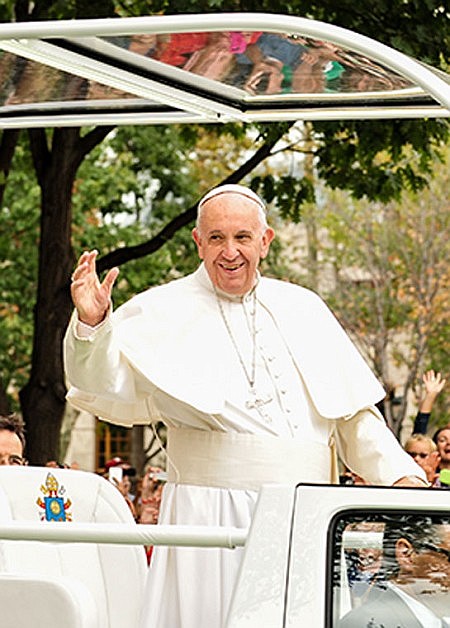
And so the phrase the “Francis Effect,” coined early in Pope Francis’ papacy, has grown in popularity until it has reached its recent crescendo – uttered an unknowable number of times by the legions covering and commenting on his recent apostolic visit to the United States. It is probable that a question about the “Francis Effect” came up in every media interview of every Church leader during these past weeks.
Those who have pondered the existence and impact of the so-called “Francis Effect” have likely found a general lack of empirical and measurable evidence. If we were to look strictly at Mass attendance, the jury is out. Few, if any parishes or dioceses have seen conclusive signs that people are returning to Mass in droves. However, much of this feedback, particularly in relation to a more recent time period, is anecdotal.
However, anecdotes of people returning to Mass are also out there. Many of us know a person or family who has started to go to Mass again, though these experiences haven’t yet reached statistical significance. Some of these anecdotes have taken on a higher profile, such as CNN reporter Carol Costello, who, during her coverage of the papal visit, fought back tears as she admitted that she had been a lapsed Catholic and returned to the Church because of her hope that Pope Francis would bring about change.
Future research may reveal that in any given parish, the number of returning Catholics may be small. But taken in their entirety – across the Church in the United States – these people may represent a tectonic phenomenon, a building season of sorts, to borrow a phrase from the sports world. The influx of new participating Catholics can bring blessings and gifts to the Church that we cannot begin to fathom today.
Still, one might wonder, must the “Francis Effect” begin and end with Mass attendance? While we recognize that the celebration of the Eucharist is the source and summit of our faith, giving us the sustenance we need to go out and live the Gospel, we also are aware of today’s cultural realities that find people entering or re-entering the Church through less traditional portals. Acts of social service and outreach, support groups, Catholic education, Bible study and prayer groups are but a few examples of the many ways that lapsed Catholics or seekers dip their toes in the water of the Catholic faith.
Few among us who witnessed the powerful and inspiring visit of Pope Francis would question that it has had a tremendous impact on the entire country – among Catholics and non-Catholics alike. In both word and deed the Holy Father challenged us to serve the kingdom of God. He asked us, straight up: “What will you now do?” and our responses might take any number of forms – all legitimate examples of the “Francis Effect.”
But will we recognize this “effect” when we see it? If we are strictly looking for the big changes, we may fail to see the less dramatic, but no less powerful movements in the Church. It is not hard to imagine, for instance, that there are men and women who heard the Pope’s call and are now discerning a life in ministry. Because of the way that the Pope has stirred so many people, teens and young adults may feel a stronger affinity with their Catholic faith – it’s not just okay to be Catholic, it’s special and important.
Social service groups, like the St. Vincent de Paul Society or Catholic Charities, may see growth in their membership, participation and support because the Holy Father has lifted the plight of the poor before the entire country. We might expect, as a result of the Holy Father’s challenge to the faithful, to see a more robust commitment toward our families – treating one another with greater respect and patience, showing our love more readily and backing one another up when it is needed.
Can we possibly know how many people who, after being moved by Pope Francis will embrace a deeper prayer life, vowing to set time aside each day to spend with the Lord? Will more Catholics move the dial on their faith lives, extending Sunday Mass attendance to daily Mass, joining a Scripture study group or going on an occasional retreat?
Regardless of where the “Francis Effect” may be found, the interest in it reveals several realities that were less clear until now – we truly yearn to be closer to God and to share his love with others, just as we aspire to see a revitalization of our beloved Church. The “Francis Effect” already exists in so many hearts; it’s only a matter of time before its full and measurable impact is seen.
[[In-content Ad]]Related Stories
Friday, December 19, 2025



E-Editions
Events
Everyone loves a catch phrase, most especially the media and their second cousin, the punditry.
And so the phrase the “Francis Effect,” coined early in Pope Francis’ papacy, has grown in popularity until it has reached its recent crescendo – uttered an unknowable number of times by the legions covering and commenting on his recent apostolic visit to the United States. It is probable that a question about the “Francis Effect” came up in every media interview of every Church leader during these past weeks.
Those who have pondered the existence and impact of the so-called “Francis Effect” have likely found a general lack of empirical and measurable evidence. If we were to look strictly at Mass attendance, the jury is out. Few, if any parishes or dioceses have seen conclusive signs that people are returning to Mass in droves. However, much of this feedback, particularly in relation to a more recent time period, is anecdotal.
However, anecdotes of people returning to Mass are also out there. Many of us know a person or family who has started to go to Mass again, though these experiences haven’t yet reached statistical significance. Some of these anecdotes have taken on a higher profile, such as CNN reporter Carol Costello, who, during her coverage of the papal visit, fought back tears as she admitted that she had been a lapsed Catholic and returned to the Church because of her hope that Pope Francis would bring about change.
Future research may reveal that in any given parish, the number of returning Catholics may be small. But taken in their entirety – across the Church in the United States – these people may represent a tectonic phenomenon, a building season of sorts, to borrow a phrase from the sports world. The influx of new participating Catholics can bring blessings and gifts to the Church that we cannot begin to fathom today.
Still, one might wonder, must the “Francis Effect” begin and end with Mass attendance? While we recognize that the celebration of the Eucharist is the source and summit of our faith, giving us the sustenance we need to go out and live the Gospel, we also are aware of today’s cultural realities that find people entering or re-entering the Church through less traditional portals. Acts of social service and outreach, support groups, Catholic education, Bible study and prayer groups are but a few examples of the many ways that lapsed Catholics or seekers dip their toes in the water of the Catholic faith.
Few among us who witnessed the powerful and inspiring visit of Pope Francis would question that it has had a tremendous impact on the entire country – among Catholics and non-Catholics alike. In both word and deed the Holy Father challenged us to serve the kingdom of God. He asked us, straight up: “What will you now do?” and our responses might take any number of forms – all legitimate examples of the “Francis Effect.”
But will we recognize this “effect” when we see it? If we are strictly looking for the big changes, we may fail to see the less dramatic, but no less powerful movements in the Church. It is not hard to imagine, for instance, that there are men and women who heard the Pope’s call and are now discerning a life in ministry. Because of the way that the Pope has stirred so many people, teens and young adults may feel a stronger affinity with their Catholic faith – it’s not just okay to be Catholic, it’s special and important.
Social service groups, like the St. Vincent de Paul Society or Catholic Charities, may see growth in their membership, participation and support because the Holy Father has lifted the plight of the poor before the entire country. We might expect, as a result of the Holy Father’s challenge to the faithful, to see a more robust commitment toward our families – treating one another with greater respect and patience, showing our love more readily and backing one another up when it is needed.
Can we possibly know how many people who, after being moved by Pope Francis will embrace a deeper prayer life, vowing to set time aside each day to spend with the Lord? Will more Catholics move the dial on their faith lives, extending Sunday Mass attendance to daily Mass, joining a Scripture study group or going on an occasional retreat?
Regardless of where the “Francis Effect” may be found, the interest in it reveals several realities that were less clear until now – we truly yearn to be closer to God and to share his love with others, just as we aspire to see a revitalization of our beloved Church. The “Francis Effect” already exists in so many hearts; it’s only a matter of time before its full and measurable impact is seen.
[[In-content Ad]]