


What is our responsibility to the hungry in a land of bounty?
July 29, 2019 at 12:37 p.m.
By Liz Quirin and Tom Sheridan | Catholic News Service
This edition of Viewpoints looks at the question: What is our responsibility to the hungry in a land of bounty? Liz Quirin, editor of The Messenger, newspaper of the Diocese of Belleville, Ill., says that at harvest time we must recognize that we all bear responsibility, in some way, for every other person, especially those who are hungry. Tom Sheridan, former editor of the Catholic New World, newspaper of the Archdiocese of Chicago, and a deacon ordained for the Diocese of Joliet, Ill., says that too many people are hungry in a land that likes to boast of its bounty.
Harvest time calls us all to be responsible for the hungry
By Liz Quirin
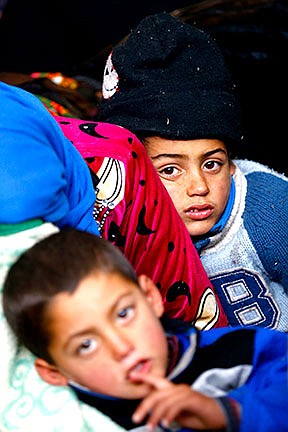
Where does food come from? The grocery store, of course. Many children who live in urban settings don't have the faintest idea where food comes from. In some countries, the food that keeps people alive comes from convoys of trucks with "USAID" written on the bags.
In war-torn countries, many people would be so grateful to see one of those convoys. In fact, just recently convoys carrying food and supplies to people starving in the Aleppo region of Syria were destroyed, leaving the starving people without recourse, without hope.
Growing up as the child of farmers who had left the farm for the urban centers with the hope of better jobs in an era when crop prices were low and nothing could be counted on, we always had a huge garden.
I was intrigued by the process of preparing the soil, planting the seeds and then, somewhat miraculously it seemed, plants would grow, maturing into sweet corn, broccoli, beans -- actually any and all vegetables.
I thought every family had fruit trees growing in their yards and picking corn for dinner was the way of the world. Obviously, it's not.
Having traveled to Guatemala and seeing "hillside farming" taken to a new level, and to Malawi with Catholic Relief Services to watch the farmers use creative ways to irrigate their fields, I have learned farming is still neither easy, nor is a crop promised at the end of the season.
In countries where poverty rules and drought plays havoc with whatever crop is planted, the stakes are high. It's more than feast or famine; it's live or die.
If we bring the discussion closer to home, we see farmers who harvest some of their fresh vegetables to share with local food pantries. If they have food on their tables, they want to make sure others, perhaps less fortunate, can share in the bounty of the land.
Some also invite "gleaners" to come into the fields to harvest the vegetables that machinery may have missed to take the food to pantries where clients can taste the sweetness of freshly picked corn or what a "vine-ripened" tomato really tastes like.
I live in a small Midwestern rural diocese that knows the important role farmers play in supplying food to their neighbors down the street or to our global neighbors around the world. They might take produce to a farmers market or local grocery chain or send it down river on barges that will travel thousands of miles to market.
Each spring we gather at a local farm to ask God's blessing on the people and the land, and each fall we again go to the farm to thank God for the blessing of the harvest. Seeing the farmers gather with their families in thanksgiving at this time of year paints a vivid portrait of faith in action.
Many also bring food to be shared through local pantries with others less fortunate, again pointing to a faith that demands a response to the hungry, the thirsty, those less fortunate.
While farming is a business, many men and women farm because of their love of the land, of the animals they care for, of the joy it brings to be part of the changing seasons and knowing the contributions they make.
But it's never easy, relying on the weather or the ebb and flow of a market that seems to register more downs than ups.
And still they rise in the early spring mornings to plant the seeds, and walk the fields during the summer heat as they prepare to harvest their crops and make a difference in the lives of hungry people here or on the other side of the world where people desperately wait for that harvest.
"There is an appointed time for everything, and a time for every affair under the heavens," "Ecclesiastes 3:1 says. This is the time not only for a farmer to harvest but also for all of us who share in that harvest to recognize we all bear responsibility, in some way, for every other person, especially those who are hungry.
Comments are welcome. Contact Liz Quirin at [email protected].
America's harvest a reminder to heal the land
By Tom Sheridan
Harvest in America: iconic amber waves of grain, orange pumpkins, sweet yellow corn, tables groaning under the weight of farm-fresh victuals. But there are fractures in those homey images.
Many of us -- too many, in fact -- are hungry in a land that likes to boast of its bounty. Moreover, we fail to recognize that the land itself -- a gift from God -- must be nourished and protected.
Harvest's bounty was in glory during a late-summer drive through America's heartland. It was a journey with horizons of tall corn and ripening, verdant soybeans.
The sweet corn was already harvested, the remainder drying brown in the dazzling sun, destined to become seed, feed, plastics, even fuel for our cars and trucks. We shouldn't forget that the harvest is for more than food.
The connection between our food, our life and our land should be obvious. Sadly, it's not always so.
Today, we're farther from the land than ever before in human society -- emotionally and physically. A hundred years ago, most Americans lived in rural settings or small towns. Everyone knew farms. For generations before that, our food came from just outside our doors.
Today, most farms are vast, big-business operations, and with our wide-aisled and brightly lit supermarkets -- with groceries and meat packaged neatly in plastic, water in convenient bottles -- it's easy to see why our farms are overlooked.
Yet, we mustn't forget the land. Old joke: Invest in real estate; God isn't making any more. In fact, despite America's wide-open spaces, less and less land is available for agriculture. Americans need food, but they also need housing.
Even though today's technology produces more food with fewer acres, we're going to need even more to feed earth's burgeoning population.
Less space, more people and more need puts renewed focus on how we treat the land. Increasing global temperatures and changing growing patterns only add to the burden.
"Harvest" is recurring biblical imagery. Our faith frequently connects the harvest of souls and the harvest of food.
Perhaps that's why a Pope Francis video in September can make that connection. He asked "that each may contribute to the common good and to the building of a society that places the human person at the center."
The pope has often lamented that we live in a "throwaway" culture, one in which people as well as things are disposable. We waste food, consumer goods and too often we waste people considered no longer useful, such as the old and the ill and the homeless.
And yes, because of our wasteful treatment of our environment, we also consider the land disposable.
But it's not.
Pope Francis' trepidations about our wounded environment and the deleterious effects of climate change have brought criticism from those less concerned about climate and pollution and less aware of the bond between the land and humanity.
The harvest personalizes that relationship.
The pope's 2015 encyclical "Laudato Si'" was part of his efforts to renew the environment. In September, marking the World Day of Prayer for the Care of Creation, he called environmental concern a "work of mercy" and said destroying earthly resources is a "sin."
And, it is the poor who bear the brunt. "Climate change is also contributing to the heart-rending refugee crisis," he said. "The world's poor, though least responsible for climate change, are most vulnerable and already suffering its impact."
A healthy harvest is a partner to the efforts of the Catholic Church and others who glean those resources to provide food to the hungry through agencies such as Catholic Charities, Catholic Relief Services and through parish and diocesan food pantries.
Honor the land. It nourishes our bodies. And feeds our souls.
Comments are welcome. Contact Tom Sheridan at [email protected].
[[In-content Ad]]Related Stories
Saturday, December 20, 2025



E-Editions
Events
By Liz Quirin and Tom Sheridan | Catholic News Service
This edition of Viewpoints looks at the question: What is our responsibility to the hungry in a land of bounty? Liz Quirin, editor of The Messenger, newspaper of the Diocese of Belleville, Ill., says that at harvest time we must recognize that we all bear responsibility, in some way, for every other person, especially those who are hungry. Tom Sheridan, former editor of the Catholic New World, newspaper of the Archdiocese of Chicago, and a deacon ordained for the Diocese of Joliet, Ill., says that too many people are hungry in a land that likes to boast of its bounty.
Harvest time calls us all to be responsible for the hungry
By Liz Quirin
Where does food come from? The grocery store, of course. Many children who live in urban settings don't have the faintest idea where food comes from. In some countries, the food that keeps people alive comes from convoys of trucks with "USAID" written on the bags.
In war-torn countries, many people would be so grateful to see one of those convoys. In fact, just recently convoys carrying food and supplies to people starving in the Aleppo region of Syria were destroyed, leaving the starving people without recourse, without hope.
Growing up as the child of farmers who had left the farm for the urban centers with the hope of better jobs in an era when crop prices were low and nothing could be counted on, we always had a huge garden.
I was intrigued by the process of preparing the soil, planting the seeds and then, somewhat miraculously it seemed, plants would grow, maturing into sweet corn, broccoli, beans -- actually any and all vegetables.
I thought every family had fruit trees growing in their yards and picking corn for dinner was the way of the world. Obviously, it's not.
Having traveled to Guatemala and seeing "hillside farming" taken to a new level, and to Malawi with Catholic Relief Services to watch the farmers use creative ways to irrigate their fields, I have learned farming is still neither easy, nor is a crop promised at the end of the season.
In countries where poverty rules and drought plays havoc with whatever crop is planted, the stakes are high. It's more than feast or famine; it's live or die.
If we bring the discussion closer to home, we see farmers who harvest some of their fresh vegetables to share with local food pantries. If they have food on their tables, they want to make sure others, perhaps less fortunate, can share in the bounty of the land.
Some also invite "gleaners" to come into the fields to harvest the vegetables that machinery may have missed to take the food to pantries where clients can taste the sweetness of freshly picked corn or what a "vine-ripened" tomato really tastes like.
I live in a small Midwestern rural diocese that knows the important role farmers play in supplying food to their neighbors down the street or to our global neighbors around the world. They might take produce to a farmers market or local grocery chain or send it down river on barges that will travel thousands of miles to market.
Each spring we gather at a local farm to ask God's blessing on the people and the land, and each fall we again go to the farm to thank God for the blessing of the harvest. Seeing the farmers gather with their families in thanksgiving at this time of year paints a vivid portrait of faith in action.
Many also bring food to be shared through local pantries with others less fortunate, again pointing to a faith that demands a response to the hungry, the thirsty, those less fortunate.
While farming is a business, many men and women farm because of their love of the land, of the animals they care for, of the joy it brings to be part of the changing seasons and knowing the contributions they make.
But it's never easy, relying on the weather or the ebb and flow of a market that seems to register more downs than ups.
And still they rise in the early spring mornings to plant the seeds, and walk the fields during the summer heat as they prepare to harvest their crops and make a difference in the lives of hungry people here or on the other side of the world where people desperately wait for that harvest.
"There is an appointed time for everything, and a time for every affair under the heavens," "Ecclesiastes 3:1 says. This is the time not only for a farmer to harvest but also for all of us who share in that harvest to recognize we all bear responsibility, in some way, for every other person, especially those who are hungry.
Comments are welcome. Contact Liz Quirin at [email protected].
America's harvest a reminder to heal the land
By Tom Sheridan
Harvest in America: iconic amber waves of grain, orange pumpkins, sweet yellow corn, tables groaning under the weight of farm-fresh victuals. But there are fractures in those homey images.
Many of us -- too many, in fact -- are hungry in a land that likes to boast of its bounty. Moreover, we fail to recognize that the land itself -- a gift from God -- must be nourished and protected.
Harvest's bounty was in glory during a late-summer drive through America's heartland. It was a journey with horizons of tall corn and ripening, verdant soybeans.
The sweet corn was already harvested, the remainder drying brown in the dazzling sun, destined to become seed, feed, plastics, even fuel for our cars and trucks. We shouldn't forget that the harvest is for more than food.
The connection between our food, our life and our land should be obvious. Sadly, it's not always so.
Today, we're farther from the land than ever before in human society -- emotionally and physically. A hundred years ago, most Americans lived in rural settings or small towns. Everyone knew farms. For generations before that, our food came from just outside our doors.
Today, most farms are vast, big-business operations, and with our wide-aisled and brightly lit supermarkets -- with groceries and meat packaged neatly in plastic, water in convenient bottles -- it's easy to see why our farms are overlooked.
Yet, we mustn't forget the land. Old joke: Invest in real estate; God isn't making any more. In fact, despite America's wide-open spaces, less and less land is available for agriculture. Americans need food, but they also need housing.
Even though today's technology produces more food with fewer acres, we're going to need even more to feed earth's burgeoning population.
Less space, more people and more need puts renewed focus on how we treat the land. Increasing global temperatures and changing growing patterns only add to the burden.
"Harvest" is recurring biblical imagery. Our faith frequently connects the harvest of souls and the harvest of food.
Perhaps that's why a Pope Francis video in September can make that connection. He asked "that each may contribute to the common good and to the building of a society that places the human person at the center."
The pope has often lamented that we live in a "throwaway" culture, one in which people as well as things are disposable. We waste food, consumer goods and too often we waste people considered no longer useful, such as the old and the ill and the homeless.
And yes, because of our wasteful treatment of our environment, we also consider the land disposable.
But it's not.
Pope Francis' trepidations about our wounded environment and the deleterious effects of climate change have brought criticism from those less concerned about climate and pollution and less aware of the bond between the land and humanity.
The harvest personalizes that relationship.
The pope's 2015 encyclical "Laudato Si'" was part of his efforts to renew the environment. In September, marking the World Day of Prayer for the Care of Creation, he called environmental concern a "work of mercy" and said destroying earthly resources is a "sin."
And, it is the poor who bear the brunt. "Climate change is also contributing to the heart-rending refugee crisis," he said. "The world's poor, though least responsible for climate change, are most vulnerable and already suffering its impact."
A healthy harvest is a partner to the efforts of the Catholic Church and others who glean those resources to provide food to the hungry through agencies such as Catholic Charities, Catholic Relief Services and through parish and diocesan food pantries.
Honor the land. It nourishes our bodies. And feeds our souls.
Comments are welcome. Contact Tom Sheridan at [email protected].
[[In-content Ad]]