


We are not alone
July 29, 2019 at 12:37 p.m.
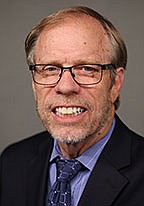
By Greg Erlandson | Catholic News Service
"Are you with the Catholic group meeting at the university?"
My interrogator looked like a beautiful Irish lass, but spoke with a distinctly Quebecois French accent. She was my bartender.
Yes, I said, I was part of a group of several hundred Catholic journalists and communicators from around the world meeting at Laval University in Quebec City.
"I think it is so encouraging," she said, talking about seeing so many people proud of their identity as Catholics.
"Are you Catholic?" I asked, and she nodded. So was her boyfriend. "Are any of your friends Catholic?" I asked. She shook her head no. "So why are you?"
She said that they had been involved with drugs, and their faith had helped them escape its clutches.
It was a brief conversation over a glass of wine, but it left its mark.
The Catholic Press Association of the United States and Canada was holding a joint conference with Signis, a worldwide association of Catholic communicators, filmmakers and broadcasters. We gathered last month in Quebec City. It was in some ways an ironic location.
Quebec is perhaps best known to Americans as that French-speaking outpost in the New World. While we may treat the rest of Canada like an English-speaking extension of the lower 48, Quebec is exotic, foreign and a bit intimidating.
What many of us may have forgotten is that Quebec was at one time a solidly Catholic province, famed for its churches, its devotions, its religious practice. But the same precipitous decline that so devastated the church in Quebec's mother country of France took its toll on Quebec as well.
A recent article in The Economist compared its decline in religious practice to Ireland, except that Quebec's fall from grace took place in the 1960s. Although the cultural markers of Catholicism -- beautiful churches, street names, monuments -- are still found everywhere, the practice of Catholicism is down.
"Marriage (even in the civil sort, let alone church weddings) has become an unusual choice among youngsters," The Economist reported. "A church spokesman estimates Mass attendance in Montreal at 2 to 4 percent of the population. In the province as a whole, just 11 percent say they are regular worshippers."
One small sign of hope as well as contradiction perhaps: "75 percent of the province's people still identify as Catholic."
Catholicism, for both good and ill, had an ironclad lock on Quebec society for centuries. It was part of the Francophone identity. It was a cultural protector against the larger English and Protestant majority.
Yet as seems to have happened throughout much of Europe, this almost ethnic identification with a faith is no substitute for faith. The other cultural threats wane, the seductions of secularism grow more attractive and eventually the churches are filled only with the sound of retreating footsteps.
On the other hand, perhaps Quebec was the perfect place for Catholic communicators and journalists to meet. In the face of such great changes in our media -- the struggles of print, the rise of social media and digital offerings, the expectation that everything is free! -- we need to remind ourselves that our profession, our vocation, our craft has much to contribute.
Throughout Christendom's tattered empire, we are endlessly engaged in the dialogue between faith and culture, faith and science, faith and politics. We report what does not get reported.
We tell the stories of those whose stories would not otherwise be heard. We are not curators in a shabby museum. We are truth-tellers in the public square.
And the people we serve -- like that woman shyly confessing her faith from behind the bar -- are strengthened and affirmed. They see that they are not alone.
Erlandson, director and editor-in-chief of Catholic News Service, can be reached at [email protected].
[[In-content Ad]]Related Stories
Saturday, December 20, 2025




E-Editions
Events
By Greg Erlandson | Catholic News Service
"Are you with the Catholic group meeting at the university?"
My interrogator looked like a beautiful Irish lass, but spoke with a distinctly Quebecois French accent. She was my bartender.
Yes, I said, I was part of a group of several hundred Catholic journalists and communicators from around the world meeting at Laval University in Quebec City.
"I think it is so encouraging," she said, talking about seeing so many people proud of their identity as Catholics.
"Are you Catholic?" I asked, and she nodded. So was her boyfriend. "Are any of your friends Catholic?" I asked. She shook her head no. "So why are you?"
She said that they had been involved with drugs, and their faith had helped them escape its clutches.
It was a brief conversation over a glass of wine, but it left its mark.
The Catholic Press Association of the United States and Canada was holding a joint conference with Signis, a worldwide association of Catholic communicators, filmmakers and broadcasters. We gathered last month in Quebec City. It was in some ways an ironic location.
Quebec is perhaps best known to Americans as that French-speaking outpost in the New World. While we may treat the rest of Canada like an English-speaking extension of the lower 48, Quebec is exotic, foreign and a bit intimidating.
What many of us may have forgotten is that Quebec was at one time a solidly Catholic province, famed for its churches, its devotions, its religious practice. But the same precipitous decline that so devastated the church in Quebec's mother country of France took its toll on Quebec as well.
A recent article in The Economist compared its decline in religious practice to Ireland, except that Quebec's fall from grace took place in the 1960s. Although the cultural markers of Catholicism -- beautiful churches, street names, monuments -- are still found everywhere, the practice of Catholicism is down.
"Marriage (even in the civil sort, let alone church weddings) has become an unusual choice among youngsters," The Economist reported. "A church spokesman estimates Mass attendance in Montreal at 2 to 4 percent of the population. In the province as a whole, just 11 percent say they are regular worshippers."
One small sign of hope as well as contradiction perhaps: "75 percent of the province's people still identify as Catholic."
Catholicism, for both good and ill, had an ironclad lock on Quebec society for centuries. It was part of the Francophone identity. It was a cultural protector against the larger English and Protestant majority.
Yet as seems to have happened throughout much of Europe, this almost ethnic identification with a faith is no substitute for faith. The other cultural threats wane, the seductions of secularism grow more attractive and eventually the churches are filled only with the sound of retreating footsteps.
On the other hand, perhaps Quebec was the perfect place for Catholic communicators and journalists to meet. In the face of such great changes in our media -- the struggles of print, the rise of social media and digital offerings, the expectation that everything is free! -- we need to remind ourselves that our profession, our vocation, our craft has much to contribute.
Throughout Christendom's tattered empire, we are endlessly engaged in the dialogue between faith and culture, faith and science, faith and politics. We report what does not get reported.
We tell the stories of those whose stories would not otherwise be heard. We are not curators in a shabby museum. We are truth-tellers in the public square.
And the people we serve -- like that woman shyly confessing her faith from behind the bar -- are strengthened and affirmed. They see that they are not alone.
Erlandson, director and editor-in-chief of Catholic News Service, can be reached at [email protected].
[[In-content Ad]]