


UPDATED:Diocesan Vincentians hear hopes to lift generations out of poverty through "systemic change"
July 29, 2019 at 12:37 p.m.
By Lois Rogers | Correspondent
The National Council of the U.S. Society of St. Vincent de Paul has embarked on a plan to help lift generations out of poverty through “systemic change.”
To see photo gallery from the Mass, click here.
To see photo gallery from the Meeting, click here.
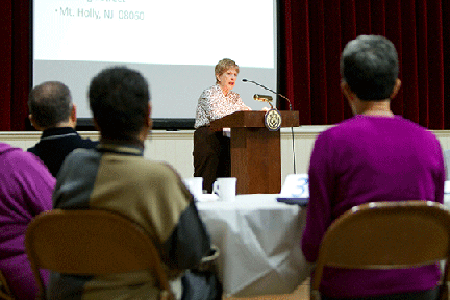
And on Oct. 11, Sheila Gilbert, president of the outreach’s national council, and local St. Vincent de Paul leaders from across the Diocese, gathered in the Casino of Georgian Court University to introduce this concept to some 200 Vincentians from 52 parish conferences in Burlington, Mercer, Monmouth and Ocean Counties.
The program, titled “Walking from Poverty to Hope,” began with Mass celebrated by Bishop David M. O’Connell, C.M., who expressed his joy in being with fellow Vincentians, calling it an “honor and a privilege” to share the morning with them.
In a touching homily, he shared his own personal experiences of “growing up poor” the way, he theorized, that many of the Vincentians gathered in the former indoor arena where the wealthy Gould family exercised their polo ponies, probably had.
“Like many people over the years our age or older, I never knew I was poor,” the Bishop said. He credited his parents and those of the Vincentians present for creating that impression. “Our parents did everything possible to provide for us. They never complained of their sacrifice and they did without for us.”
The Bishop said he regretted never thanking his mother and father the way they strove to foster that illusion. “Christmas gifts ‘like’ what we wanted were always under the tree. Our home was always filled with love and we never realized what we didn’t have.”
“Some folks are not so lucky – they suffer and they know it,” he said.
“Their need for sustenance makes their lives unbearable. … You’ve met them and you know that in a world that says more is good, greed is good, this is very hard.”
He urged them as Vincentians to not fall into the despair that can afflict those who “care and give till they hurt,” but to follow the admonition of St. Vincent de Paul to do what they can to assist the poor and be at peace.
He also asked them to take spiritual nourishment from the ongoing words of Pope Francis encouraging the Church to love and serve the poor.
Gilbert, keynote speaker, and Joseph Williams, president of St. Vincent de Paul’s Trenton Diocesan Council, led the way in laying out the emerging vision of the national council which calls for greater collaboration and partnerships with others who share the mission of St. Vincent de Paul.
Their presentations and those of other St. Vincent de Paul leaders also focused on moving beyond the work of assisting those in direct need to looking at ways to lift generations out of poverty and into sustainable life for good.
Gilbert’s presentation, “End Poverty Through Systemic Change” can be found at http://www.youtube.com/watch?v=wmZ7F3D9Ijo.
In her address to the diocesan Vincentians, Gilbert spoke of the many people and organizations that have contributed vast amounts of money and time to alleviate or eliminate poverty in the United States.
She pointed out that often the members of the Society have been the last line of defense between countless people and disaster.
Gilbert, who spent several days before the conference touring programs around the Diocese – including House in A Box and the Visitation Relief Center, Brick; Selective Seconds Thrift Shop, Belmar; the hugely successful food pantry operated out of the St. Peter Claver Center in Mother of Mercy Parish, Asbury Park – are all hallmarks of Vincentian creativity, dedication and selflessness.
Those endeavors, she said, symbolize the overall efforts of the Trenton Diocesan Council. She called its efforts outstanding and representative of the “most Vincentian” approach in the “ways you relate together, you serve with each other – the way you go out of your way to serve. … You have done all of this in a Vincentian way with a Vincentian heart.”
Given the “tragedy” of Hurricane Sandy, she said, this council symbolizes the ways in which God was able to “bring good out of disaster.” She pointed to the Trenton Diocesan Council as “a model” of what Vincentians can be “when they live out the rule.”
Gilbert said that after contemplation and prayer, she feels the time is right to look at our actions and seek more long-ranging ways to help those suffering from endemic, generational poverty.
To help drive her initiative, Gilbert appointed “goal leaders,” men and women who have already been serving in positions of leadership in the Society, to help make the concept a reality by tying it to the six specific areas of the organization’s strategic plan: spirituality, communication, unity, solidarity, collaboration and development.
In his remarks, Joseph Williams stressed that there are no plans to change the immediate help which he described as “what we do best.” But instead of only a handout, Williams said, there will be an added focus on a hand up by way of remedies, which can include assistance for educational programs that will lead to longterm solutions.
[[In-content Ad]]
Related Stories
Saturday, December 20, 2025




E-Editions
Events
By Lois Rogers | Correspondent
The National Council of the U.S. Society of St. Vincent de Paul has embarked on a plan to help lift generations out of poverty through “systemic change.”
To see photo gallery from the Mass, click here.
To see photo gallery from the Meeting, click here.
And on Oct. 11, Sheila Gilbert, president of the outreach’s national council, and local St. Vincent de Paul leaders from across the Diocese, gathered in the Casino of Georgian Court University to introduce this concept to some 200 Vincentians from 52 parish conferences in Burlington, Mercer, Monmouth and Ocean Counties.
The program, titled “Walking from Poverty to Hope,” began with Mass celebrated by Bishop David M. O’Connell, C.M., who expressed his joy in being with fellow Vincentians, calling it an “honor and a privilege” to share the morning with them.
In a touching homily, he shared his own personal experiences of “growing up poor” the way, he theorized, that many of the Vincentians gathered in the former indoor arena where the wealthy Gould family exercised their polo ponies, probably had.
“Like many people over the years our age or older, I never knew I was poor,” the Bishop said. He credited his parents and those of the Vincentians present for creating that impression. “Our parents did everything possible to provide for us. They never complained of their sacrifice and they did without for us.”
The Bishop said he regretted never thanking his mother and father the way they strove to foster that illusion. “Christmas gifts ‘like’ what we wanted were always under the tree. Our home was always filled with love and we never realized what we didn’t have.”
“Some folks are not so lucky – they suffer and they know it,” he said.
“Their need for sustenance makes their lives unbearable. … You’ve met them and you know that in a world that says more is good, greed is good, this is very hard.”
He urged them as Vincentians to not fall into the despair that can afflict those who “care and give till they hurt,” but to follow the admonition of St. Vincent de Paul to do what they can to assist the poor and be at peace.
He also asked them to take spiritual nourishment from the ongoing words of Pope Francis encouraging the Church to love and serve the poor.
Gilbert, keynote speaker, and Joseph Williams, president of St. Vincent de Paul’s Trenton Diocesan Council, led the way in laying out the emerging vision of the national council which calls for greater collaboration and partnerships with others who share the mission of St. Vincent de Paul.
Their presentations and those of other St. Vincent de Paul leaders also focused on moving beyond the work of assisting those in direct need to looking at ways to lift generations out of poverty and into sustainable life for good.
Gilbert’s presentation, “End Poverty Through Systemic Change” can be found at http://www.youtube.com/watch?v=wmZ7F3D9Ijo.
In her address to the diocesan Vincentians, Gilbert spoke of the many people and organizations that have contributed vast amounts of money and time to alleviate or eliminate poverty in the United States.
She pointed out that often the members of the Society have been the last line of defense between countless people and disaster.
Gilbert, who spent several days before the conference touring programs around the Diocese – including House in A Box and the Visitation Relief Center, Brick; Selective Seconds Thrift Shop, Belmar; the hugely successful food pantry operated out of the St. Peter Claver Center in Mother of Mercy Parish, Asbury Park – are all hallmarks of Vincentian creativity, dedication and selflessness.
Those endeavors, she said, symbolize the overall efforts of the Trenton Diocesan Council. She called its efforts outstanding and representative of the “most Vincentian” approach in the “ways you relate together, you serve with each other – the way you go out of your way to serve. … You have done all of this in a Vincentian way with a Vincentian heart.”
Given the “tragedy” of Hurricane Sandy, she said, this council symbolizes the ways in which God was able to “bring good out of disaster.” She pointed to the Trenton Diocesan Council as “a model” of what Vincentians can be “when they live out the rule.”
Gilbert said that after contemplation and prayer, she feels the time is right to look at our actions and seek more long-ranging ways to help those suffering from endemic, generational poverty.
To help drive her initiative, Gilbert appointed “goal leaders,” men and women who have already been serving in positions of leadership in the Society, to help make the concept a reality by tying it to the six specific areas of the organization’s strategic plan: spirituality, communication, unity, solidarity, collaboration and development.
In his remarks, Joseph Williams stressed that there are no plans to change the immediate help which he described as “what we do best.” But instead of only a handout, Williams said, there will be an added focus on a hand up by way of remedies, which can include assistance for educational programs that will lead to longterm solutions.
[[In-content Ad]]