


The Grace of Faith
July 29, 2019 at 12:37 p.m.
By Mary Morrell | Managing Editor
Since the earliest days of the Church, the responsibility for instructing the first Christian communities fell to the apostles. The letters of Paul to the communities of Corinth and Thessalonica were words of encouragement or correction, as needed, instructing the new Christians on how they should live their faith in Jesus Christ.
Today that responsibility falls to our bishops, who follow in the footsteps of the apostles, and for whom episcopal ordination confers the offices of sanctifying, teaching and governing. To fulfill, in part, the bishop’s duty as a true and authentic teacher of the faith, a bishop will write a pastoral letter, an open letter to the people of his diocese, which provides some instruction in the faith, often in response to circumstances of the times.
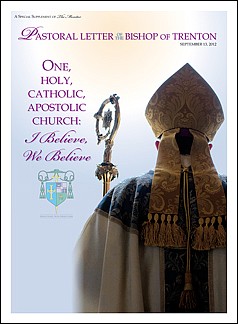
As chief shepherd of the Diocese of Trenton, Bishop David M. O’Connell, C.M., has written his first pastoral letter since becoming the 10th Bishop of Trenton on Dec. 1, 2010. The letter, titled “One, Holy, Catholic, Apostolic Church: I Believe, We Believe,” was written as the start of the Year of Faith proposed by Pope Benedict XVI approaches, and offers the “opportunity for reflection and celebration of our Catholic faith,” writes Bishop O’Connell.
The bishop explained, in an interview with The Monitor, that “the Year of Faith and the whole emphasis on the ‘new evangelization’ in the Church were the real inspiration” for his pastoral letter. The Year of Faith will begin October 11, in conjunction with the 50th anniversary of the opening of the Second Vatican Council, and run through November 24, 2013, which is the Solemnity of Christ the King.
A Look Back
According to the Pastoral Letters of the United States Catholic Bishops, 1984, the first pastoral
letter of the first bishop in the first diocese in the United States was written by John Carroll, Bishop of the Diocese of Baltimore, in 1792. The Diocese of Trenton would be established 98 years later.
Bishop Carroll’s first pastoral letter focused on a number of issues affecting Catholics at the time, including the advantages of a Christian education, the need for vocations, the financial support of the Church in the diocese and attendance at Sunday Mass.
In subsequent years, as bishops sought to lead their flocks toward holiness and a knowledge of their faith, societal issues changed, but pastoral letters always addressed these changing issues with the unchanging truth of Jesus Christ.
The Need for Faith
Bishop O’Connell explained that he focused his pastoral letter on the four marks of the Church – one, holy, catholic and apostolic – because of current challenges facing the Church and her people. “It strikes me, given all that the Catholic Church in our country has faced in the last decade, that ‘faith in the Church’ needed renewed explanation and support at this time,” the bishop said, adding, “The results of our recent survey among disaffected Catholics in the diocese also provided a bit of impetus. I sense that our Catholic people do not understand the nature of our Church and this lack of understanding is the source of a lot of the problems that surface.”
In his letter, the bishop explains that the definitions of faith as offered by St. Thomas Aquinas, St. Augustine and the author of the Letter to the Hebrews are “rooted in a simple fact of human life: faith is not the result of some demonstrable proof of science or reason. At the same time, however, faith is not contrary to human reason or unreasonable. Like reason, faith is a human act that identifies what we believe as true, real and compelling. Like reason, faith and what it presents as true make a claim on human lives, guiding and directing them toward life’s purpose and fulfillment.”
‘In Believing, We Understand’
Bishop O’Connell also stresses in his pastoral that, in addition to personal faith, “God . . . gives the grace of faith to a ‘community of believers.’ . . . The Lord Jesus did not choose only one person to follow him; we know that from the New Testament. Rather, he chose twelve men of different talents, abilities, temperaments and occupations. To these twelve and to the many others he drew into his company like Lazarus, Mary and Martha, Mary Magdalene and the countless people who benefitted from his miracles in the Gospels, he gave the gift and grace of faith, both as individuals and a community.”
In his teaching on the truth that the Catholic Church is one, holy, catholic and apostolic, which is proclaimed in the Profession of Faith, Bishop O’Connell explains each mark of the Church, supported by Scripture and the varied documents of the Church, especially the Catechism of the Catholic Church. The bishop closes each section with four powerful words – “In believing, we understand” – contradicting the often held perception that understanding must precede faith.
In closing the pastoral letter, Bishop O’Connell reminds the faithful, “Our Catholic faith gives us, as human persons, the truest sense of purpose in life as God created us. Our Catholic faith gives us, as human persons, the truest sense of belonging in life as God, Father, Son and Holy Spirit, intended for us; belonging to him and to one another in the one, holy, catholic and apostolic community of believers.”
The bishop then leads readers to reflect on the closing words of the apostolic letter of Pope Benedict XVI, Porta Fidei, which recount the direction of St. Paul to his disciple, Timothy, to “aim at faith.” Pope Benedict writes, “We hear this invitation directed to each of us, that none of us grow lazy in the faith. It is the lifelong companion that makes it possible to perceive, ever anew, the marvels that God works for us.”
In reflecting on the possible fruits of his first pastoral letter, Bishop O’Connell expressed the hope that, through faith, readers would understand “the Catholic Church was founded by the Lord Jesus Christ and it is he whose truth and holiness have sustained it over the centuries. We, as Catholics, have every reason to have faith in our Church.”
[[In-content Ad]]Related Stories
Friday, December 19, 2025




E-Editions
Events
By Mary Morrell | Managing Editor
Since the earliest days of the Church, the responsibility for instructing the first Christian communities fell to the apostles. The letters of Paul to the communities of Corinth and Thessalonica were words of encouragement or correction, as needed, instructing the new Christians on how they should live their faith in Jesus Christ.
Today that responsibility falls to our bishops, who follow in the footsteps of the apostles, and for whom episcopal ordination confers the offices of sanctifying, teaching and governing. To fulfill, in part, the bishop’s duty as a true and authentic teacher of the faith, a bishop will write a pastoral letter, an open letter to the people of his diocese, which provides some instruction in the faith, often in response to circumstances of the times.
As chief shepherd of the Diocese of Trenton, Bishop David M. O’Connell, C.M., has written his first pastoral letter since becoming the 10th Bishop of Trenton on Dec. 1, 2010. The letter, titled “One, Holy, Catholic, Apostolic Church: I Believe, We Believe,” was written as the start of the Year of Faith proposed by Pope Benedict XVI approaches, and offers the “opportunity for reflection and celebration of our Catholic faith,” writes Bishop O’Connell.
The bishop explained, in an interview with The Monitor, that “the Year of Faith and the whole emphasis on the ‘new evangelization’ in the Church were the real inspiration” for his pastoral letter. The Year of Faith will begin October 11, in conjunction with the 50th anniversary of the opening of the Second Vatican Council, and run through November 24, 2013, which is the Solemnity of Christ the King.
A Look Back
According to the Pastoral Letters of the United States Catholic Bishops, 1984, the first pastoral
letter of the first bishop in the first diocese in the United States was written by John Carroll, Bishop of the Diocese of Baltimore, in 1792. The Diocese of Trenton would be established 98 years later.
Bishop Carroll’s first pastoral letter focused on a number of issues affecting Catholics at the time, including the advantages of a Christian education, the need for vocations, the financial support of the Church in the diocese and attendance at Sunday Mass.
In subsequent years, as bishops sought to lead their flocks toward holiness and a knowledge of their faith, societal issues changed, but pastoral letters always addressed these changing issues with the unchanging truth of Jesus Christ.
The Need for Faith
Bishop O’Connell explained that he focused his pastoral letter on the four marks of the Church – one, holy, catholic and apostolic – because of current challenges facing the Church and her people. “It strikes me, given all that the Catholic Church in our country has faced in the last decade, that ‘faith in the Church’ needed renewed explanation and support at this time,” the bishop said, adding, “The results of our recent survey among disaffected Catholics in the diocese also provided a bit of impetus. I sense that our Catholic people do not understand the nature of our Church and this lack of understanding is the source of a lot of the problems that surface.”
In his letter, the bishop explains that the definitions of faith as offered by St. Thomas Aquinas, St. Augustine and the author of the Letter to the Hebrews are “rooted in a simple fact of human life: faith is not the result of some demonstrable proof of science or reason. At the same time, however, faith is not contrary to human reason or unreasonable. Like reason, faith is a human act that identifies what we believe as true, real and compelling. Like reason, faith and what it presents as true make a claim on human lives, guiding and directing them toward life’s purpose and fulfillment.”
‘In Believing, We Understand’
Bishop O’Connell also stresses in his pastoral that, in addition to personal faith, “God . . . gives the grace of faith to a ‘community of believers.’ . . . The Lord Jesus did not choose only one person to follow him; we know that from the New Testament. Rather, he chose twelve men of different talents, abilities, temperaments and occupations. To these twelve and to the many others he drew into his company like Lazarus, Mary and Martha, Mary Magdalene and the countless people who benefitted from his miracles in the Gospels, he gave the gift and grace of faith, both as individuals and a community.”
In his teaching on the truth that the Catholic Church is one, holy, catholic and apostolic, which is proclaimed in the Profession of Faith, Bishop O’Connell explains each mark of the Church, supported by Scripture and the varied documents of the Church, especially the Catechism of the Catholic Church. The bishop closes each section with four powerful words – “In believing, we understand” – contradicting the often held perception that understanding must precede faith.
In closing the pastoral letter, Bishop O’Connell reminds the faithful, “Our Catholic faith gives us, as human persons, the truest sense of purpose in life as God created us. Our Catholic faith gives us, as human persons, the truest sense of belonging in life as God, Father, Son and Holy Spirit, intended for us; belonging to him and to one another in the one, holy, catholic and apostolic community of believers.”
The bishop then leads readers to reflect on the closing words of the apostolic letter of Pope Benedict XVI, Porta Fidei, which recount the direction of St. Paul to his disciple, Timothy, to “aim at faith.” Pope Benedict writes, “We hear this invitation directed to each of us, that none of us grow lazy in the faith. It is the lifelong companion that makes it possible to perceive, ever anew, the marvels that God works for us.”
In reflecting on the possible fruits of his first pastoral letter, Bishop O’Connell expressed the hope that, through faith, readers would understand “the Catholic Church was founded by the Lord Jesus Christ and it is he whose truth and holiness have sustained it over the centuries. We, as Catholics, have every reason to have faith in our Church.”
[[In-content Ad]]