


Singer's rich 'Inheritance' on display in new album
July 29, 2019 at 12:37 p.m.
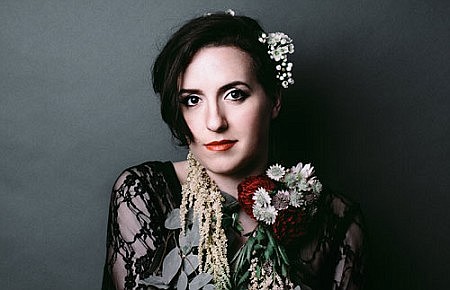
Last February, the Islamic State beheaded near two dozen Egyptian Coptic Christians on a Libyan beach.
Audrey Assad saw the video of 21 men killed with the name of Jesus on their lips, and 21 executioners exulting in their death. The gruesome moment inspired a realization.
“What is it like for God’s heart when God’s image-bearers slay his other image-bearers,” she remembered thinking. “He gave me an insight into how tragic that is – not just the death, but also the instruments of death…how tragic it is to watch all 42 men on that beach.”
Her moment of insight became “Even Unto Death,” a song inspired by the words of St. Bernard of Clairvaux. The chorus:
Lover of my soul, even unto death
With my every breath I will love You
“It’s the prayer of the martyrs,” Assad said, “Done with not only the martyrs in mind, but also the men who carried out their execution, praying for their salvation.”
The song is featured on “Inheritance,” the New Jersey native’s new independently-released album which hits shelves Feb. 12.
Her “Inheritance” on display in the new album is twofold: songs from her youth that are showcased throughout the album, and the relentless optimism that helped make it a reality.
“A lot of the songs I grew up singing as a Protestant I don’t hear at Mass, but I think they’re incredibly beautiful songs,” said Assad, whose family attended services in the Plymouth Brethren tradition while she was growing up in Union County, N.J.
Despite the beauty of the hymns, which would be sung without instrumentation on Sunday mornings, their memory carried baggage.
“I grew up in a fundamentalist, legalistic, small sect of Christianity that I have a lot of pain associated with,” Assad said.
“When I was recording these songs, I was coming out of a very, very long, dark spiritual crisis which had a to do with [that background and] those wounds I had been carrying around, especially the character of God the Father – ‘is God my judge or is God my father?’
“I wanted to do something so beautiful and a gift to the Church, and I found myself choking on the very words I was trying to put out there.”
Through prayer, counsel and self-examination, Assad said, she pressed on through the difficulties, and describes herself as “on the upswing again.” Also crucial was a sense of persistence and optimism that she credits to the example of her father, who came to the United States as a refugee from Damascus, Syria, in the 1970s.
“My father was a refugee and an immigrant,” she said. “He chose, and clung to, a sort of relentless optimism and self-confidence, because that’s kind of what you have to do when you come a country like America and try to make it…I kind of absorbed that by osmosis.”
Unafraid to Blaze a Trail
That same “relentless optimism” drove Assad to take a risk with both “Inheritance” and her previous album, 2013’s “Fortunate Fall.” She and her husband turned away from the traditional recording industry to self-produce both albums. The funding for the effort came from online Kickstarter-style campaigns.
“In 2013, I was biting my nails and freaking out, because I truly wasn’t sure what would happen. And it was so overwhelming to me to see how well people responded,” Assad said. “This time around, I felt much more confident about the process.
“The record coincided with a very difficult spiritual period for me. But I love that about it now. When I listen to it, I hear it all over it, and I’m happy. It feels very vulnerable. “
Assad worked elements of her heritage and upbringing into the songs featured on the album. “Inheritance” begins with a reworking of the traditional Holy Thursday chant “Ubi Caritas” that features Middle Eastern rhythms.
The theme repeats on the final song on the album, “Abide With Me,” an intentional nod to universality that Assad says is intended to drive home the underlying concept behind songs featured throughout the album.
“A lot of hymns were written by people who were very poor or suffering. I really wanted to use one of the most corporate and global song forms available, the hymn, to talk about unity with not only the whole Church, but all of our human brothers and sisters.”
Assad's first solo album was named the 2010 iTunes Christian Breakthrough Album of the Year, and she has performed across the nation, including alongside Catholic artist Matt Maher during Pope Francis' visit to Philadelphia, an experience she calls "an incredible honor."
Outside the world of music, Assad achieved international notoriety for a bracing, personal testimony she gave at SEEK 2015, a conference sponsored by the Fellowship of Catholic University Students. In it, she detailed her lengthy struggle combatting addiction to pornography – a story, she says, she now finds power in telling.
“I have a story to tell about the mercy of God,” she said. “Part of the reason of I was eventually able to be freed from the addiction itself is that I stopped overly stigmatizing the problem I was having.
“One of my main goals in speaking publicly about it is to give that gift to other people, especially young women who feel like they cannot be upfront about their struggles sexually…it might incite them towards freedom and honesty and that will be the beginning of their journey into wholeness.”
Singing Truth and Mercy
That trademark mix of unflinching honesty and unhesitating trust in God has won Assad many fans among Catholic young adults.
“There is something so genuine to her music,” said Elsie Albone, who leads music ministry at Rider University, Lawrenceville. “You can hear her heart longing, truly clinging to Christ on the cross to get her through. She’s not afraid to lay herself out there for the glory of God.”
Assad, who now lives in Nashville with her husband and almost-two-year-old son, said that bringing the almighty, almost incomprehensible power of Christ’s love to the level of a personal relationship is what she strives to do through her work.
“The faith of your fathers is important to uphold but until it’s enlivened by an encounter with the living Christ, what is it to you?...When these songs are enlivened by a real, visceral and deep understanding of the mercy of God, even lyrics like ‘Holy, holy, holy, Lord God Almighty,’ take on a personal and emotional significance.
“The closer you draw to the holiness of God, the more you will find the mercy of God revealed and the love of God is shown. That’s really my heart in this album – a lot of these songs have very high theological statements in them, but ultimately what I want is for people to encounter God in all of his mercy and love for them.”
"Inheritance" (Fortunate Fall Records) will be available for download Feb. 12. For more information, visit www.audreyassad.com.
[[In-content Ad]]
Related Stories
Saturday, December 13, 2025


E-Editions
Events
Last February, the Islamic State beheaded near two dozen Egyptian Coptic Christians on a Libyan beach.
Audrey Assad saw the video of 21 men killed with the name of Jesus on their lips, and 21 executioners exulting in their death. The gruesome moment inspired a realization.
“What is it like for God’s heart when God’s image-bearers slay his other image-bearers,” she remembered thinking. “He gave me an insight into how tragic that is – not just the death, but also the instruments of death…how tragic it is to watch all 42 men on that beach.”
Her moment of insight became “Even Unto Death,” a song inspired by the words of St. Bernard of Clairvaux. The chorus:
Lover of my soul, even unto death
With my every breath I will love You
“It’s the prayer of the martyrs,” Assad said, “Done with not only the martyrs in mind, but also the men who carried out their execution, praying for their salvation.”
The song is featured on “Inheritance,” the New Jersey native’s new independently-released album which hits shelves Feb. 12.
Her “Inheritance” on display in the new album is twofold: songs from her youth that are showcased throughout the album, and the relentless optimism that helped make it a reality.
“A lot of the songs I grew up singing as a Protestant I don’t hear at Mass, but I think they’re incredibly beautiful songs,” said Assad, whose family attended services in the Plymouth Brethren tradition while she was growing up in Union County, N.J.
Despite the beauty of the hymns, which would be sung without instrumentation on Sunday mornings, their memory carried baggage.
“I grew up in a fundamentalist, legalistic, small sect of Christianity that I have a lot of pain associated with,” Assad said.
“When I was recording these songs, I was coming out of a very, very long, dark spiritual crisis which had a to do with [that background and] those wounds I had been carrying around, especially the character of God the Father – ‘is God my judge or is God my father?’
“I wanted to do something so beautiful and a gift to the Church, and I found myself choking on the very words I was trying to put out there.”
Through prayer, counsel and self-examination, Assad said, she pressed on through the difficulties, and describes herself as “on the upswing again.” Also crucial was a sense of persistence and optimism that she credits to the example of her father, who came to the United States as a refugee from Damascus, Syria, in the 1970s.
“My father was a refugee and an immigrant,” she said. “He chose, and clung to, a sort of relentless optimism and self-confidence, because that’s kind of what you have to do when you come a country like America and try to make it…I kind of absorbed that by osmosis.”
Unafraid to Blaze a Trail
That same “relentless optimism” drove Assad to take a risk with both “Inheritance” and her previous album, 2013’s “Fortunate Fall.” She and her husband turned away from the traditional recording industry to self-produce both albums. The funding for the effort came from online Kickstarter-style campaigns.
“In 2013, I was biting my nails and freaking out, because I truly wasn’t sure what would happen. And it was so overwhelming to me to see how well people responded,” Assad said. “This time around, I felt much more confident about the process.
“The record coincided with a very difficult spiritual period for me. But I love that about it now. When I listen to it, I hear it all over it, and I’m happy. It feels very vulnerable. “
Assad worked elements of her heritage and upbringing into the songs featured on the album. “Inheritance” begins with a reworking of the traditional Holy Thursday chant “Ubi Caritas” that features Middle Eastern rhythms.
The theme repeats on the final song on the album, “Abide With Me,” an intentional nod to universality that Assad says is intended to drive home the underlying concept behind songs featured throughout the album.
“A lot of hymns were written by people who were very poor or suffering. I really wanted to use one of the most corporate and global song forms available, the hymn, to talk about unity with not only the whole Church, but all of our human brothers and sisters.”
Assad's first solo album was named the 2010 iTunes Christian Breakthrough Album of the Year, and she has performed across the nation, including alongside Catholic artist Matt Maher during Pope Francis' visit to Philadelphia, an experience she calls "an incredible honor."
Outside the world of music, Assad achieved international notoriety for a bracing, personal testimony she gave at SEEK 2015, a conference sponsored by the Fellowship of Catholic University Students. In it, she detailed her lengthy struggle combatting addiction to pornography – a story, she says, she now finds power in telling.
“I have a story to tell about the mercy of God,” she said. “Part of the reason of I was eventually able to be freed from the addiction itself is that I stopped overly stigmatizing the problem I was having.
“One of my main goals in speaking publicly about it is to give that gift to other people, especially young women who feel like they cannot be upfront about their struggles sexually…it might incite them towards freedom and honesty and that will be the beginning of their journey into wholeness.”
Singing Truth and Mercy
That trademark mix of unflinching honesty and unhesitating trust in God has won Assad many fans among Catholic young adults.
“There is something so genuine to her music,” said Elsie Albone, who leads music ministry at Rider University, Lawrenceville. “You can hear her heart longing, truly clinging to Christ on the cross to get her through. She’s not afraid to lay herself out there for the glory of God.”
Assad, who now lives in Nashville with her husband and almost-two-year-old son, said that bringing the almighty, almost incomprehensible power of Christ’s love to the level of a personal relationship is what she strives to do through her work.
“The faith of your fathers is important to uphold but until it’s enlivened by an encounter with the living Christ, what is it to you?...When these songs are enlivened by a real, visceral and deep understanding of the mercy of God, even lyrics like ‘Holy, holy, holy, Lord God Almighty,’ take on a personal and emotional significance.
“The closer you draw to the holiness of God, the more you will find the mercy of God revealed and the love of God is shown. That’s really my heart in this album – a lot of these songs have very high theological statements in them, but ultimately what I want is for people to encounter God in all of his mercy and love for them.”
"Inheritance" (Fortunate Fall Records) will be available for download Feb. 12. For more information, visit www.audreyassad.com.
[[In-content Ad]]