


Retreat stresses inclusive, welcoming ministry
July 29, 2019 at 12:37 p.m.
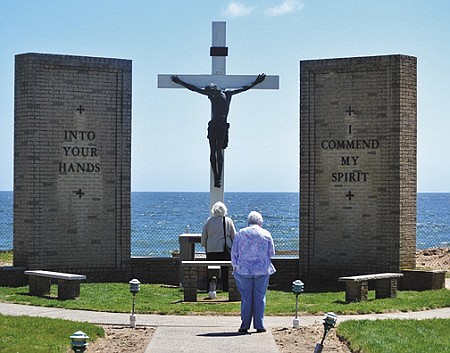
For those involved with pastoral care in the Trenton Diocese and beyond, the seventh Annual Pastoral Care Retreat May 3 opened windows on the ways they can minister to persons with disabilities and shed light on ways those with disabilities return the favor by ministering to them.
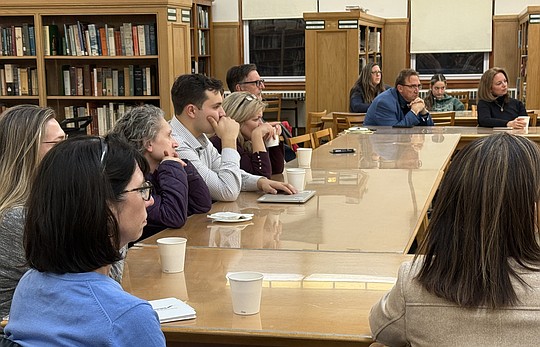
The retreat, sponsored by the diocesan Department of Pastoral Care, drew 65 parish visitors of the sick, chaplains, clergy, religious, home visitors, spiritual directors, family caregivers, healthcare professionals and others to the San Alfonso Retreat Center in the West End section of Long Branch.
Click HERE to view the photo gallery
There, by the rolling waters of the Atlantic, the daylong retreat by presenters Bill Gaventa and Anne Masters entitled “So that the grace of God might be manifest” (John 9:3) Ministry, Disability, Opportunity, offered participants the chance to gain knowledge, pray together, share support for each other’s ministries and even, on breaks, bask in the glory of God’s Creation.
The presentation focused on the fundamental questions and core theological themes of ministering to those with disabilities as well as Church teaching on the subject and how best to include people with disabilities in the active life of the faith community.
Topics addressed in a succession of informational segments included the supportive Catholic perspective on inclusive ministry to the disabled; understanding the fundamental questions involved; a video entitled the Ten Commandments for Communicating with People with Disabilities and how to respond when people with disabilities come to your pastoral setting.
Gaventa, a nationally known advocate of those with mental and physical disabilities, is an associate professor of pediatrics and coordinator of community and congregational supports in the Elizabeth M. Boggs Center on Disabilities in the UMDJ-Robert Wood Medical School, New Brunswick.
Masters is the director of the Department for Pastoral Ministry with Persons with Disabilities (sic) for the Newark Archdiocese. She also serves as president of the religion and spirituality division of the American Association of Intellectual and Developmental Disabilities and as a board member of the New Jersey Coalition for Inclusive Ministries.
They shared encouragement and insight on how a welcoming atmosphere can benefit not only the parish, but the community at large and urged retreatants to work toward breaking down barriers that have removed disabled from general participation in the past.
“Authenticity of the availability of our Eucharistic liturgies will be judged by how well we have lived what we preached,” said Gaventa,
Citing the example of Jesus welcoming the children to come to him. “Jesus is teaching us to (welcome) the vulnerable. The bishops have called upon people of good will to re-examine their attitudes and foster an attitude of a single flock under the care of a single shepherd,
“Everyone has gifts to be shared and this goes beyond accommodation to the accessibility of mind and heart.”
Stressing that pastoral care for people with physical or mental disabilities, blindness or hearing impairments involves the same strategies for anyone else, anyone else, both Gaventa and Masters encouraged their listeners to recognize that disabled people love compassion but want their independence too.
Gaventa urged all to take cues from the disabled by listening to them and responding according to what they’ve shared.
Listening emerged as a key word throughout the day. “Listening is a big part of what we do,” Gaventa said. “We listen, really listen to the story the person is telling.”
Those who attended the retreat said they appreciated the emphasis on welcoming all to the Church and the focus on the skills that help them do so.
“I’m always listening for something that can help patients,” said Jennifer Harper, a nurse at Ocean Medical Center, Brick, and a parish nurse in St. Pius X Parish, Forked River. “Listening to the speakers gave insight on the spiritual end of how to care for patients.”
Nancy Marano who is in hospital ministry with St. Catharine Parish, Holmdel, said she appreciated learning skills that can help her as she brings the Eucharist to patients in Bayshore Hospital. Joanne Repasky and Mary Ann Collett of Catholic Women of Zion, a group that meets monthly to offer spiritual enrichment to women, said the day fulfilled its goals.
“It was designed to help people achieve more access, knowledge and wisdom for those of us in pastoral ministry,” said Repasky, a member of St. Martha Parish, Point Pleasant.
Collett, director and founder of Catholic Women of Zion, said she felt the program would help to “get more people involved and foster more advocacy” for those with disabilities.
[[In-content Ad]]Related Stories
Thursday, December 18, 2025



E-Editions
Events
For those involved with pastoral care in the Trenton Diocese and beyond, the seventh Annual Pastoral Care Retreat May 3 opened windows on the ways they can minister to persons with disabilities and shed light on ways those with disabilities return the favor by ministering to them.
The retreat, sponsored by the diocesan Department of Pastoral Care, drew 65 parish visitors of the sick, chaplains, clergy, religious, home visitors, spiritual directors, family caregivers, healthcare professionals and others to the San Alfonso Retreat Center in the West End section of Long Branch.
Click HERE to view the photo gallery
There, by the rolling waters of the Atlantic, the daylong retreat by presenters Bill Gaventa and Anne Masters entitled “So that the grace of God might be manifest” (John 9:3) Ministry, Disability, Opportunity, offered participants the chance to gain knowledge, pray together, share support for each other’s ministries and even, on breaks, bask in the glory of God’s Creation.
The presentation focused on the fundamental questions and core theological themes of ministering to those with disabilities as well as Church teaching on the subject and how best to include people with disabilities in the active life of the faith community.
Topics addressed in a succession of informational segments included the supportive Catholic perspective on inclusive ministry to the disabled; understanding the fundamental questions involved; a video entitled the Ten Commandments for Communicating with People with Disabilities and how to respond when people with disabilities come to your pastoral setting.
Gaventa, a nationally known advocate of those with mental and physical disabilities, is an associate professor of pediatrics and coordinator of community and congregational supports in the Elizabeth M. Boggs Center on Disabilities in the UMDJ-Robert Wood Medical School, New Brunswick.
Masters is the director of the Department for Pastoral Ministry with Persons with Disabilities (sic) for the Newark Archdiocese. She also serves as president of the religion and spirituality division of the American Association of Intellectual and Developmental Disabilities and as a board member of the New Jersey Coalition for Inclusive Ministries.
They shared encouragement and insight on how a welcoming atmosphere can benefit not only the parish, but the community at large and urged retreatants to work toward breaking down barriers that have removed disabled from general participation in the past.
“Authenticity of the availability of our Eucharistic liturgies will be judged by how well we have lived what we preached,” said Gaventa,
Citing the example of Jesus welcoming the children to come to him. “Jesus is teaching us to (welcome) the vulnerable. The bishops have called upon people of good will to re-examine their attitudes and foster an attitude of a single flock under the care of a single shepherd,
“Everyone has gifts to be shared and this goes beyond accommodation to the accessibility of mind and heart.”
Stressing that pastoral care for people with physical or mental disabilities, blindness or hearing impairments involves the same strategies for anyone else, anyone else, both Gaventa and Masters encouraged their listeners to recognize that disabled people love compassion but want their independence too.
Gaventa urged all to take cues from the disabled by listening to them and responding according to what they’ve shared.
Listening emerged as a key word throughout the day. “Listening is a big part of what we do,” Gaventa said. “We listen, really listen to the story the person is telling.”
Those who attended the retreat said they appreciated the emphasis on welcoming all to the Church and the focus on the skills that help them do so.
“I’m always listening for something that can help patients,” said Jennifer Harper, a nurse at Ocean Medical Center, Brick, and a parish nurse in St. Pius X Parish, Forked River. “Listening to the speakers gave insight on the spiritual end of how to care for patients.”
Nancy Marano who is in hospital ministry with St. Catharine Parish, Holmdel, said she appreciated learning skills that can help her as she brings the Eucharist to patients in Bayshore Hospital. Joanne Repasky and Mary Ann Collett of Catholic Women of Zion, a group that meets monthly to offer spiritual enrichment to women, said the day fulfilled its goals.
“It was designed to help people achieve more access, knowledge and wisdom for those of us in pastoral ministry,” said Repasky, a member of St. Martha Parish, Point Pleasant.
Collett, director and founder of Catholic Women of Zion, said she felt the program would help to “get more people involved and foster more advocacy” for those with disabilities.
[[In-content Ad]]