


Pastoral care program enriches ministry to sick, bereaved
July 29, 2019 at 12:37 p.m.
By Christina Leslie | Staff Writer
Men and women who minister to the sick, suffering, dying, imprisoned or grieving are becoming better equipped to address their unique needs through a program offered by the diocesan Department of Pastoral Care.
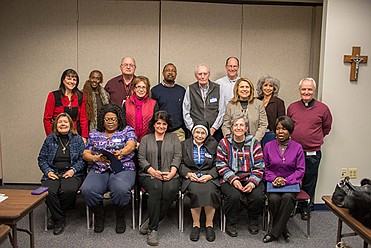
Thirteen individuals marked the completion of this intensive training on Feb. 13 in the Chancery in Lawrenceville with the acceptance of letters of completion of the Pastoral Care specialization requirements within the broader Diocesan Certificate Program.
The diocesan Certificate Program’s Pastoral Care specialization is a five-month, 10-session course of study offering faith-filled education, formation and practical skills to those who serve in a wide variety of pastoral ministries. Beginning each fall, the monthly sessions lead students to a fuller appreciation of the needs of the suffering, sick and dying, explained Deanna V. Sass, director of the Department of Pastoral Care.
“We give students formation and training for their particular ministries,” Sass remarked. “Many volunteers visit the sick. This program gives them the formation and information to help them be better at what they do. The people they visit benefit from it.”
The course unfolds in a series of two and one-half hour sessions, covering many aspects of caring for those who suffer in spiritual, pastoral and practical ways. Courses on the art of holy listening and ministry to the grieving, an examination of suffering in light of the healing mission of Jesus, and love of God, neighbor and self serve as companion courses to learning about the “nuts and bolts” of the pastoral encounter and a discussion of the rituals for Holy Communion and the care of the sick and dying for lay persons.
The sessions were conducted by clinical psychologists, spiritual directors, psychiatric nurses, deacons, lawyers, physicians and priests. Preceding the Feb. 13 closing ceremony, Catholic psychotherapist Dr. Adriane Gullota-Gsell of Red Bank discussed a number of pastoral care case studies; while a panel including Vincentian Father Martin McGeough, diocesan coordinator of jail and prison ministries, and Father Michael Manning, pastor of Holy Cross Parish, Rumson, and a medical doctor, informed the students of the legal, medical and bioethical considerations of patients in their last days.
While completely Catholic-oriented, the pastoral care workshops are also beneficial for persons of all Christian denominations and in various pastoral ministries, Sass asserted. This year’s workshop attendees included over 40 volunteers and professionals who serve as parish pastoral associates, hospital chaplains, ministers to the sick and dying, prison ministers and bereavement ministers. Some attendees were of non-Catholic Christian faiths, and a small group of native Africans who worship in a Christian church in Burlington County were faithful and enthusiastic class members.
Pastoral ministers who had completed the course of study shared their newly-minted insights into the care of the sick and dying.
Despite 40 years experience as a nurse in Camden Diocese, Marianite of the Holy Cross Sister Anne Ebersold said the sessions had taught her new ways to minister to the sick. “You realize afterwards how little you knew. You’re not just there to hear a lecture,” she said.
The retired religious and Hamilton resident continued, “All ministry is connected to discipleship. It is a privilege to work with the sick, and an opportunity to share God’s love.”
Annette York, a parishioner in Our Lady of Good Counsel, Moorestown, advocated the courses for anyone looking for a deeper understanding of and compassion for the bereaved. “As a funeral director, I found the offerings to be both meaningful and on point,” she said. “I could not agree more with the basic tenet of the program: to listen and let the Holy Spirit guide you through your interaction with a person in need.”
Carol and Alexander Kiczek, Sr., of St. Mary Parish, Middletown, are professed Secular Franciscans who began the pastoral care sessions in order to assume responsibility for their parish’s bereavement ministry. The couple, married 48 years and parents to eight children, shared a number of key points they learned during the program: “pray before and after you do anything; set boundaries; prevent burn out, and listen: often that is the best and only thing needed and wanted.”
Proving that the guideposts of pastoral care ministries know no religious boundaries, Jacqueline Candia expressed her admiration of the pastoral care workshops and their applicability to her work as a leader in her Pentecostal church. Candia, a member in the Christian Faith Fellowship Church of Burlington County, attended the sessions alongside her pastor, Festus Agidi. She recalled the impact the sessions had on her in her post-completion survey.
“After the first hour of the very first course, I slipped my pastor a note that read, ‘I know I am where I need to be,’” Candia wrote. “I looked forward to coming to class as the Holy Spirit was all over this program. The presenters illuminated the importance of accepting the end of life through the love of God.”
[[In-content Ad]]
Related Stories
Sunday, December 21, 2025



E-Editions
Events
By Christina Leslie | Staff Writer
Men and women who minister to the sick, suffering, dying, imprisoned or grieving are becoming better equipped to address their unique needs through a program offered by the diocesan Department of Pastoral Care.
Thirteen individuals marked the completion of this intensive training on Feb. 13 in the Chancery in Lawrenceville with the acceptance of letters of completion of the Pastoral Care specialization requirements within the broader Diocesan Certificate Program.
The diocesan Certificate Program’s Pastoral Care specialization is a five-month, 10-session course of study offering faith-filled education, formation and practical skills to those who serve in a wide variety of pastoral ministries. Beginning each fall, the monthly sessions lead students to a fuller appreciation of the needs of the suffering, sick and dying, explained Deanna V. Sass, director of the Department of Pastoral Care.
“We give students formation and training for their particular ministries,” Sass remarked. “Many volunteers visit the sick. This program gives them the formation and information to help them be better at what they do. The people they visit benefit from it.”
The course unfolds in a series of two and one-half hour sessions, covering many aspects of caring for those who suffer in spiritual, pastoral and practical ways. Courses on the art of holy listening and ministry to the grieving, an examination of suffering in light of the healing mission of Jesus, and love of God, neighbor and self serve as companion courses to learning about the “nuts and bolts” of the pastoral encounter and a discussion of the rituals for Holy Communion and the care of the sick and dying for lay persons.
The sessions were conducted by clinical psychologists, spiritual directors, psychiatric nurses, deacons, lawyers, physicians and priests. Preceding the Feb. 13 closing ceremony, Catholic psychotherapist Dr. Adriane Gullota-Gsell of Red Bank discussed a number of pastoral care case studies; while a panel including Vincentian Father Martin McGeough, diocesan coordinator of jail and prison ministries, and Father Michael Manning, pastor of Holy Cross Parish, Rumson, and a medical doctor, informed the students of the legal, medical and bioethical considerations of patients in their last days.
While completely Catholic-oriented, the pastoral care workshops are also beneficial for persons of all Christian denominations and in various pastoral ministries, Sass asserted. This year’s workshop attendees included over 40 volunteers and professionals who serve as parish pastoral associates, hospital chaplains, ministers to the sick and dying, prison ministers and bereavement ministers. Some attendees were of non-Catholic Christian faiths, and a small group of native Africans who worship in a Christian church in Burlington County were faithful and enthusiastic class members.
Pastoral ministers who had completed the course of study shared their newly-minted insights into the care of the sick and dying.
Despite 40 years experience as a nurse in Camden Diocese, Marianite of the Holy Cross Sister Anne Ebersold said the sessions had taught her new ways to minister to the sick. “You realize afterwards how little you knew. You’re not just there to hear a lecture,” she said.
The retired religious and Hamilton resident continued, “All ministry is connected to discipleship. It is a privilege to work with the sick, and an opportunity to share God’s love.”
Annette York, a parishioner in Our Lady of Good Counsel, Moorestown, advocated the courses for anyone looking for a deeper understanding of and compassion for the bereaved. “As a funeral director, I found the offerings to be both meaningful and on point,” she said. “I could not agree more with the basic tenet of the program: to listen and let the Holy Spirit guide you through your interaction with a person in need.”
Carol and Alexander Kiczek, Sr., of St. Mary Parish, Middletown, are professed Secular Franciscans who began the pastoral care sessions in order to assume responsibility for their parish’s bereavement ministry. The couple, married 48 years and parents to eight children, shared a number of key points they learned during the program: “pray before and after you do anything; set boundaries; prevent burn out, and listen: often that is the best and only thing needed and wanted.”
Proving that the guideposts of pastoral care ministries know no religious boundaries, Jacqueline Candia expressed her admiration of the pastoral care workshops and their applicability to her work as a leader in her Pentecostal church. Candia, a member in the Christian Faith Fellowship Church of Burlington County, attended the sessions alongside her pastor, Festus Agidi. She recalled the impact the sessions had on her in her post-completion survey.
“After the first hour of the very first course, I slipped my pastor a note that read, ‘I know I am where I need to be,’” Candia wrote. “I looked forward to coming to class as the Holy Spirit was all over this program. The presenters illuminated the importance of accepting the end of life through the love of God.”
[[In-content Ad]]