


Outlining, defining annulment process eliminates fear
July 29, 2019 at 12:37 p.m.
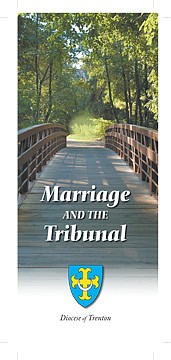
By Rose O’Connor | Correspondent
“It is important for people to hear and understand that ‘my Church is not blind to my situation and my Church understands’,” said Father Oscar B. Sumanga, Judicial Vicar for the Diocese of Trenton, during an Annulment Information Meeting in Our Lady of Sorrows Church, Hamilton, March 6.
Catholics interested in the annulment process joined annulment advocates from around the Diocese for an information session designed to educate and clarify the many misconceptions that surround the annulment process.
Father Sumanga defined an annulment “as a study of the marriage to determine its validity in the eyes of the Church at the time of the wedding.” He discussed the many myths involved with the annulment process including the widely held belief that the process is a long and expensive one and that it illegitimatizes the children created during the union.
He characterized a Catholic valid marriage as “one where no impediments were present at the time of the wedding, one that is true in canonical form and bound by the laws of the Church and one where the consent was not defective.”
He then outlined and identified the 13 impediments that could constitute a marriage invalid. He described the two kinds of annulments, the first being a simple annulment where there was a lack of canonical form at the time of the marriage ceremony, and a formal annulment where there were no impediments at the time of the wedding and canonical form was followed but the consent exchanged by the spouses could be found defective. Father Sumanga then presented the many possible grounds for an annulment on defective consent.
As he explained, either spouse may seek an annulment in (1) the Tribunal of the diocese where the marriage took place, (2) where the former spouse resides, (3) where the person seeing an annulment resides with the permission of the Judicial Vicar of the former spouse’s Diocese, (4) where most of the proofs would be found.
He encouraged those who were seeking an annulment to meet with their pastor and praised the parishes in the Diocese. “Go to your parishes, they know what to do, your pastor will guide and help you prepare your petition,” he affirmed.
He also recommended seeking the assistance of an annulment advocate, a member of the parish who has been trained by the Office of the Tribunal to assist a petitioner in the process. There are almost 100 annulment advocates in the Diocese, affirmed Rose Moore from the Office of Canonical Services. Currently, the office of Canonical Services and the Tribunal is training 12 more individuals participating in the 13-week course to become an annulment advocate.
Father Sumanga advised the petitioner to be prepared to “go back in time” and write a history and reflection on the marriage. Baptismal and marriage records must be obtained as well as the divorce decree. Friends and family members who knew either one or both the spouse at the time of the wedding should be presented as witnesses and, in some cases, expert testimony will also need to be provided.
Once the petition is complete, as explained by the Tribunal, “within two weeks of its arrival at the Tribunal office, a complete petition will be assigned to a Tribunal Judge who will accept or reject the petition and notify the persons involved. A rejected petition can be appealed, or else corrected and submitted again to the Tribunal. An accepted petition goes through several stages: a formal investigation and trial determining proofs of nullity, obtaining the necessary testimonies and other proofs and review by experts if the grounds involve the behavioral sciences.”
Regarding the decision of the case, the Tribunal explains, “Depending on the nature and grounds of the petition, a decision will be made by the Tribunal Judge within a year. An affirmative decision means that nullity has been proven. A negative decision means that the marriage is valid and could not be annulled. All decisions are automatically appealed to the court of second instance, either by the law itself or by one of the parties. No new marriage can take place until the appeal has been completed and two affirmative decisions from two different tribunals have been given.”
The judge could never give annulment to a valid marriage. Only invalid marriages could be declared null by the Church. In order to declare nullity, the Judge is required to establish “moral certitude,” Father Sumanga declared.
“Please do not approach annulment as looking for anyone to blame,” he continued, “not yourself, not your spouse. Annulment is to look for the truth whether the marriage met the requirements of the Church for validity at the time of the wedding.”
Jean Pierfy, an annulment advocate and parishioner of Our Lady of Sorrows-St. Anthony Parish views the annulment process as “a very thorough and compassionate process. The annulment advocates are well-trained and very open and helpful.”
Susan Plantier, a member of Our Lady of Sorrow-St. Anthony Parish, found the presentation to be “excellent. The whole presentation was very informative.”
Fellow parishoner Lorraine Gingo concurred. “I found it informative and think these information sessions are wonderful,” acknowledging that each petitioner has “different circumstances and problems.”
More Annulment Sessions are scheduled throughout the Diocese during the month of March – March 13, St. Isaac Jogues, Marlton; March 22, St. Robert Bellarmine, Freehold, March 27, St. Joseph, Toms River and two Spanish sessions: March 18, St. Mary of the Assumtion Cathedral, Trenton; March 25, St. Rose of Lima, Freehold.
Those discerning whether to seek an annulment should contact their parishes or the Tribunal Office, (609) 406-7411, or by email: [email protected].
[[In-content Ad]]Related Stories
Friday, December 19, 2025





E-Editions
Events
By Rose O’Connor | Correspondent
“It is important for people to hear and understand that ‘my Church is not blind to my situation and my Church understands’,” said Father Oscar B. Sumanga, Judicial Vicar for the Diocese of Trenton, during an Annulment Information Meeting in Our Lady of Sorrows Church, Hamilton, March 6.
Catholics interested in the annulment process joined annulment advocates from around the Diocese for an information session designed to educate and clarify the many misconceptions that surround the annulment process.
Father Sumanga defined an annulment “as a study of the marriage to determine its validity in the eyes of the Church at the time of the wedding.” He discussed the many myths involved with the annulment process including the widely held belief that the process is a long and expensive one and that it illegitimatizes the children created during the union.
He characterized a Catholic valid marriage as “one where no impediments were present at the time of the wedding, one that is true in canonical form and bound by the laws of the Church and one where the consent was not defective.”
He then outlined and identified the 13 impediments that could constitute a marriage invalid. He described the two kinds of annulments, the first being a simple annulment where there was a lack of canonical form at the time of the marriage ceremony, and a formal annulment where there were no impediments at the time of the wedding and canonical form was followed but the consent exchanged by the spouses could be found defective. Father Sumanga then presented the many possible grounds for an annulment on defective consent.
As he explained, either spouse may seek an annulment in (1) the Tribunal of the diocese where the marriage took place, (2) where the former spouse resides, (3) where the person seeing an annulment resides with the permission of the Judicial Vicar of the former spouse’s Diocese, (4) where most of the proofs would be found.
He encouraged those who were seeking an annulment to meet with their pastor and praised the parishes in the Diocese. “Go to your parishes, they know what to do, your pastor will guide and help you prepare your petition,” he affirmed.
He also recommended seeking the assistance of an annulment advocate, a member of the parish who has been trained by the Office of the Tribunal to assist a petitioner in the process. There are almost 100 annulment advocates in the Diocese, affirmed Rose Moore from the Office of Canonical Services. Currently, the office of Canonical Services and the Tribunal is training 12 more individuals participating in the 13-week course to become an annulment advocate.
Father Sumanga advised the petitioner to be prepared to “go back in time” and write a history and reflection on the marriage. Baptismal and marriage records must be obtained as well as the divorce decree. Friends and family members who knew either one or both the spouse at the time of the wedding should be presented as witnesses and, in some cases, expert testimony will also need to be provided.
Once the petition is complete, as explained by the Tribunal, “within two weeks of its arrival at the Tribunal office, a complete petition will be assigned to a Tribunal Judge who will accept or reject the petition and notify the persons involved. A rejected petition can be appealed, or else corrected and submitted again to the Tribunal. An accepted petition goes through several stages: a formal investigation and trial determining proofs of nullity, obtaining the necessary testimonies and other proofs and review by experts if the grounds involve the behavioral sciences.”
Regarding the decision of the case, the Tribunal explains, “Depending on the nature and grounds of the petition, a decision will be made by the Tribunal Judge within a year. An affirmative decision means that nullity has been proven. A negative decision means that the marriage is valid and could not be annulled. All decisions are automatically appealed to the court of second instance, either by the law itself or by one of the parties. No new marriage can take place until the appeal has been completed and two affirmative decisions from two different tribunals have been given.”
The judge could never give annulment to a valid marriage. Only invalid marriages could be declared null by the Church. In order to declare nullity, the Judge is required to establish “moral certitude,” Father Sumanga declared.
“Please do not approach annulment as looking for anyone to blame,” he continued, “not yourself, not your spouse. Annulment is to look for the truth whether the marriage met the requirements of the Church for validity at the time of the wedding.”
Jean Pierfy, an annulment advocate and parishioner of Our Lady of Sorrows-St. Anthony Parish views the annulment process as “a very thorough and compassionate process. The annulment advocates are well-trained and very open and helpful.”
Susan Plantier, a member of Our Lady of Sorrow-St. Anthony Parish, found the presentation to be “excellent. The whole presentation was very informative.”
Fellow parishoner Lorraine Gingo concurred. “I found it informative and think these information sessions are wonderful,” acknowledging that each petitioner has “different circumstances and problems.”
More Annulment Sessions are scheduled throughout the Diocese during the month of March – March 13, St. Isaac Jogues, Marlton; March 22, St. Robert Bellarmine, Freehold, March 27, St. Joseph, Toms River and two Spanish sessions: March 18, St. Mary of the Assumtion Cathedral, Trenton; March 25, St. Rose of Lima, Freehold.
Those discerning whether to seek an annulment should contact their parishes or the Tribunal Office, (609) 406-7411, or by email: [email protected].
[[In-content Ad]]