


Easter 2012
July 29, 2019 at 12:37 p.m.
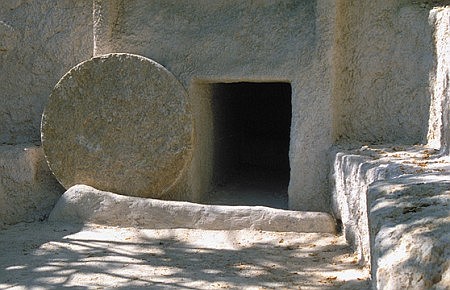
When Mary of Magdala arrived at Jesus’ tomb, the Gospel of John tells us, she “saw the stone removed from the tomb.” I can only imagine the thoughts that went racing through her mind as she ran to tell “Simon Peter and the other disciple whom Jesus loved” that “they have taken the Lord from the tomb and we don’t know where they put him (John 20:2).” Upon arrival at the tomb, the Lord’s followers rushed in only to find the burial cloths but no body. Where was Jesus? John’s Gospel then says of Peter, “He saw and believed (John 20:8).”
We know what Peter saw: an empty tomb. But we also know what he believed: Jesus had risen from the dead, just as Scripture predicted. In that instant, in that moment of faith, the whole meaning and purpose of Jesus’ life and death had become clear: eternal life! Every prophecy, every word, every action, every teaching, every miracle, every gesture, every prayer, every whisper against him, every piece of bread, every cup of wine, every kiss of betrayal, every denial, every suffering, every tear, every thorn, every step to Calvary, every nail, every drop of blood, every lifeless limb made sense, perhaps for the first time! “He saw and believed.”
Jesus Christ had risen from the dead! He told them he would. They heard it on the occasion of Jesus’ conversation with Peter in Caesarea Philippi and his confession of faith. Matthew wrote “From that time Jesus began to show His disciples that He must go to Jerusalem, and suffer many things from the elders and chief priests and scribes, and be killed, and be raised up on the third day (Matthew 16:21).” But Mark related that they did not know what “rising from the dead” meant (Mark 9:10). Now they knew! Now they believed! It was not their own arguments or discussions about Jesus’ words that convinced them. It was, rather, an empty tomb.
In another account of this experience, that of Luke, the first witnesses of the empty tomb were confronted by two individuals in dazzling garments and told “Why do you seek the Living One among the dead? He is not here, but He has risen. Remember how He spoke to you while He was still in Galilee. And they remembered His words (Luke 24: 5-8).”
In those first, hurried moments, the sight of an empty tomb filled Mary with anxious concern. But her distress soon gave way to peace and joy when met with Peter’s faith as he “saw and believed,” as he “remembered Jesus’ words.”
Easter turned tragedy to triumph at the empty tomb. And it continues to do so for us. The things in life that lead us to Calvary so often do not stop there. No, they lead us, in faith, to an empty tomb. All of us, as Christians, need to roll the stone back. We need to peer in and see. We need to believe. We need to remember His words. They were spoken to the disciples and they are spoken to us. They were spoken for the disciples and they are spoken for us.
“I am the Resurrection and the Life. Whoever believes in me, even if he dies, will live (John 11:25)!”
Most Reverend David M. O’Connell, C.M.
Bishop of Trenton
Click HERE for St. Mary of the Assumption Cathedral’s Holy Week schedule
[[In-content Ad]]Related Stories
Saturday, December 20, 2025





E-Editions
Events
When Mary of Magdala arrived at Jesus’ tomb, the Gospel of John tells us, she “saw the stone removed from the tomb.” I can only imagine the thoughts that went racing through her mind as she ran to tell “Simon Peter and the other disciple whom Jesus loved” that “they have taken the Lord from the tomb and we don’t know where they put him (John 20:2).” Upon arrival at the tomb, the Lord’s followers rushed in only to find the burial cloths but no body. Where was Jesus? John’s Gospel then says of Peter, “He saw and believed (John 20:8).”
We know what Peter saw: an empty tomb. But we also know what he believed: Jesus had risen from the dead, just as Scripture predicted. In that instant, in that moment of faith, the whole meaning and purpose of Jesus’ life and death had become clear: eternal life! Every prophecy, every word, every action, every teaching, every miracle, every gesture, every prayer, every whisper against him, every piece of bread, every cup of wine, every kiss of betrayal, every denial, every suffering, every tear, every thorn, every step to Calvary, every nail, every drop of blood, every lifeless limb made sense, perhaps for the first time! “He saw and believed.”
Jesus Christ had risen from the dead! He told them he would. They heard it on the occasion of Jesus’ conversation with Peter in Caesarea Philippi and his confession of faith. Matthew wrote “From that time Jesus began to show His disciples that He must go to Jerusalem, and suffer many things from the elders and chief priests and scribes, and be killed, and be raised up on the third day (Matthew 16:21).” But Mark related that they did not know what “rising from the dead” meant (Mark 9:10). Now they knew! Now they believed! It was not their own arguments or discussions about Jesus’ words that convinced them. It was, rather, an empty tomb.
In another account of this experience, that of Luke, the first witnesses of the empty tomb were confronted by two individuals in dazzling garments and told “Why do you seek the Living One among the dead? He is not here, but He has risen. Remember how He spoke to you while He was still in Galilee. And they remembered His words (Luke 24: 5-8).”
In those first, hurried moments, the sight of an empty tomb filled Mary with anxious concern. But her distress soon gave way to peace and joy when met with Peter’s faith as he “saw and believed,” as he “remembered Jesus’ words.”
Easter turned tragedy to triumph at the empty tomb. And it continues to do so for us. The things in life that lead us to Calvary so often do not stop there. No, they lead us, in faith, to an empty tomb. All of us, as Christians, need to roll the stone back. We need to peer in and see. We need to believe. We need to remember His words. They were spoken to the disciples and they are spoken to us. They were spoken for the disciples and they are spoken for us.
“I am the Resurrection and the Life. Whoever believes in me, even if he dies, will live (John 11:25)!”
Most Reverend David M. O’Connell, C.M.
Bishop of Trenton
Click HERE for St. Mary of the Assumption Cathedral’s Holy Week schedule
[[In-content Ad]]