


Diocese partners with schools to meet enrollment, financial challenges
July 29, 2019 at 12:37 p.m.
By Rayanne Bennett | Associate Publisher
The first steps along the path to sustainability that all Catholic schools in the Diocese are pursuing centers on strengthening communication and building awareness about the realities that each school faces and the challenges they must meet.
In the first few months of the new school year, with the recommendations of the 15-month School Sustainability Study in hand, Bishop David M. O’Connell, C.M., and diocesan leaders have conducted a rigorous consultation and awareness campaign, visiting, as a team, 10 schools who have some area in which development is needed. Father Douglas Freer, diocesan vicar for education, along with others from the Department of Catholic Schools, visited another eight schools.
JoAnn Tier, diocesan superintendent of schools, explained, “We’ve gone out in the field, and we’ve interfaced with pastors, principals, school boards and other leaders to support them in their efforts to implement some of the changes that will help them strengthen their schools.”
In some cases, Tier notes, the schools are already strong in many areas. “We are telling them the good that we see and identifying key issues where some tweaking is needed. In other instances, the school is addressing a serious enrollment decline and a more robust approach is needed in turning it around.”
But the universal response, Tier reports, has been engaged and receptive. “People understand there is an urgency to grow enrollment and solidify finances so that schools are shoring up their viability.”
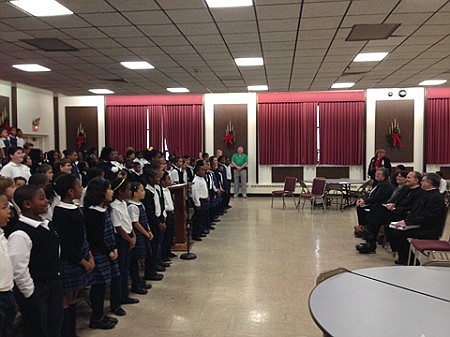
Key to the consultation process has been the involvement of Bishop O’Connell. Tier stated, “The Bishop has toured the schools, engaged with the kids and seen the life and vibrancy in that community.”
She added, “At the same time, he has had very frank conversations with pastors and principals, making it clear that this is the time to get ‘all hands on deck’ to make something happen.”
The push for positive action comes on the heels of the Sustainability Study which resulted in a 100-plus page report detailing recommendations to help schools build strong futures based on financial viability, academic excellence and a strong Catholic identity.
The recommendations, more than 60 in all, pointed to other areas that could be enhanced in many Catholic schools – including development, governance and leadership and marketing and public relations.
The study also identified three realities that reflect the poor health of a school:
• K-8 enrollment less than 220 students; declining enrollment over a five-year period or a precipitous drop in enrollment between any two of the past five years;
• Difference between tuition and cost per student of $2,000 or more
• The need for subsidy from the sponsoring parish amounting to more than 30 percent of that parish’s ordinary income
In a message published in September, 2013, Bishop O’Connell emphasized the importance for schools to address the main driver of sustainability – enrollment. Acknowledging that the implementation of the recommendations would unfold over time, he wrote, “I would like to provide some more time for our Catholic primary schools to evaluate their own sustainability based upon criteria recommended by the commission and to get their acts together on a positive trajectory. I will not approve the closing of another Catholic primary school before 2015, but our parishes, our Diocese and I cannot keep all our Catholic primary schools open indefinitely and at all costs.”
Bringing pastors and principals on board is one way to grow tuition and strengthen schools. In addition to the visits and consultations, there will be regular meetings with schools who need the greatest assistance. Some of the best practices and strategies driving enrollment development were shared this fall with school leaders, including outreach to Latino families and alternative methods to fill classroom seats and gain revenue without increasing the cost of education.
Some of the study’s recommendations involved restructuring tuition rates and the ways that parishes without schools support Catholic education, all with an eye toward making more funds available for tuition assistance. These will take a while to move forward, Tier acknowledged, emphasizing that there are no quick fixes.
“What we can do now,” Tier stressed, “is to get more families to apply for tuition assistance. We hear from pastors and principals that so little assistance was paid out to their families. Then we do the research and find that only eight families applied. We want the assistance money to go to the people who need it most, so we are trying to raise awareness about tuition assistance and encourage families to apply.”
In order to foster a clearer understanding about the need for tuition to cover more of the cost to educate a child, school leaders have been encouraged to hold State of the School sessions with the parent community each fall.
Measures already taken to turn around declining enrollment are already paying off in some schools. While Tier reports that the overall enrollment this fall still slipped by 227 students, it was the lowest decrease in 10 years. A few schools have experienced enrollment drops, but many others are seeing steady growth, requiring the creation of additional class sections in some cases.
Tier admitted to being optimistic, saying, “We have yet to turn the tide, but we are gaining momentum.”
Mary Stadnyk, associate editor, contributed to this report.
[[In-content Ad]]
Related Stories
Thursday, December 18, 2025





E-Editions
Events
By Rayanne Bennett | Associate Publisher
The first steps along the path to sustainability that all Catholic schools in the Diocese are pursuing centers on strengthening communication and building awareness about the realities that each school faces and the challenges they must meet.
In the first few months of the new school year, with the recommendations of the 15-month School Sustainability Study in hand, Bishop David M. O’Connell, C.M., and diocesan leaders have conducted a rigorous consultation and awareness campaign, visiting, as a team, 10 schools who have some area in which development is needed. Father Douglas Freer, diocesan vicar for education, along with others from the Department of Catholic Schools, visited another eight schools.
JoAnn Tier, diocesan superintendent of schools, explained, “We’ve gone out in the field, and we’ve interfaced with pastors, principals, school boards and other leaders to support them in their efforts to implement some of the changes that will help them strengthen their schools.”
In some cases, Tier notes, the schools are already strong in many areas. “We are telling them the good that we see and identifying key issues where some tweaking is needed. In other instances, the school is addressing a serious enrollment decline and a more robust approach is needed in turning it around.”
But the universal response, Tier reports, has been engaged and receptive. “People understand there is an urgency to grow enrollment and solidify finances so that schools are shoring up their viability.”
Key to the consultation process has been the involvement of Bishop O’Connell. Tier stated, “The Bishop has toured the schools, engaged with the kids and seen the life and vibrancy in that community.”
She added, “At the same time, he has had very frank conversations with pastors and principals, making it clear that this is the time to get ‘all hands on deck’ to make something happen.”
The push for positive action comes on the heels of the Sustainability Study which resulted in a 100-plus page report detailing recommendations to help schools build strong futures based on financial viability, academic excellence and a strong Catholic identity.
The recommendations, more than 60 in all, pointed to other areas that could be enhanced in many Catholic schools – including development, governance and leadership and marketing and public relations.
The study also identified three realities that reflect the poor health of a school:
• K-8 enrollment less than 220 students; declining enrollment over a five-year period or a precipitous drop in enrollment between any two of the past five years;
• Difference between tuition and cost per student of $2,000 or more
• The need for subsidy from the sponsoring parish amounting to more than 30 percent of that parish’s ordinary income
In a message published in September, 2013, Bishop O’Connell emphasized the importance for schools to address the main driver of sustainability – enrollment. Acknowledging that the implementation of the recommendations would unfold over time, he wrote, “I would like to provide some more time for our Catholic primary schools to evaluate their own sustainability based upon criteria recommended by the commission and to get their acts together on a positive trajectory. I will not approve the closing of another Catholic primary school before 2015, but our parishes, our Diocese and I cannot keep all our Catholic primary schools open indefinitely and at all costs.”
Bringing pastors and principals on board is one way to grow tuition and strengthen schools. In addition to the visits and consultations, there will be regular meetings with schools who need the greatest assistance. Some of the best practices and strategies driving enrollment development were shared this fall with school leaders, including outreach to Latino families and alternative methods to fill classroom seats and gain revenue without increasing the cost of education.
Some of the study’s recommendations involved restructuring tuition rates and the ways that parishes without schools support Catholic education, all with an eye toward making more funds available for tuition assistance. These will take a while to move forward, Tier acknowledged, emphasizing that there are no quick fixes.
“What we can do now,” Tier stressed, “is to get more families to apply for tuition assistance. We hear from pastors and principals that so little assistance was paid out to their families. Then we do the research and find that only eight families applied. We want the assistance money to go to the people who need it most, so we are trying to raise awareness about tuition assistance and encourage families to apply.”
In order to foster a clearer understanding about the need for tuition to cover more of the cost to educate a child, school leaders have been encouraged to hold State of the School sessions with the parent community each fall.
Measures already taken to turn around declining enrollment are already paying off in some schools. While Tier reports that the overall enrollment this fall still slipped by 227 students, it was the lowest decrease in 10 years. A few schools have experienced enrollment drops, but many others are seeing steady growth, requiring the creation of additional class sections in some cases.
Tier admitted to being optimistic, saying, “We have yet to turn the tide, but we are gaining momentum.”
Mary Stadnyk, associate editor, contributed to this report.
[[In-content Ad]]