


Diocesan pastoral retreat a prescription for family care
July 29, 2019 at 12:37 p.m.
By Lois Rogers | Correspondent
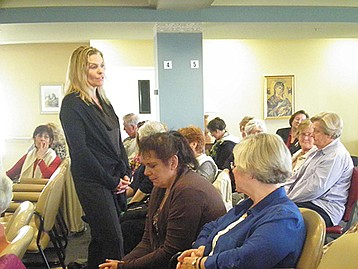
The diocesan Pastoral Care Retreat is considered, first and foremost, a day away for those in ministries where life or death situations are far from uncommon and stress is often present.
Held annually for the last nine years in San Alfonso Retreat Center at the beach in Long Branch, retreatants say it is always a time to share and learn with those who share the experiences of care and ministry.
This year’s retreat May 1 focuses on marriage and ministry, and offered a day away to the 88 caregivers in attendance. It also set the stage for the two-day Marriage Summit scheduled to unfold at Georgian Court University, Lakewood, exactly one week later.
The presentation by Dr. Michelle Barrett was geared toward helping all those in caregiving ministries understand the role and needs of families from the bedside, to the dining room table, to prison or scattered geographically or emotionally.
Barrett, a licensed psychologist and assistant professor of psychology and program chair in the College of St. Elizabeth, Morristown, used a framework that blended the social sciences and the spiritual.
Her seamless seven-hour presentation incorporated elements so important to retreatants – time for prayer, silence and fellowship – with insight about the societal situations that have stressed today’s families to the limit.
There was also time to learn breathing and guided mediation exercises that can soothe ministers’ souls and the souls of those to whom they minister.
Barrett encouraged caregivers to recognize the issues that divide families today: divorce, separation, substance abuse, etc. She talked about what they can do to foster a sense of “mindfulness” that can help bridge the communication gap created by technology and the fast pace of life.
“Facebook is great, but what’s missing today,” she said, “is person-to-person, generation-to-generation contact. Try to think about that void individuals and families feel and how pastoral care can help in those situations.”
She encouraged them to remember to focus on God and community when they are facing a crisis. And, she advised them to encourage more direct communication – including making eye-contact – among the generations.
She cited one example of a typical inter-generational exchange that no longer exists.
“People used to ask mom or grandma for their carrot cake recipe which made them feel good when they called,” she said. “Now everyone just googles the recipe.”
Barrett explained that in the “culture of texting, there’s a lack of meaningful language. We lose quite a bit. We need to be mindful. We need to employ language to foster relations. Practice making connections,” she urged.
In the home, she said, make connections key. “Be attentive to what’s going on around you. … It’s OK to put the phones away. Find a few minutes each day to be together in mind, body and spirit. Say a family Rosary, create family rituals – like clinking your glasses in a toast – do what you do to make connections a priority.”
“When you work with families where you feel dislocation, loneliness and voids, work to bring people together,” she said.
Deanna Sass, director of the diocesan Department of Pastoral Care that sponsored the retreat, explained that an earlier segment of the day was like “a psych course for newlyweds, couples with their first child, growing families and “empty nesters” and the crises that come with family life.”
She described Barrett’s insights on how both psychology and religion can work to help bring care, comfort and healing to families, the doctor’s “prescription for pastoral care.”
[[In-content Ad]]
Related Stories
Sunday, December 21, 2025





E-Editions
Events
By Lois Rogers | Correspondent
The diocesan Pastoral Care Retreat is considered, first and foremost, a day away for those in ministries where life or death situations are far from uncommon and stress is often present.
Held annually for the last nine years in San Alfonso Retreat Center at the beach in Long Branch, retreatants say it is always a time to share and learn with those who share the experiences of care and ministry.
This year’s retreat May 1 focuses on marriage and ministry, and offered a day away to the 88 caregivers in attendance. It also set the stage for the two-day Marriage Summit scheduled to unfold at Georgian Court University, Lakewood, exactly one week later.
The presentation by Dr. Michelle Barrett was geared toward helping all those in caregiving ministries understand the role and needs of families from the bedside, to the dining room table, to prison or scattered geographically or emotionally.
Barrett, a licensed psychologist and assistant professor of psychology and program chair in the College of St. Elizabeth, Morristown, used a framework that blended the social sciences and the spiritual.
Her seamless seven-hour presentation incorporated elements so important to retreatants – time for prayer, silence and fellowship – with insight about the societal situations that have stressed today’s families to the limit.
There was also time to learn breathing and guided mediation exercises that can soothe ministers’ souls and the souls of those to whom they minister.
Barrett encouraged caregivers to recognize the issues that divide families today: divorce, separation, substance abuse, etc. She talked about what they can do to foster a sense of “mindfulness” that can help bridge the communication gap created by technology and the fast pace of life.
“Facebook is great, but what’s missing today,” she said, “is person-to-person, generation-to-generation contact. Try to think about that void individuals and families feel and how pastoral care can help in those situations.”
She encouraged them to remember to focus on God and community when they are facing a crisis. And, she advised them to encourage more direct communication – including making eye-contact – among the generations.
She cited one example of a typical inter-generational exchange that no longer exists.
“People used to ask mom or grandma for their carrot cake recipe which made them feel good when they called,” she said. “Now everyone just googles the recipe.”
Barrett explained that in the “culture of texting, there’s a lack of meaningful language. We lose quite a bit. We need to be mindful. We need to employ language to foster relations. Practice making connections,” she urged.
In the home, she said, make connections key. “Be attentive to what’s going on around you. … It’s OK to put the phones away. Find a few minutes each day to be together in mind, body and spirit. Say a family Rosary, create family rituals – like clinking your glasses in a toast – do what you do to make connections a priority.”
“When you work with families where you feel dislocation, loneliness and voids, work to bring people together,” she said.
Deanna Sass, director of the diocesan Department of Pastoral Care that sponsored the retreat, explained that an earlier segment of the day was like “a psych course for newlyweds, couples with their first child, growing families and “empty nesters” and the crises that come with family life.”
She described Barrett’s insights on how both psychology and religion can work to help bring care, comfort and healing to families, the doctor’s “prescription for pastoral care.”
[[In-content Ad]]