


Carmelite way of life enriches faith, adds joy
July 29, 2019 at 12:37 p.m.
By Dorothy K. LaMantia | Correspondent
Say the word “Carmelite,” and the Catholic mind floods with images: Our Lady of Mount Carmel, crowned and enthroned, with the Infant Jesus sitting on her lap and scapular in hand; saints such as Teresa of Avila, John of the Cross and Therese of the Child Jesus, and consecrated men and women praying in sacred silence.
For 800 years men and women — consecrated and laypersons – have embraced the Carmelite way of life in imitation of the prophet Elijah’s profound experience of God as he prayed in the mountains of Carmel in Palestine. Founded by hermits, the community spread to Europe, where under the guidance of Pope Innocent IV, it was transformed into a mendicant order.
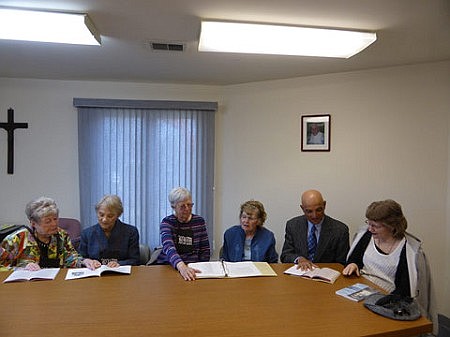
In the Diocese of Trenton, nearly 130 laypeople in five parishes carry on the commitment to follow Jesus in the Lay Carmelite Order of the Blessed Virgin Mary, known as the Third Order.
While the consecrated live in monasteries or convents, Third Order members remain in the world, raise their families and have careers while dedicating their days to the “interior life” of prayer and contemplation.
With Mary as the patroness and mother of all Carmelites, the members begin and end their days with the Liturgy of the Hours, the universal prayer of the Church. Throughout the day, they are encouraged to read and contemplate the day’s Gospel, a practice known as Lectio Divina, as well as pray and meditate on the Rosary daily, attend Mass and receive the Eucharist.
Once a month the community meets for Mass then spends the morning in prayer and Lectio Divina, where members learn from each other as they read the Scriptures and share their insights.
They are charged with living as models of the Beatitudes and fostering love of Church and all humanity. While the order sponsors no service ministries, its members find ways to serve.
“This is an order, not a social group,” said Anne R. Miller, regional coordinator of the Lay Carmelites of South New Jersey, which include Third Order communities found in the following parishes in the Diocese: St. Mary, Colts Neck; St. Dominic, Brick; St. Justin the Martyr, Toms River; St. Elizabeth Ann Seton, Whiting, and St. Mary, Barnegat. The parishes are part of the Pure Heart of Mary Province, based in Chicago. Miller, a parishioner in St. Mary, Barnegat, and a member of the Third Order Carmelite community in Whiting, serves as a liaison between the motherhouse and the communities.
As an order, there is a period of formation in three phases of prayer and study.
“First we invite those interested to two or three meetings to see how we pray. Phase one is a nine to 12-month period of study,” said Pat Martin, former director in St. Mary Parish, Barnegat.
“Candidates receive the scapular at the end of the first phase. The second phase lasts two years and then they profess their temporary vows, which last three years. While the third phase used to mean taking permanent vows, it is now considered a phase of permanent formation.”
“It is a calling,” said Janice Larkin, director of the Barnegat community. “In the three-phase period of formation we grow in that vocation or in the realization... that God is not calling us (to the order).”
So what draws people to this venerable vocation? Who hears the call?
Miller remembered her mother’s devotion to Our Lady of Mount Carmel and the annual festival in Our Lady’s honor in New York City where police barricades kept the crowds in check. “All that was not completely faith based. It is amazing how the Lord leads us in so many ways. I didn’t know there was so much more to wearing the scapular and being devoted to Mary.”
In the St. Mary, Barnegat, community, the smallest of the five in South Jersey, two aspirants spoke of mysteries of God’s call.
Barbara Bennes, married with a 20-year old daughter, and in her first phase of formation, has “always loved Carmelite spirituality. It is simple, honest and real. It is about love of neighbor and following what Jesus wants from us. I am learning so much about the Bible from the others. Everyone is so willing to help you learn.”
Aspirant Harjinder Bedi, a physician who converted to Catholicism in 1994, “fell in love with the Liturgy of the Hours when I was on vacation in Florida. At the Little Flower Church a priest introduced me to the brown scapular, which I knew nothing about. I heard him say the word ‘Carmelite.’ When I came home I called Pat Martin and asked if I could attend meetings.”
What benefits come from this way of life?
“These devotions become second nature,” said Pat Martin.
“You’re always conscious that you have such a beautiful vocation. Before I became a Carmelite, I wasn’t as aware of the different psalms or canticles. From saying them over and over they become part of our lives,” she added.
It is very enriching. We are on a journey to get closer to God. This helps me learn more about God and about me. It is very compelling to those who are called, and this way of life makes us very happy,” said Larkin.
Happiness is something to which Bedi can already attest.
“I need a very defined cause in my life. Living for something in my life made me open to other people. My wife loves me immensely, and relationships with family and friends have evolved beautifully since I submitted my life to the Lord.”
[[In-content Ad]]
Related Stories
Friday, December 19, 2025





E-Editions
Events
By Dorothy K. LaMantia | Correspondent
Say the word “Carmelite,” and the Catholic mind floods with images: Our Lady of Mount Carmel, crowned and enthroned, with the Infant Jesus sitting on her lap and scapular in hand; saints such as Teresa of Avila, John of the Cross and Therese of the Child Jesus, and consecrated men and women praying in sacred silence.
For 800 years men and women — consecrated and laypersons – have embraced the Carmelite way of life in imitation of the prophet Elijah’s profound experience of God as he prayed in the mountains of Carmel in Palestine. Founded by hermits, the community spread to Europe, where under the guidance of Pope Innocent IV, it was transformed into a mendicant order.
In the Diocese of Trenton, nearly 130 laypeople in five parishes carry on the commitment to follow Jesus in the Lay Carmelite Order of the Blessed Virgin Mary, known as the Third Order.
While the consecrated live in monasteries or convents, Third Order members remain in the world, raise their families and have careers while dedicating their days to the “interior life” of prayer and contemplation.
With Mary as the patroness and mother of all Carmelites, the members begin and end their days with the Liturgy of the Hours, the universal prayer of the Church. Throughout the day, they are encouraged to read and contemplate the day’s Gospel, a practice known as Lectio Divina, as well as pray and meditate on the Rosary daily, attend Mass and receive the Eucharist.
Once a month the community meets for Mass then spends the morning in prayer and Lectio Divina, where members learn from each other as they read the Scriptures and share their insights.
They are charged with living as models of the Beatitudes and fostering love of Church and all humanity. While the order sponsors no service ministries, its members find ways to serve.
“This is an order, not a social group,” said Anne R. Miller, regional coordinator of the Lay Carmelites of South New Jersey, which include Third Order communities found in the following parishes in the Diocese: St. Mary, Colts Neck; St. Dominic, Brick; St. Justin the Martyr, Toms River; St. Elizabeth Ann Seton, Whiting, and St. Mary, Barnegat. The parishes are part of the Pure Heart of Mary Province, based in Chicago. Miller, a parishioner in St. Mary, Barnegat, and a member of the Third Order Carmelite community in Whiting, serves as a liaison between the motherhouse and the communities.
As an order, there is a period of formation in three phases of prayer and study.
“First we invite those interested to two or three meetings to see how we pray. Phase one is a nine to 12-month period of study,” said Pat Martin, former director in St. Mary Parish, Barnegat.
“Candidates receive the scapular at the end of the first phase. The second phase lasts two years and then they profess their temporary vows, which last three years. While the third phase used to mean taking permanent vows, it is now considered a phase of permanent formation.”
“It is a calling,” said Janice Larkin, director of the Barnegat community. “In the three-phase period of formation we grow in that vocation or in the realization... that God is not calling us (to the order).”
So what draws people to this venerable vocation? Who hears the call?
Miller remembered her mother’s devotion to Our Lady of Mount Carmel and the annual festival in Our Lady’s honor in New York City where police barricades kept the crowds in check. “All that was not completely faith based. It is amazing how the Lord leads us in so many ways. I didn’t know there was so much more to wearing the scapular and being devoted to Mary.”
In the St. Mary, Barnegat, community, the smallest of the five in South Jersey, two aspirants spoke of mysteries of God’s call.
Barbara Bennes, married with a 20-year old daughter, and in her first phase of formation, has “always loved Carmelite spirituality. It is simple, honest and real. It is about love of neighbor and following what Jesus wants from us. I am learning so much about the Bible from the others. Everyone is so willing to help you learn.”
Aspirant Harjinder Bedi, a physician who converted to Catholicism in 1994, “fell in love with the Liturgy of the Hours when I was on vacation in Florida. At the Little Flower Church a priest introduced me to the brown scapular, which I knew nothing about. I heard him say the word ‘Carmelite.’ When I came home I called Pat Martin and asked if I could attend meetings.”
What benefits come from this way of life?
“These devotions become second nature,” said Pat Martin.
“You’re always conscious that you have such a beautiful vocation. Before I became a Carmelite, I wasn’t as aware of the different psalms or canticles. From saying them over and over they become part of our lives,” she added.
It is very enriching. We are on a journey to get closer to God. This helps me learn more about God and about me. It is very compelling to those who are called, and this way of life makes us very happy,” said Larkin.
Happiness is something to which Bedi can already attest.
“I need a very defined cause in my life. Living for something in my life made me open to other people. My wife loves me immensely, and relationships with family and friends have evolved beautifully since I submitted my life to the Lord.”
[[In-content Ad]]