


"A pilgrimage to Mary's house"
July 29, 2019 at 12:37 p.m.
At over 7,000 square feet, it’s the largest Roman Catholic church in the United States.
It’s welcomed three popes, count- less cardinals and bishops, and more than one million pilgrims – annually.
Since its dedication in 1959, the Basilica of the National Shrine of the Immaculate Conception has served a site of prayer and pilgrimage for many across the country and the world. Now, the shrine will welcome another visit from pilgrims from the Diocese of Trenton, who will take in its neo-Byzantine, neo-Romanesque architecture and marvel at its immense scale.
Located within the boundaries of the Archdiocese of Washington, D.C., the shrine is not a cathedral nor a parish church. Dedicated to the Blessed Virgin Mary – patroness of the United States – under her title of the Immaculate Conception, the Basilica is America’s preeminent Marian Shrine.
As early as 1846, the Bishops of the United States declared that a Catholic church, “is to be built in Washington after the manner of the great cathe- drals of the old world,” according to the Basilica’s historical records.
In the early 1900s, Bishop Thomas Shahan, then-rector of the Catholic University of America in Washington, suggested a shrine to Mary adjacent to the university’s campus. Bishop Shahan received Pope Pius X’s enthusiastic support, and plans to build a national shrine were approved in 1913. The cornerstone was laid in 1920 and the first Mass at the site was celebrated on Easter
Sunday in 1924.
Building of the shrine was put on hold by the Great Depression and World War II, but construction resumed in 1954, and the shrine was dedicated Nov. 20, 1959. Additional mosaics and decorations have been added through the years.
Throughout its history, the shrine has been home to many milestones. On Oct. 7, 1979, Pope John Paul II made the first apostolic visit to the shrine, proclaiming that it “speaks to us with the voice of all America, with the voice of all the sons and
daughters of America.”
In 1990, John Paul II officially elevated the shrine to the status of minor Basilica, a papal honor bestowed upon places of historical importance and significance as a center of worship. The Basilica hosted Pope Benedict XVI during his visit to the United States, as he presided at vespers in the Basilica’s Crypt Church and later addressed the U.S. bishops at the shrine. He also left a papal golden rose, a symbol that dates back to the eleventh century, as a sign of honor and respect.
Last September, Pope Francis celebrated Mass in front of 25,000 on the Basilica grounds. It was the first canonization Mass on U.S. soil, celebrating St. Junipero Serra, an 18th-century missionary in California.
This year, children from the Diocese attending the pilgrimage will be making a special journey to fill a ‘passport’ with stamps from 10 of the more than 70 Marian chapels and shrines. The locations that will be featured are:
Mary Help of Christians Chapel: Mary is depicted as Queen with crown and scepter. This chapel portrays her as an image of strength and forbearance. The title derives from a 16th-century prayer, the Litany of Loretto.
Miraculous Medal Chapel: Mary is shown standing on a globe, with a serpent crushed under her feet. Rays emit from her hands. The words “O Mary, conceived without sin, pray for us who have recourse to thee” encircle the figure of the Blessed Virgin Mary.
Our Lady of Guadalupe Chapel: This chapel honors Our Lady of Gua- dalupe as Queen of the Americas and features figures and landmarks representing the entire American continent, including St. Juan Diego, St. Martin de Porres, St. Elizabeth Ann Seton and St. Kateri Tekakwitha.
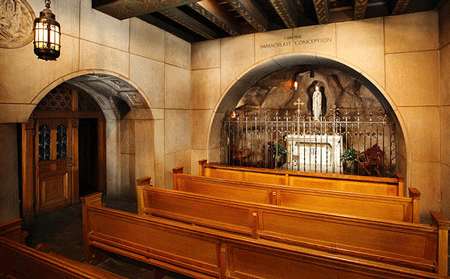
Our Lady of Lourdes Chapel: The Shrine’s first chapel outside of the Crypt Church commemorates the Marian apparitions to St. Bernadette Soubirous. An imitation of the Grotto, this chapel was constructed with a rock formation, low lighting, and statue of Mary in the alcove. Above the gate reads: “I am the Immaculate Conception.”
Our Lady of Siluva Chapel: The chapel’s statue recognizes an apparition of Mary which led to the discovery of a deed to a church that had been buried for safekeeping 40 years earlier. The altar portrays the hill of crosses upon which the Lithuanians vigilantly upheld their Christian identity in the wake of communist oppression.
Immaculate Heart of Mary: The carved, gold-leafed wood medallion of Mother and Child is the focal point of this chapel dedicated to the Immaculate Heart of Mary. The seal in the center was designed by St. Anthony Mary Claret, founder of an order devoted to Mary’s immaculate heart.
Our Lady of Czestochowa Chapel: In 1382, the Vice Regent of Poland brought the original picture of Mary to Czestochowa, where it came under the guardianship of the Pauline Fathers in their monastery. When the Hussites plundered the shrine in 1430, one of the bandits struck the painting with a sword, leaving scars on Mary’s cheek.
Mother of Perpetual Help Chapel: Also known as Our Lady of Baclavan, the image of Our Mother of Perpetual Help is among the best-known Marian icons in the world. The Byzantine-style painting features Mary as Our Lady of Sorrows as Jesus, the Christ Child, frightened by the symbols of his Passion, seeks the solace of his mother’s embrace.
Mary, Queen of Ireland Chapel: The green marble walls that surround this oratory reflect the Irish heritage and Catholic Faith. On the right wall is a map of Ireland with its four modern provinces, and a dominating image of St. Patrick at its center.
Immaculate Conception Mosaic: Crafted by the Vatican Mosaic Studio, the image is a gift of Popes Benedict XV and Pius XI. It arrived in June 1930 and is a copy of the famous oil painting by the Spanish artist Murillo.
Material from The Monitor archives and online sources was used in this report.
Related Stories
Monday, December 22, 2025





E-Editions
Events
At over 7,000 square feet, it’s the largest Roman Catholic church in the United States.
It’s welcomed three popes, count- less cardinals and bishops, and more than one million pilgrims – annually.
Since its dedication in 1959, the Basilica of the National Shrine of the Immaculate Conception has served a site of prayer and pilgrimage for many across the country and the world. Now, the shrine will welcome another visit from pilgrims from the Diocese of Trenton, who will take in its neo-Byzantine, neo-Romanesque architecture and marvel at its immense scale.
Located within the boundaries of the Archdiocese of Washington, D.C., the shrine is not a cathedral nor a parish church. Dedicated to the Blessed Virgin Mary – patroness of the United States – under her title of the Immaculate Conception, the Basilica is America’s preeminent Marian Shrine.
As early as 1846, the Bishops of the United States declared that a Catholic church, “is to be built in Washington after the manner of the great cathe- drals of the old world,” according to the Basilica’s historical records.
In the early 1900s, Bishop Thomas Shahan, then-rector of the Catholic University of America in Washington, suggested a shrine to Mary adjacent to the university’s campus. Bishop Shahan received Pope Pius X’s enthusiastic support, and plans to build a national shrine were approved in 1913. The cornerstone was laid in 1920 and the first Mass at the site was celebrated on Easter
Sunday in 1924.
Building of the shrine was put on hold by the Great Depression and World War II, but construction resumed in 1954, and the shrine was dedicated Nov. 20, 1959. Additional mosaics and decorations have been added through the years.
Throughout its history, the shrine has been home to many milestones. On Oct. 7, 1979, Pope John Paul II made the first apostolic visit to the shrine, proclaiming that it “speaks to us with the voice of all America, with the voice of all the sons and
daughters of America.”
In 1990, John Paul II officially elevated the shrine to the status of minor Basilica, a papal honor bestowed upon places of historical importance and significance as a center of worship. The Basilica hosted Pope Benedict XVI during his visit to the United States, as he presided at vespers in the Basilica’s Crypt Church and later addressed the U.S. bishops at the shrine. He also left a papal golden rose, a symbol that dates back to the eleventh century, as a sign of honor and respect.
Last September, Pope Francis celebrated Mass in front of 25,000 on the Basilica grounds. It was the first canonization Mass on U.S. soil, celebrating St. Junipero Serra, an 18th-century missionary in California.
This year, children from the Diocese attending the pilgrimage will be making a special journey to fill a ‘passport’ with stamps from 10 of the more than 70 Marian chapels and shrines. The locations that will be featured are:
Mary Help of Christians Chapel: Mary is depicted as Queen with crown and scepter. This chapel portrays her as an image of strength and forbearance. The title derives from a 16th-century prayer, the Litany of Loretto.
Miraculous Medal Chapel: Mary is shown standing on a globe, with a serpent crushed under her feet. Rays emit from her hands. The words “O Mary, conceived without sin, pray for us who have recourse to thee” encircle the figure of the Blessed Virgin Mary.
Our Lady of Guadalupe Chapel: This chapel honors Our Lady of Gua- dalupe as Queen of the Americas and features figures and landmarks representing the entire American continent, including St. Juan Diego, St. Martin de Porres, St. Elizabeth Ann Seton and St. Kateri Tekakwitha.
Our Lady of Lourdes Chapel: The Shrine’s first chapel outside of the Crypt Church commemorates the Marian apparitions to St. Bernadette Soubirous. An imitation of the Grotto, this chapel was constructed with a rock formation, low lighting, and statue of Mary in the alcove. Above the gate reads: “I am the Immaculate Conception.”
Our Lady of Siluva Chapel: The chapel’s statue recognizes an apparition of Mary which led to the discovery of a deed to a church that had been buried for safekeeping 40 years earlier. The altar portrays the hill of crosses upon which the Lithuanians vigilantly upheld their Christian identity in the wake of communist oppression.
Immaculate Heart of Mary: The carved, gold-leafed wood medallion of Mother and Child is the focal point of this chapel dedicated to the Immaculate Heart of Mary. The seal in the center was designed by St. Anthony Mary Claret, founder of an order devoted to Mary’s immaculate heart.
Our Lady of Czestochowa Chapel: In 1382, the Vice Regent of Poland brought the original picture of Mary to Czestochowa, where it came under the guardianship of the Pauline Fathers in their monastery. When the Hussites plundered the shrine in 1430, one of the bandits struck the painting with a sword, leaving scars on Mary’s cheek.
Mother of Perpetual Help Chapel: Also known as Our Lady of Baclavan, the image of Our Mother of Perpetual Help is among the best-known Marian icons in the world. The Byzantine-style painting features Mary as Our Lady of Sorrows as Jesus, the Christ Child, frightened by the symbols of his Passion, seeks the solace of his mother’s embrace.
Mary, Queen of Ireland Chapel: The green marble walls that surround this oratory reflect the Irish heritage and Catholic Faith. On the right wall is a map of Ireland with its four modern provinces, and a dominating image of St. Patrick at its center.
Immaculate Conception Mosaic: Crafted by the Vatican Mosaic Studio, the image is a gift of Popes Benedict XV and Pius XI. It arrived in June 1930 and is a copy of the famous oil painting by the Spanish artist Murillo.
Material from The Monitor archives and online sources was used in this report.