


Aug. 18 – The world will always be hostile to the disciples of Jesus
August 12, 2019 at 5:41 p.m.
We often lament that fewer people seem to be practicing the faith today than in years’ past. Certainly this appears to be the case, and there are many reasons why and these are often elucidated by various surveys and polls. It is not at all unlikely that the difference between today and say 60 years ago isn’t that fewer people have the urgency of faith and therefore, fewer practice, but rather that as it has become socially normative to not practice, it is easier for them to not attend religious services with any regularity.
Jesus knew that his teaching was divisive and that not everyone would respond with generous faith and be enlivened with the Spirit. We all know that even one of his chosen 12 didn’t catch the faith and betrayed him to the authorities leading to his arrest and execution. It should be no surprise that the same is true in our own families and among our friends.
The time of seeming peace and security for the disciples of Jesus is a time of interval and of a false hope. Upheaval and unrest – many times from non-believers and at other times from within the Church – are and ought to be the hallmark of discipleship. Being a believing and practicing Christian, and especially a believing and practicing Catholic, should be disruptive to our lives. Criticism in the public square should be normative. Recently Brian Buescher, a judicial nominee, was challenged by two U.S. senators because of his membership in the Knights of Columbus. Instead of being recognized for membership in a charitable organization they drew focus on the political positions of the group, which are based on sound Catholic moral teaching. The challenge was a deeper one – one where they demonstrated a bias or indeed bigotry against our Catholic faith.
This is problematic but not unprecedented. Much of the history of our country has been rooted in an anti-Catholic bias, and likely it always will be. Perhaps, as we read the Gospels, it always should be that way.
Our First Reading highlights the persecution of the prophet Jeremiah. Jeremiah will eventually be murdered by his own people when they are in exile in Egypt. It is not surprise that St. Paul seems to identify with Jeremiah in his own life and ministry. He, too, suffers martyrdom for his proclamation of the Gospel.
As he writes to the Colossians, Paul reminds us that Jesus himself: “For the sake of the joy that lay before him he endured the Cross, despising its shame, and has taken his seat at the right of the throne of God.”
The great mystery, indeed the great irony of the Christian faith is that we gaze upon the Crucified One and see not defeat but victory; not death but life.
In the midst of the struggles that come with trying to be a faithful disciple of Jesus, Paul continues: “Consider how he (Jesus) endured such opposition from sinners, in order that you may not grow weary and lose heart.”
With our model always as the Cross of Jesus Christ then we are strengthened in faith and encouraged in our perseverance. This is among the reasons why a Crucifix – a depiction of Jesus hanging on the Cross – is and always should be prominent in the sanctuary. We are reminded of the cost of our salvation, and also what we are called to endure as we walk that path of salvation in our own lives.
Are we to be surprised, then, that others choose to drop off the path and walk the ways of the world – by no means! Yes, we must pray for them, hoping that they will find their way, but we cannot lose our own way in the process.
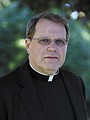
Father Garry Koch is pastor of St. Benedict Parish, Holmdel.
Related Stories
Sunday, January 11, 2026


E-Editions
Events
We often lament that fewer people seem to be practicing the faith today than in years’ past. Certainly this appears to be the case, and there are many reasons why and these are often elucidated by various surveys and polls. It is not at all unlikely that the difference between today and say 60 years ago isn’t that fewer people have the urgency of faith and therefore, fewer practice, but rather that as it has become socially normative to not practice, it is easier for them to not attend religious services with any regularity.
Jesus knew that his teaching was divisive and that not everyone would respond with generous faith and be enlivened with the Spirit. We all know that even one of his chosen 12 didn’t catch the faith and betrayed him to the authorities leading to his arrest and execution. It should be no surprise that the same is true in our own families and among our friends.
The time of seeming peace and security for the disciples of Jesus is a time of interval and of a false hope. Upheaval and unrest – many times from non-believers and at other times from within the Church – are and ought to be the hallmark of discipleship. Being a believing and practicing Christian, and especially a believing and practicing Catholic, should be disruptive to our lives. Criticism in the public square should be normative. Recently Brian Buescher, a judicial nominee, was challenged by two U.S. senators because of his membership in the Knights of Columbus. Instead of being recognized for membership in a charitable organization they drew focus on the political positions of the group, which are based on sound Catholic moral teaching. The challenge was a deeper one – one where they demonstrated a bias or indeed bigotry against our Catholic faith.
This is problematic but not unprecedented. Much of the history of our country has been rooted in an anti-Catholic bias, and likely it always will be. Perhaps, as we read the Gospels, it always should be that way.
Our First Reading highlights the persecution of the prophet Jeremiah. Jeremiah will eventually be murdered by his own people when they are in exile in Egypt. It is not surprise that St. Paul seems to identify with Jeremiah in his own life and ministry. He, too, suffers martyrdom for his proclamation of the Gospel.
As he writes to the Colossians, Paul reminds us that Jesus himself: “For the sake of the joy that lay before him he endured the Cross, despising its shame, and has taken his seat at the right of the throne of God.”
The great mystery, indeed the great irony of the Christian faith is that we gaze upon the Crucified One and see not defeat but victory; not death but life.
In the midst of the struggles that come with trying to be a faithful disciple of Jesus, Paul continues: “Consider how he (Jesus) endured such opposition from sinners, in order that you may not grow weary and lose heart.”
With our model always as the Cross of Jesus Christ then we are strengthened in faith and encouraged in our perseverance. This is among the reasons why a Crucifix – a depiction of Jesus hanging on the Cross – is and always should be prominent in the sanctuary. We are reminded of the cost of our salvation, and also what we are called to endure as we walk that path of salvation in our own lives.
Are we to be surprised, then, that others choose to drop off the path and walk the ways of the world – by no means! Yes, we must pray for them, hoping that they will find their way, but we cannot lose our own way in the process.
Father Garry Koch is pastor of St. Benedict Parish, Holmdel.