
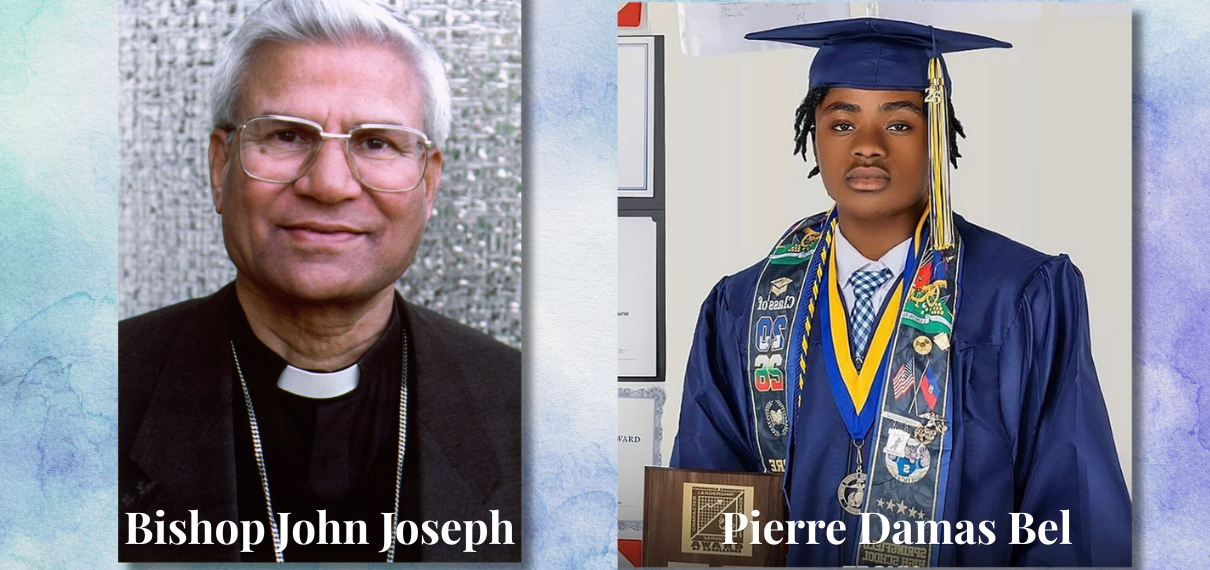
Top photo caption: Bishop John Joseph, CNS photo from KNAPierre Damas Bel: OSV News photo/@Pierre_d_bel_7/Instagram
By Rayanne Bennett, Associate Publisher
It was 1998 when Bishop John Joseph of Faisalabad, Pakistan, took his own life outside a courthouse to protest his nation’s strict blasphemy laws and cruel treatment of Christians.
Filled with despair and frustration with the law’s injustice overall, the Bishop was also condemning the death sentence given to one particular Christian man. It was a sentence that would ultimately be overturned.
The response from the Church was swift and united. The day after Bishop Joseph’s suicide, three of his fellow Pakistani bishops issued a statement about their brother in Christ. In it, they said, “He passionately devoted himself to the struggle for human rights of the poor and victims of injustice.”
They concluded, “We believe that the Lord he sought so heroically to serve will now prove to be his merciful judge and give him the reward he deserves.”
At the funeral Mass, a message from Pope John Paul II was read, expressing his hopes that Bishop Joseph’s “struggle for justice and people’s rights will bear fruit.”
Fides, the news agency for the Vatican’s Congregation for the Evangelization of Peoples, said it was clear that the bishop’s suicide was “a protest death.”
The Catechism of the Catholic Church addresses the topic of suicide in a section that proclaims clear, thorough and compassionate teaching. This text establishes the gravity of the act; acknowledges mitigating factors such as severe psychological disturbance, anguish, fear and suffering that can diminish culpability, and assures us that God can provide the opportunity for saving repentance by ways known to him alone.
A key takeaway: The Catechism teaches that we should not despair of the eternal salvation of those who have taken their own lives and that we must pray for them.
Thoughts of Bishop John Joseph may have resurfaced for some after hearing the recent heartbreaking news about the suicide of Pierre Damas Bel, a 20-year-old Haitian-born college student – a member of the Marine Corps Junior ROTC and the National Honor Society – who had been in this country for years under Temporary Protected Status. With the Trump Administration’s termination of TPS – a move that the U.S. Bishops strenuously objected to, including our own Bishop David M. O’Connell, C.M. – many Haitians who had been living in the U.S. under its auspices have been rounded up and either deported or forced to wear a large, cumbersome ankle monitor. Bel was fitted with the device in July.
Reports from the family emphasized that Bel, in his first year at Wright State University in Dayton, Ohio, was distraught over not being able to play soccer because of the ankle monitor and pleaded with Immigration authorities to remove it. He reported being bullied by classmates who called him a criminal. The young man had told his father that he “felt like he was being treated like an animal.” He had admitted feeling “shame and humiliation that I never imagined I would experience.”
And so, on the morning of Aug. 31, Bel parked his car on the shoulder of Interstate 70 in Springfield, Ohio, and walked in front of an oncoming tractor trailer. He was pronounced dead at the scene. No one else was injured.
The intentional loss of life is indeed a grave matter, and we all must bear the shame for these hellish crimes against human dignity committed by our own elected government in its efforts to deport hundreds of thousands of people.
Bel’s suicide was described by one U.S. archbishop as a “death of despair.” That is certainly true. There is no question that he suffered humiliation and anguish; anyone’s mental health could be frayed by what happened to him.
We cannot know if Bel intended for his suicide, like Bishop Joseph’s “protest death”, to be seen as an act of condemnation of the way that his Haitian community was being treated. But there is no question that this tragedy should inspire us all to pick up that protest.
As the Church teaches, we should pray for Pierre Damas Bel’s eternal salvation. We also can pray that his name will long be remembered as a tragic example of the toll that hatred and bigotry can inflict upon human beings. And, in the spirit of Pope John Paul II’s message about Bishop Joseph, we can pray that Bel’s death will truly be a catalyst for change.
September is National Suicide Prevention Month, a dedicated time to raise mental health awareness, share vital resources and support those affected by suicide. If you or someone you know is struggling or in crisis, help is available 24/7 by calling or texting 988, or by visiting 988lifeline.org.