
By Jennifer Mauro | Associate Editor
In an effort to understand and respond to the decline of religion among youth and young adults, St. James Parish, Pennington, and Pennington Presbyterian Church are co-hosting an evening of open dialogue to tackle what has become an interreligious trend.
“This is an issue for our culture,” said Nancy Lucash, coordinator of religious education in St. James Parish. “It goes beyond our parish or the Catholic Church.”
Dr. Kenda Dean, professor of youth, church and culture at Princeton Theological Seminary, will speak at 7 p.m. Nov. 9 in St. James Church on the topic of “Life Conversations: Why faith formation matters for parents & teens concerned about grades, sex, drugs, college and ‘Whether I’ll have anyone to hang out with this weekend!’” The event is free and open to the public, with an emphasis on those who encounter pre-teens, teens and young adults on a regular basis such as parents, grandparents and youth and young adult ministers.
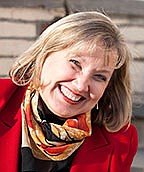
Dean – a noted author and speaker whose recent book, “Almost Christian,” discusses why American teenagers are indifferent to practicing religion – said her talk would focus heavily on the conversations going on not just between religious congregations and youth, but in the family home as well.
“The most important faith formation happens at the family level, but a lot of kids aren’t getting that,” Dean said. “Bottom line is if the parents want their children to have faith, parents have to exhibit that faith as well.”
Lucash agreed, saying, “We need to help parents and grandparents pass on the faith. They are the primary teachers.”
The Rev. David R. Hallgren, associate pastor of Christian education in Pennington Presbyterian Church, said that in his experience, parents feel underequipped when it comes to talking about religion, often hearing comments such as, “I’m going to leave the door open and let my child choose their own path in faith.”
“I can see the motivation of not forcing religion on your children,” he said. “But you also lose the opportunity to answer the questions ‘Why do I believe?’ or ‘Why do I have faith?’”
Those deeper questions, Hallgren says, are exactly what youth today need. Citing evidence from the National Study of Youth and Religion – a longevity study that began in the early 2000s by researches from the University of Notre Dame, Indiana, and University of North Carolina at Chapel Hill – young people today are leaning toward a “moralistic therapeutic deism,” tending to believe a general “feel good” faith where happiness is life’s goal and God is needed only to solve problems.
“Kids aren’t rejecting the faith of their parents,” he said. “But they only want to break the glass when they need something.”
Dean agreed, saying the younger generation are striving to be good people but not grasping the Biblical motivations behind their actions. As such, she said, “there’s little going on beyond being a nice person and having a good attitude.
“The truth is what Jesus calls compassion is a whole lot more than just being nice,” she said. “Being a good citizen in the kingdom of God is a very different idea than being a good citizen here on earth.”
Lucash and Hallgren are both hopeful the talk will give parents and others an outlet to openly discuss their faith and concerns on how to start a dialogue with their children.
“This is not a topic you talk about on the soccer field,” Lucash said. “But God is absent, and everyone is having this same issue in their families.”