
By Patrick T. Brown | Correspondent
A young man from Brooklyn lies on his deathbed. Suffering from full-blown AIDS, he moans and cries out, his forehead dripping with sweat, his eyes half-closed, the disease ravaging him from the inside.
Here is where the film “Outcasts” begins, and here is where the call to discipleship is put to the test. “Whatsoever you do for the least of these, you do for me.”
The young man’s brother, who sacrifices to care for him, ponders “Why him? Why not me?” The question is unanswerable, but he finds spiritual strength and solace in the presence of a member of the Franciscan Friars of the Renewal, who accompanies him in caring for his brother, praying for him and offering last rites.
Such are scenes from the film “Outcasts,” which was screened March 27 by the diocesan Department of Youth and Young Adult Ministries at Rider University, Lawrenceville. Scenes of Franciscan friars adoring the Blessed Sacrament in their house in Harlem are spliced between shots of drug overdoses mere blocks away. There are corpses after a horrific prison fire in Comayagua, Honduras. Viewers watch as women sit at a table in Bradford, England, and get high. There is a lack of hope heard in the voices of residents of Moyross, Ireland, one of that country’s most crime-ridden cities.
Those four sites across the globe are places the Friars of the Renewal call home, deliberately establishing themselves as the hands of Christ, reaching out to the most dispossessed and downtrodden in a broken and bruised world.
The Franciscan Friars of the Renewal were established in 1987 by eight Capuchin friars, and live out their mission of discipleship, prayer and service on the streets and neighborhoods. One of the many unnamed friars interviewed for the film says of St. Francis of Assisi, his order’s founder, “He believed that love could save the world.” Through their actions, these friars are putting that hypothesis to the test.
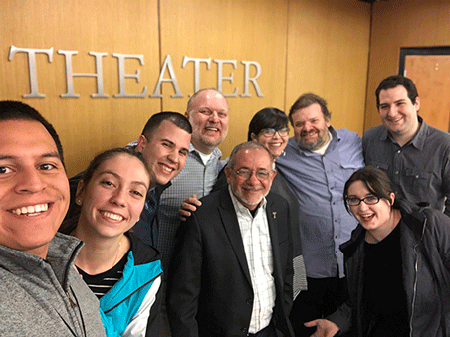
The film, with Hollywood-level production values, was screened in front of an audience, followed by a question-and-answer session with Joe Campo, the executive producer. Campo, who regularly volunteers with the Friars, said making the film is the definition of a labor of love.
“I don’t know how many times I saw these scenes in the editing room, and it takes a toll on you,” Campo said. “I wish I could be making comedies right now, but that’s not what God’s calling me to.”
The cameras follow the friars in their daily work, including at Harlem’s St. Anthony Residence, which provides services and shelter for the homeless. The help is not unconditional – one sees the priests and brothers checking for weapons with metal detectors, administering breathalyzers and testing urine for drugs.
In one such scene, a friar talks to a man named Robert, an ex-offender seeking assistance from St. Anthony Residence. He has tested positive for drugs, leading to a difficult conversation in which Robert is asked to come back in two or three days with a clean test. Over the course of the conversation, it becomes clear Robert does not plan to return, and a postscript tells the viewers that he “has not been seen since.”
“It’s incredible to know the [documentary crew] were right there, in the midst of it,” said one attendee after the screening. “You really see the dangers these people face, the tough situations.”
In a post-film discussion, Campo stressed that the ability to serve the least among us does not require a journey to Honduras or Harlem.
“We all have these situations in our own neighborhood,” Campo said. “The real goal [of the film] is to get people involved in their own community, in their own families.”
Despite the grimness of the subject matter, there is celebration, too.
“The film is really about hope,” Campo said. “It’s a thankless business, but [the Friars] are not in it to get thanked … I just wanted to bring these types of situations to people so it might stir something in their hearts.”