
By Madelyn Reichert, OSV News
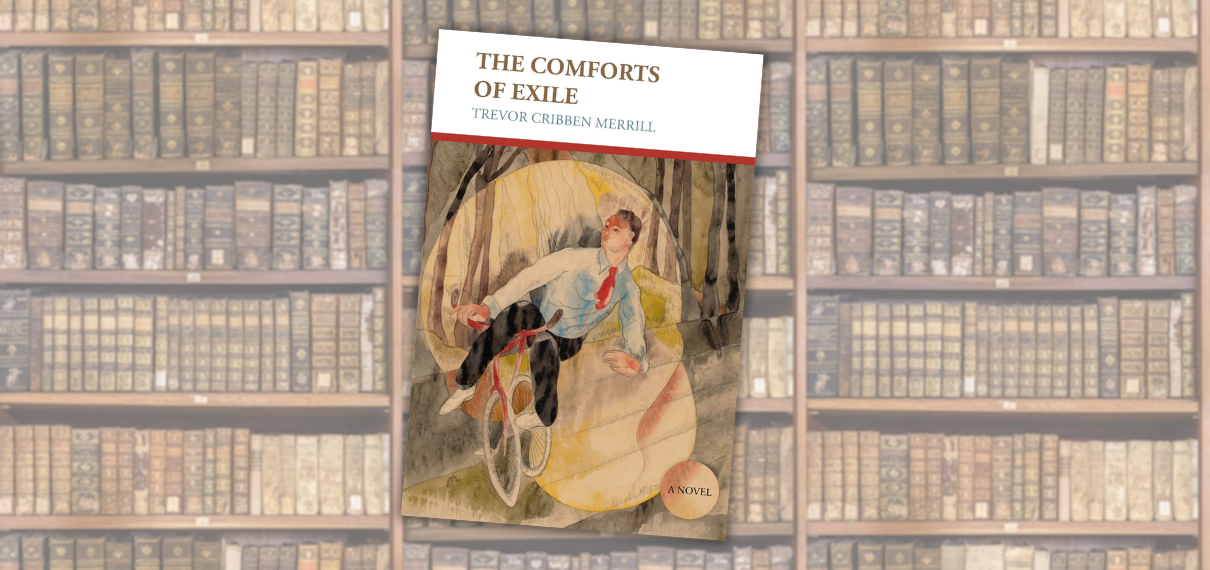
Top photo caption: This is the cover of “The Comforts of Exile” by Trevor Cribben Merrill. OSV News photo/Wiseblood Books
“The Comforts of Exile”
Trevor Cribben Merrill, Wiseblood Books (2026)
311 pages, $17.00.
How can one get a self-absorbed young man out of his head and into reality?
That is the question posed by Trevor Cribben Merrill’s latest novel, “The Comforts of Exile,” the sequel to his other well-known work, “Minor Indignities.” No longer a freshman blundering his way through Ivy League life, the now 22-year-old, recently graduated and earnestly converted Colin Phelps has set high goals for himself, shunning his grandfather’s offer of a comfortable career in architecture for more literary aspirations. Those aspirations take on a decidedly Parisian bent when his college girlfriend, Julia, simultaneously kicks him to the curb and recommends he spend a year teaching abroad in France.
Perhaps to the surprise of readers familiar with “Minor Indignities,” Colin quickly makes a good impression on his host family and even falls mutually head-over-heels for the youngest daughter, the beautiful and devout Laure; furthermore, a chance meeting with Harry McClatchy, the aggressive ex-professor from his undergraduate days, gives him an unexpected entrance into the French literary scene.
However, despite these apparent personal and professional successes, Colin has found himself in a familiar writer’s predicament: He can’t write a single sentence worth reading. A religious examination of his psyche reveals what he terms an “angelic imagination” – the inability to get out of the realm of “big ideas” and into the concrete stuff of everyday life.
Although Colin may be struggling to find the devil (or angel?) in the details, Merrill certainly is not. “The Comforts of Exile” immerses the reader in the experience of being an American in early 2000s Paris; the reader is treated to all the tangible details of Colin’s expatriate life, from bike rides on drizzling streets and visits to iconic museums to broken noses and less-than-elegant dinners of boiled eggs and beer in a basement apartment.
For those of us who have never had the pleasure of visiting this famous city, “The Comforts of Exile” is delightfully transportive – and, as with all good novels, the style supports the theme. While Colin is trapped in the realm of ideas, the plot is dragging him headfirst into the realm of the physical and real, whether he’s aware of it or not. Humans, after all, are not angels; we have a body as well as a soul.
The book does have a few flaws. Although it’s in-character for a self-absorbed and lustful young man’s internal monologue, Colin’s distaste for women who aren’t conventionally attractive is still a bit unsettling, especially given that it goes more or less unchallenged by the narrative.
Furthermore, given how frequently they’re discussed by the secondary characters, a reader might anticipate that Merrill would do more with the setting’s rising xenophobic and political tensions, instead of leaving them merely as an intriguing background detail.
Nevertheless, “The Comforts of Exile” is not only a worthwhile sequel to “Minor Indignities,” it also surpasses the original novel in terms of drama and pathos. Although “Minor Indignities” was a very funny novel, this reviewer could only take cringing through Colin’s disastrous – and at times borderline creepy – attempts to win the heart of the tempestuous Margot so many times before wanting to throw up her hands in exasperation at his juvenile antics.
In “The Comforts of Exile,” however, Colin is doing the much harder work of trying to improve himself and get out of his own head (and way); it’s a more worthwhile project, and therefore a more enjoyable read.
If you, like this reviewer, sometimes get too caught up in wondering how many angels can dance on the head of a pin, pick up “The Comforts of Exile” for a delightful reminder that oftentimes, we are all too human.
Madelyn Reichert is publications administrative coordinator at The Catholic Spirit, the official publication of the Archdiocese of St. Paul and Minneapolis.
Catholic journalism is needed now more than ever. Please consider supporting this work by signing up for a SUBSCRIPTION (click HERE) or making a DONATION to The Monitor (click HERE). Thank you for your contribution.