
By EmmaLee Italia, Contributing Editor
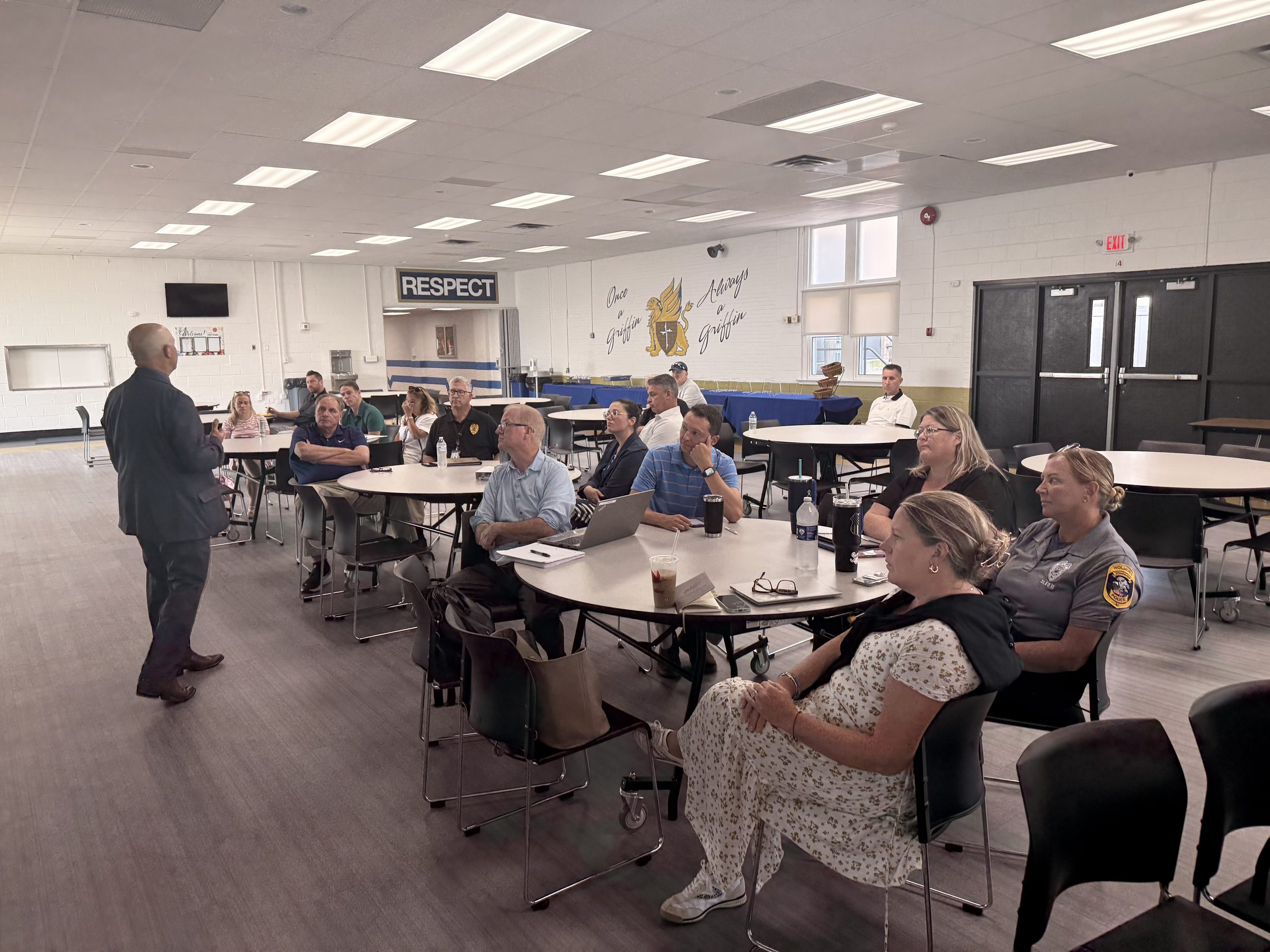
Top photo: Catholic school principals and administrators learn about unique security considerations.
When it comes to large-scale school events, thinking proactively about security can help preempt safety incidents, say local experts.
“School safety is not something that begins when the first bell rings and ends when students are dismissed,” said Bonnie Milecki, assistant superintendent for Catholic schools in the Diocese of Trenton. “Safety remains a priority every time our schools host activities that bring our communities together.”
Dr. Vincent de Paul Schmidt, the Diocese’s superintendent for Catholic schools, noted that the safety event is part of a broader, three-part approach to training school staff. “Catholic identity and adherence to mission” is the primary focus, Dr. Schmidt said, followed by an emphasis on achievement and academic excellence. “The third leg of the chair is the priority of school safety and the safety of all our students,” he said.
Some 27 Catholic high school principals and administrators learned best practices for school safety in extraordinary circumstances during a training held Aug. 12 in Donovan Catholic High School, Toms River.
Presented by Jeffrey Gale and Dr. Thomas Gambino of the New Jersey Department of Education’s Office of School Preparedness and Emergency Planning (OSPEP), the workshop encouraged leaders to look at large events through a security lens.
Security Sensibility
The diocesan Department of Catholic Schools regularly provides professional development focused on school safety and emergency preparedness, Milecki noted.
“We recognized that large events – athletic contests, performances, graduations and other activities that bring significant numbers of students, families and visitors onto our campuses – present different security considerations than the normal school day.”
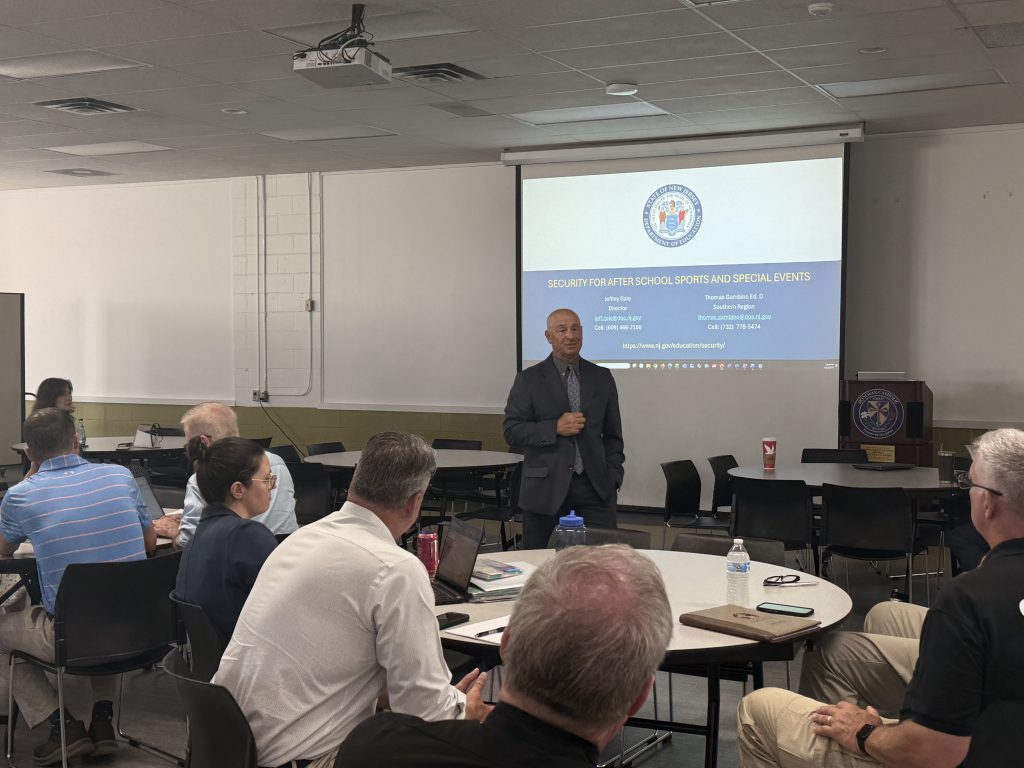
The workshop presenters emphasized how event security cannot rest with one individual; everyone – school staff, administrators, facilities personnel and local law enforcement – has a role to play, and coordination among all involved is essential.
With each gathering, school leaders were encouraged to consider who is responsible for the event, the management of entrances and exits, communication plans, outreach to first responders and potential stoppage of an event in case of emergency.
Beyond the Classroom
A typical school day is inherently predictable – controlled entrances, managed personnel and students and established schedules – whereas a large event presents particular considerations.
Gale and Gambino stressed the importance of evaluating each specific event in advance, and asking practical questions about potential vulnerabilities, who is watching those areas, who makes security decisions and communicates them quickly.
“You may have hundreds of visitors who are unfamiliar with the building, multiple entrances and exits in use, people moving between indoor and outdoor spaces, and staff members performing very different roles than they do during the school day,” Milecki noted.
Gale, now OSPEP director, previously served 26 years with the State Police. His experience included security for government officials, critical infrastructure and large venues and events, as well as conducting school security assessments and training staff.
Gambino, an education program development specialist with NJDOE, has worked extensively with schools in the southern region of the state reviewing security plans and emergency preparedness.
Safety Through Strong Planning
Parents and families are important partners in creating safe school communities, Milecki added.
“One of the simplest things parents can do is respect the security procedures a school has established; they exist for a reason,” she said. “And parents should report suspicious behavior or circumstances to school personnel or law enforcement.”
At the same time, she doesn’t want families to feel fearful attending an event. “The purpose of strong planning is precisely the opposite – to allow students and families to participate in these traditions with confidence.”
Milecki said that safety works best when everyone sees themselves as part of the school community.
“Administrators have a responsibility to prepare, staff have a responsibility to know their roles, and families help by being attentive, following established procedures and communicating concerns,” she said.