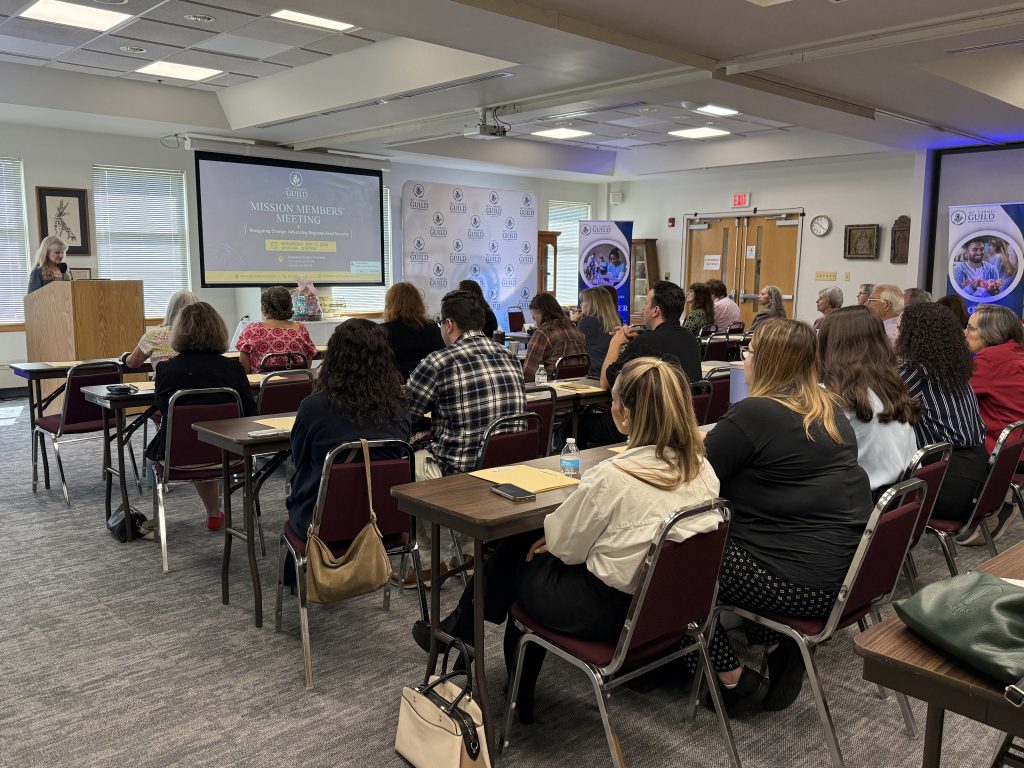

In top photo: Panelists at the Mount Carmel Guild Mission Meeting May 13 discuss food insecurity. From left, Matthew Packer, clinical quality manager for United Health; Elizabeth McCarthy, president and CEO, Community Food Bank of New Jersey; Joan F. Healy, director, Children’s Home Society of New Jersey; Cecilia Avila, director of hunger prevention, Arm in Arm; and Daren Miller, MCG executive director. EmmaLee Italia photo
By EmmaLee Italia, Contributing Editor
For nearly a century, Mount Carmel Guild has responded to the needs of Mercer County’s most vulnerable residents. But as economic pressures deepen and food insecurity rises across New Jersey, leaders in social services say the challenge has grown far beyond simply providing food.
That reality framed the Guild’s May 13 mission members meeting at the diocesan chancery in Lawrenceville, where donors, advocates and community partners gathered to discuss the growing crisis of food insecurity and the broader social issues connected to poverty, healthcare and economic instability.
When there are economic issues, “it is the poorest who feel it first and who feel it hardest,” said Darren Miller, executive director of Mount Carmel Guild. “So, we have to do the very best we can to meet those needs.”
A Multifaceted Challenge
The Guild, which has served the under-resourced since 1920 through its food pantry and home-health nursing programs, opened this year’s annual mission members meeting to the wider community in an effort to foster dialogue and collaboration around the issue.
Miller moderated a panel featuring representatives from Community Food Bank of New Jersey, Arm in Arm, UnitedHealth Group and Children’s Home Society of New Jersey, alongside Mount Carmel Guild’s home health nursing ministry.
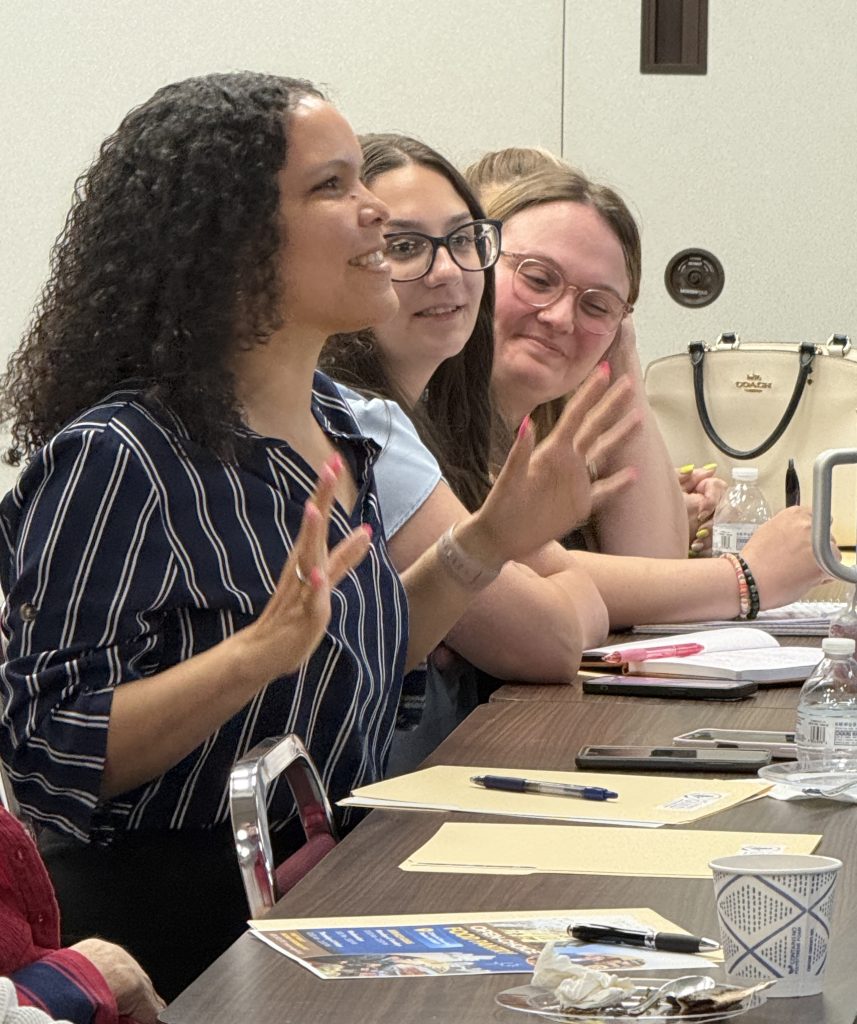
“I meet with persons who come by the food pantry every day, and many of them are having to [decide] whether to purchase supplies for their home, as opposed to purchasing medication, gas or utilities,” Miller said. “These are some decisions … that many of us may take for granted.”
Throughout the discussion, speakers emphasized that hunger today is rarely an isolated problem. Instead, it is tied to housing insecurity, lack of transportation, limited access to healthcare, job instability and barriers to education.
Panelist Elizabeth McCarthy, president and CEO of Community Food Bank of New Jersey, stressed that food insecurity is not simply hunger but the ongoing uncertainty of accessing healthy, nutritious food.
“Even short periods of food insecurity in childhood increase mental health struggles” in people “throughout their lifetime,” she said.
McCarthy said food pantries increasingly serve working families struggling with rising costs, while complex benefit systems and technology barriers often prevent people from receiving assistance. She also pointed to the need for practical supports, such as diapers and hygiene products, which can help families maintain employment and stability.
Panelist Joan Healy, director of the Mercer WIC Program for Children’s Home Society of New Jersey, highlighted how poor nutrition can contribute to developmental and academic challenges that perpetuate cycles of poverty.
“Your zip code is actually more important than your genetic code,” Healy said, referencing the impact of social determinants of health in underserved communities.
She said the WIC program — the federal supplemental nutrition program for women, infants and children — aims to address childhood food insecurity from the start, such as providing benefits for new mothers to purchase formula immediately after leaving the WIC clinic.
Panelist Michael Packer of UnitedHealth Group also emphasized the connections among early nutrition, preventive care and lifelong health outcomes.
“We are at a nationwide crisis of childhood obesity and dental issues … which lead to chronic obesity or heart problems,” Packer said.
Turning the Tide
“Advocacy is vital. We cannot keep just trying to make the Band-aids better,” said Brenda Rascher, executive director of Catholic Social Services in Trenton Diocese. “We’ve got to address the bigger picture.”
Miller said Mount Carmel Guild, like many charitable groups, was established “as an emergency response.” He said it has evolved “to become a primary resource for many individuals. And more than food is required.”
To that end, social service organization representatives described how their agencies are adapting to changing needs.
Panelist Cecilia Avila, director of hunger prevention for Arm in Arm, said many families arriving at food pantries face multiple crises at once.
“When families come to us, we listen to them first,” Avila said. “They are not only coming with one need, but several,” listing rent and family medical needs as other concerns. “It’s important for us to have our coordinators help navigate and connect these families with resources.”
Max Gatto, food truck coordinator for Trenton Area Soup Kitchen, highlighted the collaboration among TASK, Capital Health and Arm in Arm. After listening to feedback from patrons who had to choose between hot meals and fresh produce, they pivoted to having multiple mobile units in each location.
“People could get those [produce] items and … they can have the hot meals (to) take home to their families as well. And we’ve seen great success with that,” Gatto said.
“A big mission for us is looking at the community as a whole and … identifying where we can be most active and effective,” said Packer. “A healthier New Jersey leads to healthier outcomes for everybody.”
His suggestion, to which panelists nodded in agreement, is “getting teens involved in the community services” and learning “what is in their future based on what they do and how they act now.” That education includes work-life skills, budgeting and planning for a lasting, successful life, and knowing what resources are available to them.
“Our goal is to lessen how many people need to take part in these methods – we’d love to see the number go down.”