
By Father Garry Koch
Gospel reflection for March 22, 2026, Fifth Sunday of Lent
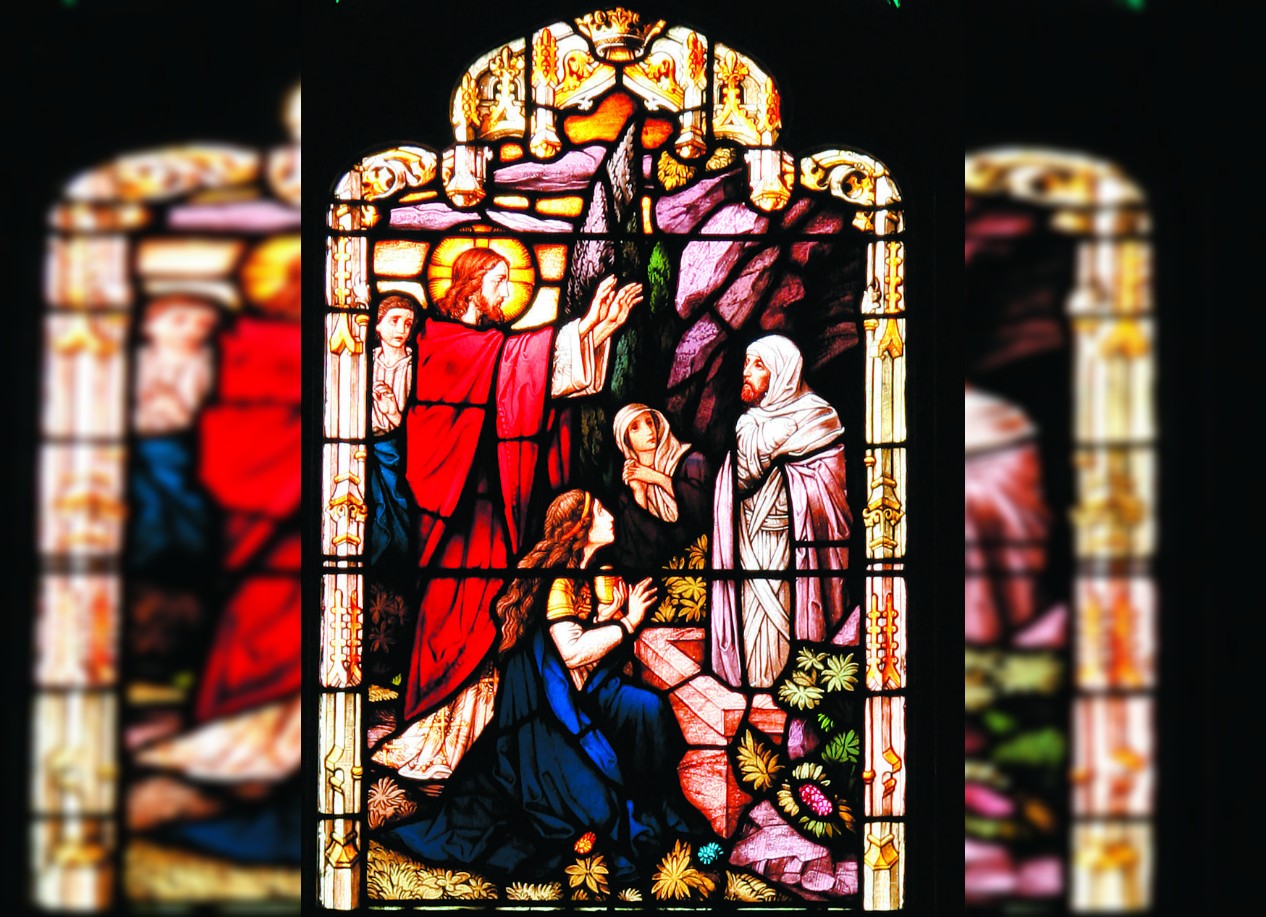
For the second week in a row, the Gospel emphasizes the image of Jesus as the Light of the world. Last week Jesus identified himself as such as he healed the man born blind. This week, as he prepares to go to Bethany where Lazarus, his friend, has died, Jesus contrasts light and darkness. The ensuing miracle, the most demonstrable and powerful of his ministry, occurs amidst the shroud of doubt, suspicion, and sadness. Jesus walks into the darkness of the death of Lazarus absorbing their grief and standing as the Light of World penetrating even death itself.
Although we are experiencing in our physical world the gradual lengthening of the hours of sunlight each day and have entered into daylight savings time to give us more evening light, the world around us is filled with all forms of darkness.
Jesus intentionally put himself into a situation where the darkness fueled by doubt and suspicion pervaded the scene. He had been alerted that Lazarus was sick and yet he waited to go to Bethany to be with Lazarus and his sisters, Martha and Mary. By the time Jesus and the disciples arrived, Lazarus had already been deaf for four days.
Martha and Mary are angry at Jesus and each of them makes the same accusatory complaint: “If you had been there, my brother would not have died.”
The mourners who were attending the ritual shiva sneer at Jesus, wondering why he didn’t do anything.
This is the one event in his ministry, aside from his Passion, where Jesus is surrounded more by disbelief, skepticism and doubt, than he is by belief and hope.
The overwhelming presence of this doubt hits Jesus on a visceral level. On two occasions on his way to the tomb of Lazarus, the evangelist reports that Jesus became “perturbed.” Yet the Greek word used is better translated as “snorted.” Jesus was not upset about the death of Lazarus, from the beginning he knew why he was there and what great sign he would perform there, but he was overwhelmed by the lack of belief, and the absence of hope, in those who were present.
Jesus — the very Light of the world — was distressed by the darkness around him.
Confusing light and darkness is a problematic feature of the post-modern world. Light isn’t seen as light anymore, and darkness is preferred to the light.
John the Evangelist wrote of this in the prologue to his Gospel, and now we see it being played out in the Gospel, and most certainly in our own time.
The current world situation, where the cause and celebration of war is rooted in the apocalyptic fantasies of believers shows us the depths to which darkness can pervade the hearts, minds, and souls of those who should be in the light. Yet, falsehood overtakes truth, and deception overwhelms authenticity.
In a homily delivered at a Rome parish this past Fourth Sunday of Lent, Pope Leo XIV made the following observation:
“Many of our brothers and sisters today suffer because of violent conflicts, caused by the absurd claim that problems and differences can be resolved with war, instead, we must tirelessly pursue dialogue for peace.
“Some even claim to involve the name of God in these choices of death, but God cannot be enlisted by darkness. Rather, he always comes to give light, hope, and peace to humanity — and it is peace that those who invoke him must seek.”
At the tomb of Lazarus Jesus overcame the darkness around him through the miraculous sign raising Lazarus from the dead. John notes then that: “many of the Jews who had come to Mary and seen what he had done, began to believe in him.” The hint there is also then that at least some still preferred to remain in the darkness instead of coming to the light.
Let us not allow the pervasive darkness around us — and sadly even within our own church — to take root in us. We have seen the light, and can never unsee what has been revealed to us.
Father Garry Koch his pastor of St. Benedict Parish, Holmdel.