
Third Sunday of Lent
The people living in the desert knew the importance of water. While we are able to take water for granted, potable water remains a scarce resource for millions of people throughout the world. Key for survival, water is the essential element that makes life possible.
The Israelites struggled to find water, and when they did, they knew they could live to see another day. Water, then, took on a deeper symbolic meaning for them, and through the ministry of Jesus, it does so for us. Water is our inner connection to all of life, and through Baptism, the necessary element for eternal life.
The Israelites struggled greatly during their desert sojourn. Over the span of forty years they lacked food — which then God provided the manna from heaven and quails to satisfy their desire for meat; water, which came from the oases but, as we see in the reading this weekend, came through the rock struck by Moses. The forty year span also brought much death and suffering. All of the people — except for Joshua and Caleb — who were slaves in Egypt died in the desert. It was a new people, who knew neither the richness of life in Egypt nor the harshness of slavery, who entered the Promised Land. The time in the desert was not one of peace, either. Various marauding tribes and desert nomads engaged Israel in war, which took a heavy toll on the people. This was not an easy time, and they frequently grumbled against God. Moses struggled with the governance of the people, and he even had to quell the anger of God against Israel on several occasions.
At the command of God, Moses brings forth water from a rock to satisfy and save the people in their thirst.
Jesus and his disciples had traveled into the more unfriendly territory of the Samaritans. For all sorts of historical and religious reasons, the Jews and Samaritans were hostile to one another, even though they are all descendants of the ancient Israelites.
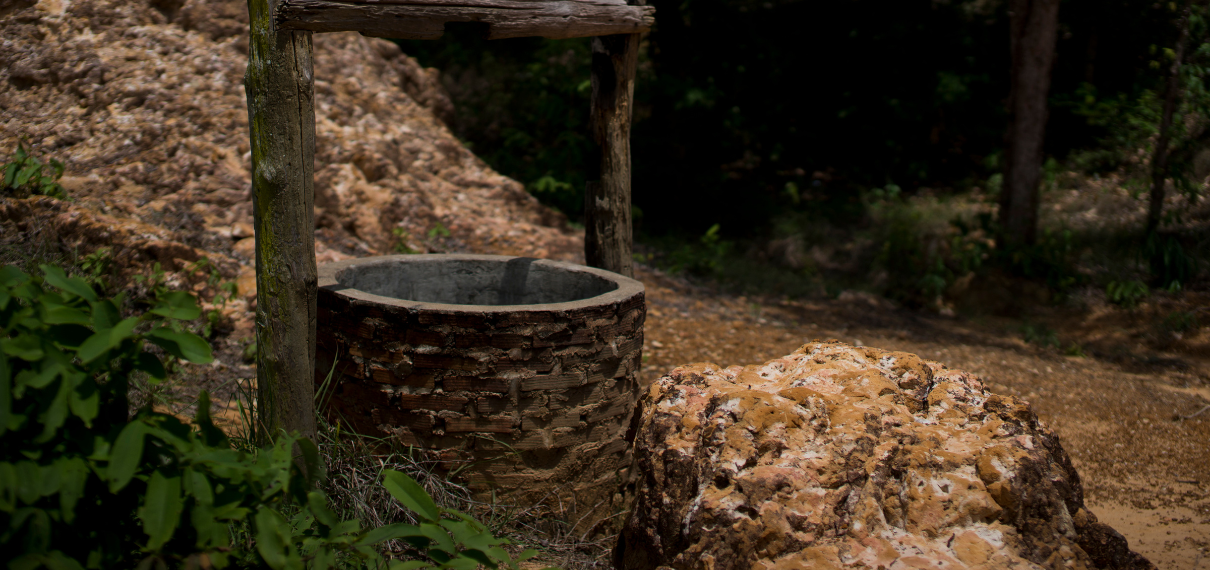
Jesus and the disciples were hungry and thirsty from their walk, and as they arrived at Jacob’s Well, Jesus remained behind while he sent the disciples to the village to purchase food.
A Samaritan woman comes to the well alone to fetch water from the well and is startled to find a lone Jewish man sitting there. When he asked her for a drink of water, she was taken aback; she was in a difficult situation. Jews and Samaritans didn’t speak; unrelated men and women should never be alone; and Jesus had no cup from which to drink.
They enter into what appears to be a dismissive conversation with each other. She is intrigued, perhaps, but not interested. Jesus asked for water but then he offered her water — not well water — but an eternal spring of water. While this sounded crazy perhaps, she muses what it must be like not to have to make this daily burdensome trip to the well each day for water.
It is clear here that she did not really want to speak with Jesus — but it is also clear that Jesus is intentionally there to speak with her. Nowhere else in the Gospels does Jesus intentionally place himself into a situation where he has a planned meeting with someone.
This woman moves quickly from being suspicious to being his disciple and, in a real sense, his first apostle to the Samaritans.
She realized quickly that this Jewish stranger was a prophet, and she spoke to him of the coming Jewish messiah. He revealed to her — and for the first time in John’s Gospel — that he is the Messiah. By that point in the conversation she was surprised by this revelation, and instead she returned to the village and went to the marketplace, where she announced to the people there that she had met the prophet.
We do not know thirst. Nor do we know the struggle to get something to drink. Not one of us is ever far from that plastic water bottle, so our longing for water and refreshment is greatly diminished.
Yet, we all know spiritual thirst — we long for a deeper relationship with the Lord and we seek to be satisfied by his presence. Unlike the water that flows from the tap we need to cry out to the Lord in order to experience the love and mercy that we seek from him.
The Lord is the fountain of refreshment, the full satisfaction of our desires, the completion of the journey. We get a taste of this promise in Baptism, but most of us are too young to know or understand the meaning.
We bless ourselves with holy water as we enter and as we leave the church, but for some of us this is a perfunctory act done from habitat and not with intentionality. The challenge now is to reflect on the meaning and power of this water to bless us and to remind us of the water of eternal life that we have received through our Baptism.
At the Easter Vigil the church blesses the font of water restoring the water that has been missing since Holy Thursday. Take a bottle of that water home and use the holy water when someone is sick or in distress. Ask the parish to have your house blessed and to set it apart for a holy purpose.
Water – with its power to give life and to take life — is the most powerful sign we have of the saving presence of God with us. It is through this water that we are cleaned and brought to salvation.
Father Garry Koch is pastor of St. Benedict Parish, Holmdel.