
By Father Garry Koch, columnist
Gospel reflection for Jan. 18, 2026, Second Sunday in Ordinary Time
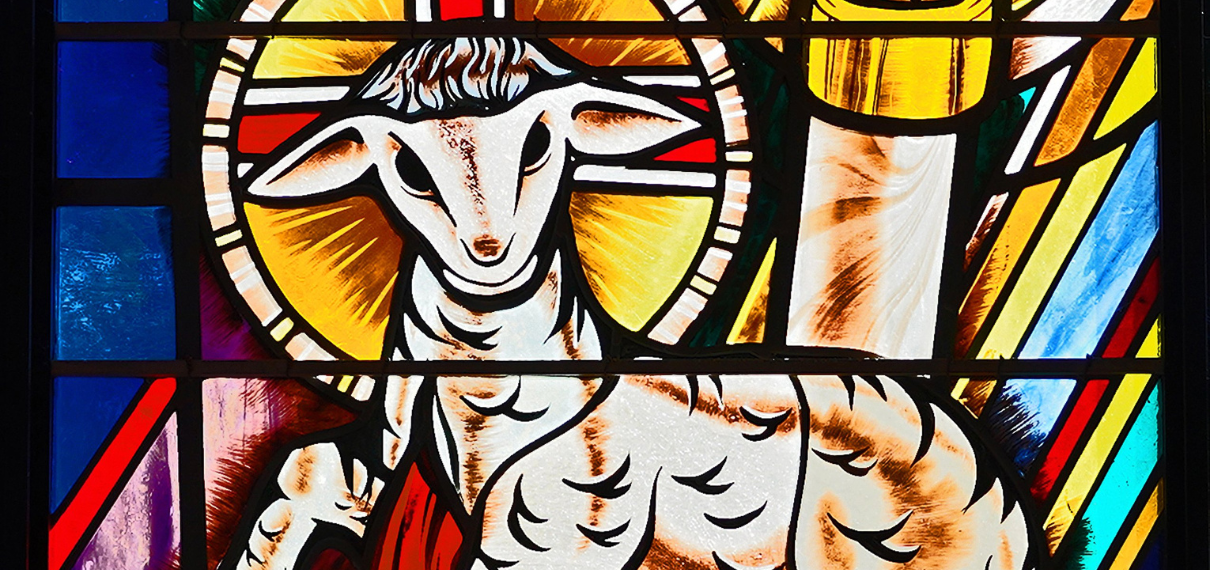
Catholics are familiar with the Lamb of God imagery as many of our churches present the image of a lamb, often holding a banner with a red cross. We often focus on this image during the Easter Season. At Mass we chant the “Lamb of God” (Agnus Dei) at the fractioning rite, and we are invited by the priest to receive communion as he pronounces: “Behold the Lamb of God.” It is John the Baptist who introduces this image of Jesus, drawn from the Passover tradition of Judaism, inviting us to see in Christ the forgiveness of our sins and the promise of eternal salvation.
Although we focused on the Baptism of Jesus by John last week for the Feast of the Baptism of the Lord, the Gospel this week returns to the moment, this time as seen by the Baptizer himself.
St. John Paul II reflected on this event at the general audience catechesis of April 1, 1998: “Jesus knew well that he had no need of that baptism, since he was completely innocent. One day he would challenge his enemies, saying: ‘Can any one of you convict me of sin?’ (Jn 8:46).
In submitting to John’s Baptism, Jesus did not receive it for his own purification but as a sign of redemptive solidarity with sinners. His baptismal act contains a redemptive intention, since he is ‘the Lamb of God, who takes away the sin of the world.’ Later he would call his passion a ‘baptism’, describing it as a kind of immersion in suffering redemptively accepted for the salvation of all: “‘I have a baptism to receive. What anguish I feel until it is over!’” (Lk 12:50).
It is here, then, that we see the development of a deeper understanding of the mission of Jesus evolving over time. John the Evangelist is inspired to propose the connection between the Death of Jesus on the Cross and the sacrifice of the lambs for the Seder meal.
The totality of John’s Gospel then draws our attention to this theological insight. Jesus, the Word-made-flesh (LOGOS) is the manifestation of the Passover and the embodiment of that sacrifice.
John carries this association even deeper into the Gospel as his timeline for the crucifixion with Jesus corresponds with the hour when the lambs were being slaughtered at the Temple in preparation for the Seder meal. On one side of Jerusalem the Temple was awash with the blood of the lambs while on the other side of the city, just outside the Herodian walls, The Lamb of God was shedding his blood for the redemption of humankind.
As we focus, then, on Jesus as the Lamb of God, we are again looking beyond the immediate event to the meaning of the Death of Jesus. Jesus died for the forgiveness of sin. All human sin has its origins in Original Sin. Jesus, the Lamb, saves us from death through His own Death on the Cross. For John, it is the collective sin of all of humanity that Jesus takes with him to the Cross. Through the shedding of his Blood – the Blood that we share in the Eucharist – our lives are reconciled to God and the forgiveness of sin becomes possible.
When we share in the Eucharist and as we pray with the entire Church that ancient liturgical hymn “Lamb of God” (Agnus Dei) we are proclaiming Jesus as the Lamb of the new Passover. We are acknowledging the saving action of Jesus on the Cross on our behalf. To receive the Eucharist, then, is to enter into an intimate relationship with the Lamb of God who is God himself in our midst.
This Sunday, as you hear the priest intone, “Behold the Lamb of God who takes away the sins of the world,” remember the first time you received the Sacrament and the excitement and enthusiasm of that event. Then you will get a taste of exuberance that John experienced as he saw the Spirit descend upon Jesus and realized that he was in the presence of the Lamb of God. We also experience that same enthusiasm as we realize that with the reception of the Eucharist our salvation is at hand.
The Eucharist is the reminder to us that our sins are forgiven in and through the sacrifice of Jesus. Yet, this is not merely a passive reality, but one that demands my full and active participation in the liturgy, yes, but also as I place my sins before the Lamb through the Sacrament of Penance.
This is the great gift of our faith, earned for us and in which we participate because of our baptism and the great love that the Lamb of God has for us in redeeming us and leading us to himself.
Father Garry Koch is pastor of St. Benedict Parish, Holmdel.