
From staff reports
Members of the Georgian Court University community traveled to the nation’s capital recently, joining students from other Mercy colleges and universities around the country to visit legislators and learn about social justice issues and faith-based advocacy in the policymaking process.
A handful of students and one faculty member from the Lakewood university participated in the event, titled the DC Mercy Justice Advocacy Experience, which was held May 20-24 and organized by the Sisters of Mercy of the Americas.
While in Washington, participants also learned about the work of the Sisters of Mercy, and began to create a plan for engaging students, faculty and staff on their home campuses around the issue of immigration.
Following are excerpts of reflections from some of the students who attended:
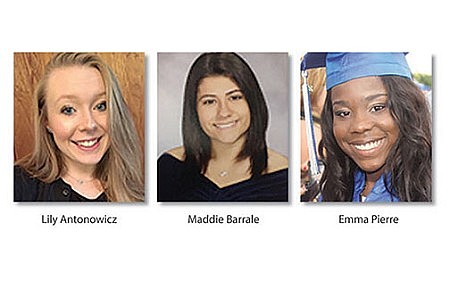
Lily Antonowicz, Sophomore
“With other students and faculty … we found our conversations bursting with ideas … After listening to the feedback on how we could make Georgian Court University more aware [of public policy, immigration, border patrol, etc.], we ultimately decided that we could start a social justice club and advocate for social justice to be taught in general education courses. Having this opportunity to advocate is something that is not only vital to those working directly with people, but also for everyone to learn how to express what they believe and feel passionate about. None of our thoughts on DACA and immigration were completely the same, but we all found effective ways to communicate how we felt, and why our input is important to our country being run not only by government, but also ‘the people.’
“As the trip drew to a close, I think that growing in Mercy advocacy was enlightening. It not only drew me closer to the wonderful people I attend Georgian Court University with, but it also sparked my drive to advocate even more for those who cannot do so themselves on and off campus. Though these conversations are difficult to have, they are necessary when people’s lives are being treated as if they are disposable.”
Maddie Barrale, Freshman
“In the meetings, we mostly focused on personal stories and things that brought the morality back into the conversation about immigration. … Every person brought up laws, numbers and people that I have never heard before. … We were told if this happened, to keep going back to our personal stories.
“[What was] most impactful to me during this trip was just learning about what immigrants face on a daily basis and why they are fleeing their countries. … If you think about it, we all immigrated to America at some point, and that’s why we need to let people in and save them from being harmed.
“Although learning about immigration was a serious and sensitive topic, there were times of joy. … I am determined to tell everyone that I know what I learned and the experience that I went through. This is my next step in trying to get more people in my community aware of what is going on in our country.”
Emma Pierre, Junior
“I was able to successfully socialize with several different groups of students who had varying opinions of how the immigration system can be rearranged and the ways immigrant students and adults can come to the United States. … I personally am an immigrant; I came to the United States at the age of nine years old, and it was very complicated to get my papers processed. My understanding based on my personal knowledge is in order for all immigrants to get the right help, the president of the United States along with the U.S. politicians need to make the right decisions to approve immigrant-related acts, such as the Dream Act.
“I learned how to advocate more, and possibly make social changes to help others in need. I am thankful that I was chosen to attend this advocacy program, because I got the chance to advocate for immigration, and educated myself in different areas to help humans who are suffering.”