
By Father Garry Koch
Gospel reflection for March 1, 2026, Second Sunday of Lent
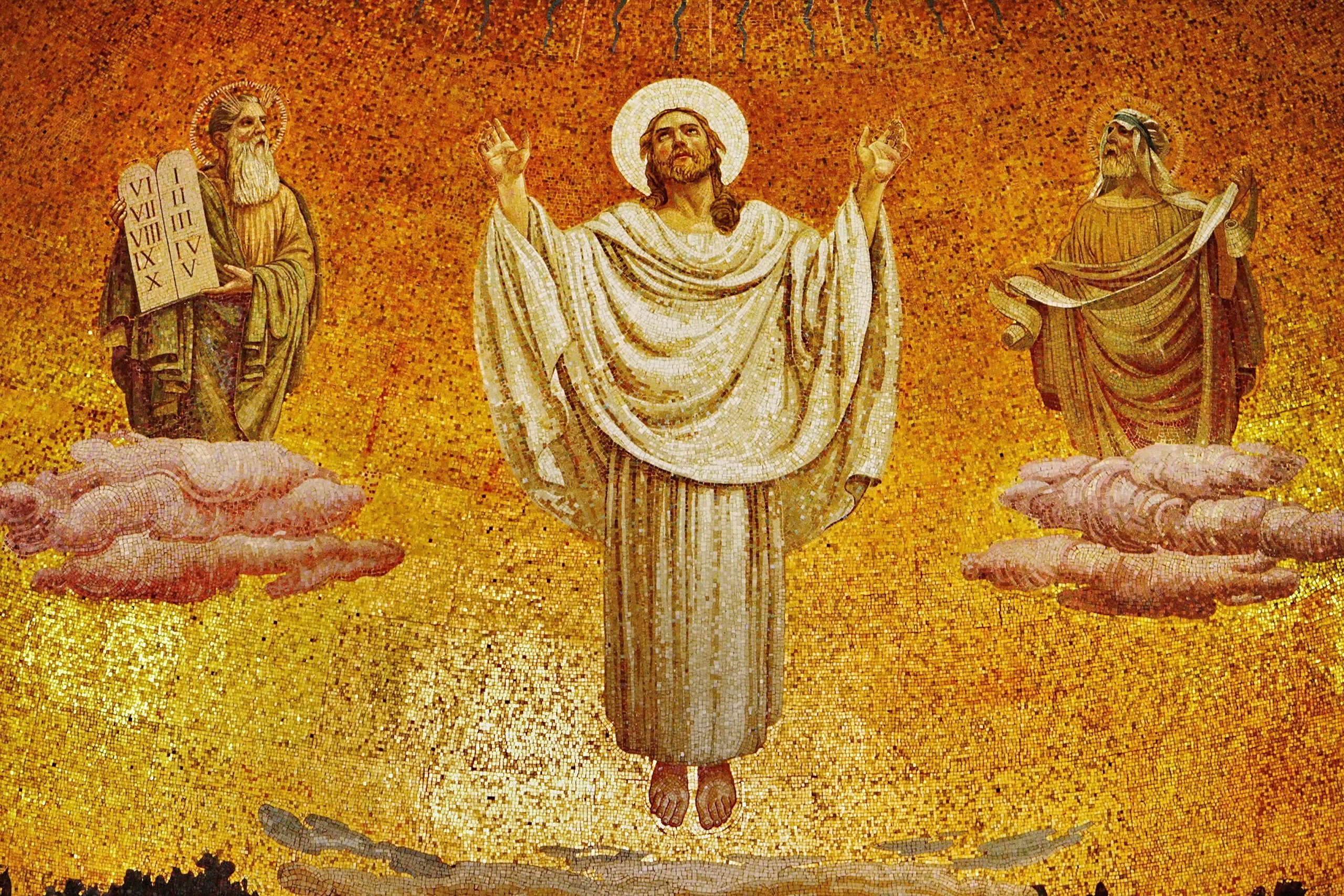
Although traditionally associated with the Law, Moses stands as the greatest prophet in the Israelite tradition, with no other ever approaching his greatness. Elijah, generally seen as the first of the prophets in what becomes the prophetic age, stands with Moses in his closeness to God. Both Moses and Elijah have unusual ends to their lives: Moses, in rabbinic tradition, was kissed by God, and Deuteronomy indicates that God buried Moses himself. Elijah was taken to heaven by the Lord’s own chariots. Their appearance at the Transfiguration highlights the prophetic words that Jesus has just given to his disciples: that he will be handed over to death.
For his part, Simon Peter is unwilling to accept this eventuality. He has come to believe, and has already publicly confessed, that Jesus is “the Christ, the Son of the living God.” The same Simon has just earned the nickname Peter (Rocky) from Jesus, then rebuked Jesus at the suggestion that this enterprise would end in Jesus being rejected and killed.
Simon Peter, James, and John accompanied Jesus to the top of a mountain. In usual biblical fashion, the mountain is the place where the great theophanies occur. Moses, here present at the transfiguration, first encountered God in the burning bush at the base of a mountain, and then at the same mountain he later received the tablets of the Law from the very hand of God. Some four hundred years later, the prophet Elijah, who had just called upon God to manifest himself in a contest against the prophets of the idol Baal, fled to the same where Moses encountered God, and experienced there his own great theophany and call to mission to the people.
Now atop another mountain, traditionally Mount Tabor, the chosen disciples encounter Moses and Elijah present with a glorified Jesus.
This moment points us back to the past for understanding, and to the immanent future events in the life of Jesus. As with Moses and Elijah, the end of Jesus’s life is a moment chosen specifically by God as the inaugural point of something new.
The death and burial of Moses set the stage for the crossing of the River Jordan by the Israelites, leading to the conquest and settlement of the Promised Land, led by his successor, Joshua. The ascension of Elijah, in the presence of his successor, Elisha, opened the 300-year period of prophecy in the history of Israel and Judah. Through these prophets, God instructed the kings and the people, calling them conversion, faithfulness, and holiness.
Now, after 400 years of silence, characterized by the development of the Wisdom Literature and the preserving of the sacred texts, God speaks again, in the person of his incarnate Son, Jesus.
At his Baptism, the great theophany occurred where the Father pronounced that Jesus is his beloved Son. Now, with the heavenly glory of Jesus being revealed and in the presence of these two eternal pillars of the Jewish tradition, the great theophany is repeated for the sake of the disciples. The Father affirms what Peter already knew.
For his part, Peter wants to capture the moment and remain in this heavenly realm for eternity. Atop this mountain the bitter end of which Jesus spoke cannot occur. They have transcended time and this world and entered the world of eternity. Alas, they are not to stay there. Peter appears to be foolish in his desire to avoid the plan of God.
At Caesarea Philipi Jesus rebuked Simon Peter for rejecting the passion to come. Now it is the Father who rebukes Peter. After the Father indicated Jesus as his Son, he adds the emphatic “Listen to him.”
While this can be easily dismissed as simply meaning to listen to the totality of the teaching of Jesus, the context places the instruction more squarely on the teaching of Jesus concerning his passion and death. Peter is rebuked for refusing to accept the fullness of the mission of Jesus and for failing to listen to him.
Jesus will again speak with the disciples about his mission and why they are going to Jerusalem. Never again does Peter refuse to heed and understand the mission, even though he wavers in his ability to stand with Jesus, denying him three times.
All of this point us to the Cross. The mission of Jesus has been unfolding throughout our proclamation of the Gospel. Now we see the fulfillment of that mission unfold before us. Jesus speaks of the cross and goes to the cross, but the Cross is not the end. Jesus will share in the glory of the Father with Moses and Elijah. The presence of the disciples at this moment is not for them alone. As they taste the glory of the Heavenly realm, someday, too, they will share in God’s presence for eternity. The victory of Jesus over death opens the gates of Heaven for all who share in his suffering and Death through Baptism.
Father Garry Koch is pastor of St. Benedict Parish, Holmdel.