


FAITH ALIVE: 'The Joy of Love': Meeting today's families
July 29, 2019 at 12:37 p.m.
By David Gibson | Catholic News Service
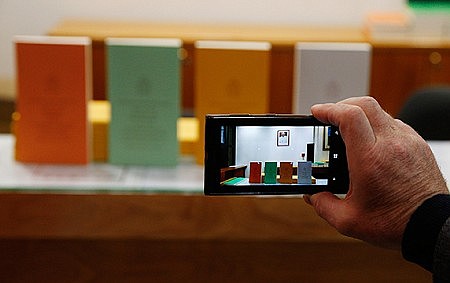
"No family drops down from heaven perfectly formed; families need constantly to grow and mature in the ability to love," Pope Francis writes in a major new document titled "The Joy of Love."
Speaking directly to families, the pope encourages them never to allow their "limitations" to cause them to "lose heart." No "stereotype of the ideal family" exists, he points out, "but rather a challenging mosaic made up of many different realities, with all their joys, hopes and problems."
Pope Francis insists from the outset that "families are not a problem; they are first and foremost an opportunity."
In this document he enters into a conversation with families, as well as with the church at large and the many pastoral ministers serving couples and families. He clearly hopes families themselves will read at least parts of the document, and he even offers a bit of guidance for reading it.
Pope Francis suggests that "the greatest benefit, for families themselves and for those engaged in the family apostolate, will come if each part is read patiently and carefully or if attention is paid to the parts dealing with their specific needs."
In reading the document he hopes that "all will feel called to love and cherish family life."
"The Joy of Love" represents the pope's response to the assemblies of the world Synod of Bishops on the family held in the fall of both 2014 and 2015. These meetings were reported widely in the media.
The synod sessions came to be known by many for their deliberations on certain specific pastoral issues involving the church's relationship with divorced Catholics who remarry without an annulment of a first marriage, for example, or with unmarried couples who cohabitate and may be raising children.
Not as widely reported was the synod's attention to couples and families across the board -- to the riches of their lives together, but also to the pressures and anxieties they experience due to cultural realities and the sometimes extreme demands today of meeting each family member's unique needs.
The document, known as an apostolic exhortation, addresses all the concerns mentioned above and many others as well.
Christ "dwells in real and concrete families with all their daily troubles and struggles, joys and hopes," Pope Francis writes in the document's chapter on the spirituality of marriage and the family.
Moreover, he says, "moments of joy, relaxation, celebration and even sexuality can be experienced as a sharing in the full life of the resurrection."
He considers it "a profound spiritual experience to contemplate our loved ones with the eyes of God and to see Christ in them."
Why would couples and families spend time with "The Joy of Love"? One reason is that it shares countless points of concrete, practical advice for "building sound and fruitful homes." Furthermore, the pope's kindness toward families is always apparent here.
If, on the one hand, he affirms that a family's continued growth in love "is a never-ending vocation," he also cautions against "judging harshly those who live in situations of frailty."
I imagine many couples will choose to spend time with Chapter 4 in "The Joy of Love." Titled "Love in Marriage," this chapter concentrates on ways to keep love alive in a marriage over the course of time.
"We have to realize that all of us are a complex mixture of light and shadows," Pope Francis advises couples. "The other person," he says, "is much more than the sum of the little things that annoy me," and "love does not have to be perfect for us to value it."
He recommends developing "the habit of giving real importance to the other person." Furthermore, he disparages "the logic of domination and competition" related to intelligence or power in families, convinced that this "destroys love" for them.
It is important to communicate well in marriage and family life, the pope comments. Be ready "to listen patiently and attentively to everything the other person wants to say," he urges.
"The Joy of Love" devotes careful attention to the education and ethical formation of children; to marriage preparation, the accompaniment of couples during a marriage's early years and the church's continuing relationship with its divorced members; and to welcoming children as a reflection of a couple's love.
In a chapter on Scripture, the pope shares his hope that couples and families will discover that the word of God for them "is not a series of abstract ideas." Instead, he says, God's word is "a source of comfort and companionship for every family that experiences difficulties or suffering."
I assume that in some way, at some time and to some degree, that includes just about every couple and family.
With "The Joy of Love," Pope Francis expresses compassion and support for contemporary families.
A reason the document is timely in this Year of Mercy, he observes, is that it "seeks to encourage everyone to be a sign of mercy and closeness wherever family life remains imperfect or lacks peace and joy."
Gibson served on Catholic News Service's editorial staff for 37 years.
The 'Joy of Love' is an affirmation worth the read
By Mike Nelson | Catholic News Service
It probably shouldn't be necessary to have pastoral letters or papal encyclicals or apostolic exhortations (or any other official church document) to tell us what we should already know: that marriage and the family life it creates are holy and sacred.
And yet, as someone celebrating 40 years of marriage and 36 years of parenthood this year, I readily admit that there are times when the sacredness of marriage and family life gets lost amid the day-to-day challenges and struggles of surviving in the world.
Sometimes these challenges and struggles lead me to act or react in a less-than-loving or Christian fashion.
That's why it's as good a reason as any to welcome "Amoris Laetitia," or "The Joy of Love," Pope Francis' recent apostolic exhortation on marriage and the family. The document is the result of synods called by the pope in each of the past two years to address this most integral component of Christ-centered living.
As a husband and father, I find it illuminating that this document sprang from the synod process, a process that by definition indicates not simply an opportunity but a need for dialogue, for listening, reflecting and sharing.
So, too, in a marriage and in a family, there is the need to listen, reflect and share, to communicate and to pray with love and respect. That is who we are as a church, as a family.
"Amoris Laetitia," in the words of Pope Francis, invites Christian families "to persevere in a love strengthened by the virtues of generosity, commitment, fidelity and patience" (virtues, I would suggest, that also are common to an effective synod process).
I also appreciate "Amoris Laetitia" and its humble, non-lecturing tone, quite in keeping with this Year of Mercy and with the tone of this pontificate that is not afraid to take the church, the papacy included, to task.
Pope Francis says what many of us in marriage have often felt: that the church has a hard time presenting marriage "more as a dynamic path to personal development and fulfillment than as a lifelong burden."
"We also find it hard," he continues, "to make room for the consciences of the faithful, who very often respond as best they can to the Gospel amid their limitations, and are capable of carrying out their own discernment in complex situations. We have been called to form consciences, not to replace them."
In other words, there is room for growth -- spiritually and in other ways -- as we journey in faith. Marriage and family life offer a unique and beautiful opportunity to experience that growth.
I know for certain that my faith journey would have barely progressed, if not stalled completely, had I not met and married the woman I've shared my life with these past four decades. Through her and the son we brought into this world I am more aware of and pray more closely to Christ and his church.
Or, as Pope Francis writes: "It is a profound spiritual experience to contemplate our loved ones with the eyes of God and to see Christ in them. This demands a freedom and openness that enable us to appreciate their dignity. We can be fully present to others only by giving fully of ourselves and forgetting all else."
Bottom line: When we set aside selfish needs, the difficulties of marriage and family life become far less daunting. "If a family is centered on Christ," the pope says, "he will unify and illumine its entire life. Moments of pain and difficulty will be experienced in union with the Lord's cross, and his closeness will make it possible to surmount them."
"Amoris Laetitia" is an affirmation of who we are as members of God's family and as members of the church that is the bride of Christ. It's well worth the read.
Nelson is former editor of The Tidings, newspaper of the Archdiocese of Los Angeles.
Scripture in the papal exhortation on families
By Daniel S. Mulhall | Catholic News Service
Pope Francis' recent apostolic exhortation "Amoris Laetitia," or "The Joy of Love," is the result of the work developed at the two synods on the family that were held at the Vatican in 2014 and 2015.
While much of the content of this exhortation is taken from the findings that were voted on by the bishops who attended the synods, the exhortation is firmly rooted in Scripture.
Many references from Scripture appear in the first chapter when the theological foundations are laid for the teaching that follows. Pope Francis begins by reflecting on the importance of families in the Bible.
He says: "The Bible is full of families, births, love stories and family crises. This is true from its very first page, with the appearance of Adam and Eve's family with all its burden of violence but also its enduring strength to its very last page, where we behold the wedding feast of the bride and the lamb.
"Jesus' description of the two houses, one built on rock and the other on sand, symbolizes any number of family situations shaped by the exercise of their members' freedom, for, as the poet says, 'every home is a lampstand.'"
Next, he quotes the passage from Psalm 128:1-6, which includes the lines, "Your wife will be like a fruitful vine within your home, your children like young olive plants around your table"; this introduces the reader to the traditional blessing offered for families.
Citing Matthew 19:4, Pope Francis notes in the document that the family is centered around a "father and mother, a couple with their personal story of love. They embody the primordial divine plan clearly spoken of by Christ himself." In so doing, Pope Francis establishes the tone and the feeling that extends throughout the rest of the exhortation.
Citing 1 Timothy 4:4 ("For everything created by God is good, and nothing is to be rejected when received with thanksgiving"), the pope lays the theological foundation for the vocation of the family. He includes here the recognition of the importance of sexuality within marriage as a "divine gift."
Reflecting on Matthew 19, Pope Francis notes that in marriage we see the fulfillment of God's original plan. No wonder families are frequently called the "domestic church."
Pope Francis brings the exhortation to a close with a reflection on the spirituality of marriage and the family by again turning to Scripture. He writes that God "dwells deep within the marital love that gives him glory."
He also offers the moving thought that "each spouse is for the other a sign and instrument of the closeness of the Lord, who never abandons us," citing Matthew 28:30 as the source of this insight.
Pope Francis encourages us to read the exhortation slowly and thoughtfully. As you read, also take time to reflect on the scriptural passages found there.
Mulhall is a catechist who lives in Laurel, Maryland.
FOOD FOR THOUGHT
Jesuit Father James Martin wrote on April 8, 2016, for America magazine about the "Top Ten Takeaways from 'Amoris Laetitia,'" the papal document on the family.
The pope, Father Martin said, asks "the church to meet people where they are, to consider the complexities of people's lives and to respect people's consciences when it comes to moral decisions."
The pope, he said, "urges the church to appreciate the context of people's lives when helping them make good decisions."
The goal of the letter is to help everyone "experience God's love and know that they are welcome members of the church," Father Martin wrote, adding that the pope wants understanding, compassion and accompaniment of church members, as well as encouragement to live good Christian lives.
The pope "is especially attentive that no one feels unimportant or excluded from God's love," Father Martin said. "All are welcome. The church must help families of every sort, and people in every state of life, know that, even in their imperfections, they are loved by God and can help others experience that love."
[[In-content Ad]]
Related Stories
Monday, December 15, 2025


E-Editions
Events
By David Gibson | Catholic News Service
"No family drops down from heaven perfectly formed; families need constantly to grow and mature in the ability to love," Pope Francis writes in a major new document titled "The Joy of Love."
Speaking directly to families, the pope encourages them never to allow their "limitations" to cause them to "lose heart." No "stereotype of the ideal family" exists, he points out, "but rather a challenging mosaic made up of many different realities, with all their joys, hopes and problems."
Pope Francis insists from the outset that "families are not a problem; they are first and foremost an opportunity."
In this document he enters into a conversation with families, as well as with the church at large and the many pastoral ministers serving couples and families. He clearly hopes families themselves will read at least parts of the document, and he even offers a bit of guidance for reading it.
Pope Francis suggests that "the greatest benefit, for families themselves and for those engaged in the family apostolate, will come if each part is read patiently and carefully or if attention is paid to the parts dealing with their specific needs."
In reading the document he hopes that "all will feel called to love and cherish family life."
"The Joy of Love" represents the pope's response to the assemblies of the world Synod of Bishops on the family held in the fall of both 2014 and 2015. These meetings were reported widely in the media.
The synod sessions came to be known by many for their deliberations on certain specific pastoral issues involving the church's relationship with divorced Catholics who remarry without an annulment of a first marriage, for example, or with unmarried couples who cohabitate and may be raising children.
Not as widely reported was the synod's attention to couples and families across the board -- to the riches of their lives together, but also to the pressures and anxieties they experience due to cultural realities and the sometimes extreme demands today of meeting each family member's unique needs.
The document, known as an apostolic exhortation, addresses all the concerns mentioned above and many others as well.
Christ "dwells in real and concrete families with all their daily troubles and struggles, joys and hopes," Pope Francis writes in the document's chapter on the spirituality of marriage and the family.
Moreover, he says, "moments of joy, relaxation, celebration and even sexuality can be experienced as a sharing in the full life of the resurrection."
He considers it "a profound spiritual experience to contemplate our loved ones with the eyes of God and to see Christ in them."
Why would couples and families spend time with "The Joy of Love"? One reason is that it shares countless points of concrete, practical advice for "building sound and fruitful homes." Furthermore, the pope's kindness toward families is always apparent here.
If, on the one hand, he affirms that a family's continued growth in love "is a never-ending vocation," he also cautions against "judging harshly those who live in situations of frailty."
I imagine many couples will choose to spend time with Chapter 4 in "The Joy of Love." Titled "Love in Marriage," this chapter concentrates on ways to keep love alive in a marriage over the course of time.
"We have to realize that all of us are a complex mixture of light and shadows," Pope Francis advises couples. "The other person," he says, "is much more than the sum of the little things that annoy me," and "love does not have to be perfect for us to value it."
He recommends developing "the habit of giving real importance to the other person." Furthermore, he disparages "the logic of domination and competition" related to intelligence or power in families, convinced that this "destroys love" for them.
It is important to communicate well in marriage and family life, the pope comments. Be ready "to listen patiently and attentively to everything the other person wants to say," he urges.
"The Joy of Love" devotes careful attention to the education and ethical formation of children; to marriage preparation, the accompaniment of couples during a marriage's early years and the church's continuing relationship with its divorced members; and to welcoming children as a reflection of a couple's love.
In a chapter on Scripture, the pope shares his hope that couples and families will discover that the word of God for them "is not a series of abstract ideas." Instead, he says, God's word is "a source of comfort and companionship for every family that experiences difficulties or suffering."
I assume that in some way, at some time and to some degree, that includes just about every couple and family.
With "The Joy of Love," Pope Francis expresses compassion and support for contemporary families.
A reason the document is timely in this Year of Mercy, he observes, is that it "seeks to encourage everyone to be a sign of mercy and closeness wherever family life remains imperfect or lacks peace and joy."
Gibson served on Catholic News Service's editorial staff for 37 years.
The 'Joy of Love' is an affirmation worth the read
By Mike Nelson | Catholic News Service
It probably shouldn't be necessary to have pastoral letters or papal encyclicals or apostolic exhortations (or any other official church document) to tell us what we should already know: that marriage and the family life it creates are holy and sacred.
And yet, as someone celebrating 40 years of marriage and 36 years of parenthood this year, I readily admit that there are times when the sacredness of marriage and family life gets lost amid the day-to-day challenges and struggles of surviving in the world.
Sometimes these challenges and struggles lead me to act or react in a less-than-loving or Christian fashion.
That's why it's as good a reason as any to welcome "Amoris Laetitia," or "The Joy of Love," Pope Francis' recent apostolic exhortation on marriage and the family. The document is the result of synods called by the pope in each of the past two years to address this most integral component of Christ-centered living.
As a husband and father, I find it illuminating that this document sprang from the synod process, a process that by definition indicates not simply an opportunity but a need for dialogue, for listening, reflecting and sharing.
So, too, in a marriage and in a family, there is the need to listen, reflect and share, to communicate and to pray with love and respect. That is who we are as a church, as a family.
"Amoris Laetitia," in the words of Pope Francis, invites Christian families "to persevere in a love strengthened by the virtues of generosity, commitment, fidelity and patience" (virtues, I would suggest, that also are common to an effective synod process).
I also appreciate "Amoris Laetitia" and its humble, non-lecturing tone, quite in keeping with this Year of Mercy and with the tone of this pontificate that is not afraid to take the church, the papacy included, to task.
Pope Francis says what many of us in marriage have often felt: that the church has a hard time presenting marriage "more as a dynamic path to personal development and fulfillment than as a lifelong burden."
"We also find it hard," he continues, "to make room for the consciences of the faithful, who very often respond as best they can to the Gospel amid their limitations, and are capable of carrying out their own discernment in complex situations. We have been called to form consciences, not to replace them."
In other words, there is room for growth -- spiritually and in other ways -- as we journey in faith. Marriage and family life offer a unique and beautiful opportunity to experience that growth.
I know for certain that my faith journey would have barely progressed, if not stalled completely, had I not met and married the woman I've shared my life with these past four decades. Through her and the son we brought into this world I am more aware of and pray more closely to Christ and his church.
Or, as Pope Francis writes: "It is a profound spiritual experience to contemplate our loved ones with the eyes of God and to see Christ in them. This demands a freedom and openness that enable us to appreciate their dignity. We can be fully present to others only by giving fully of ourselves and forgetting all else."
Bottom line: When we set aside selfish needs, the difficulties of marriage and family life become far less daunting. "If a family is centered on Christ," the pope says, "he will unify and illumine its entire life. Moments of pain and difficulty will be experienced in union with the Lord's cross, and his closeness will make it possible to surmount them."
"Amoris Laetitia" is an affirmation of who we are as members of God's family and as members of the church that is the bride of Christ. It's well worth the read.
Nelson is former editor of The Tidings, newspaper of the Archdiocese of Los Angeles.
Scripture in the papal exhortation on families
By Daniel S. Mulhall | Catholic News Service
Pope Francis' recent apostolic exhortation "Amoris Laetitia," or "The Joy of Love," is the result of the work developed at the two synods on the family that were held at the Vatican in 2014 and 2015.
While much of the content of this exhortation is taken from the findings that were voted on by the bishops who attended the synods, the exhortation is firmly rooted in Scripture.
Many references from Scripture appear in the first chapter when the theological foundations are laid for the teaching that follows. Pope Francis begins by reflecting on the importance of families in the Bible.
He says: "The Bible is full of families, births, love stories and family crises. This is true from its very first page, with the appearance of Adam and Eve's family with all its burden of violence but also its enduring strength to its very last page, where we behold the wedding feast of the bride and the lamb.
"Jesus' description of the two houses, one built on rock and the other on sand, symbolizes any number of family situations shaped by the exercise of their members' freedom, for, as the poet says, 'every home is a lampstand.'"
Next, he quotes the passage from Psalm 128:1-6, which includes the lines, "Your wife will be like a fruitful vine within your home, your children like young olive plants around your table"; this introduces the reader to the traditional blessing offered for families.
Citing Matthew 19:4, Pope Francis notes in the document that the family is centered around a "father and mother, a couple with their personal story of love. They embody the primordial divine plan clearly spoken of by Christ himself." In so doing, Pope Francis establishes the tone and the feeling that extends throughout the rest of the exhortation.
Citing 1 Timothy 4:4 ("For everything created by God is good, and nothing is to be rejected when received with thanksgiving"), the pope lays the theological foundation for the vocation of the family. He includes here the recognition of the importance of sexuality within marriage as a "divine gift."
Reflecting on Matthew 19, Pope Francis notes that in marriage we see the fulfillment of God's original plan. No wonder families are frequently called the "domestic church."
Pope Francis brings the exhortation to a close with a reflection on the spirituality of marriage and the family by again turning to Scripture. He writes that God "dwells deep within the marital love that gives him glory."
He also offers the moving thought that "each spouse is for the other a sign and instrument of the closeness of the Lord, who never abandons us," citing Matthew 28:30 as the source of this insight.
Pope Francis encourages us to read the exhortation slowly and thoughtfully. As you read, also take time to reflect on the scriptural passages found there.
Mulhall is a catechist who lives in Laurel, Maryland.
FOOD FOR THOUGHT
Jesuit Father James Martin wrote on April 8, 2016, for America magazine about the "Top Ten Takeaways from 'Amoris Laetitia,'" the papal document on the family.
The pope, Father Martin said, asks "the church to meet people where they are, to consider the complexities of people's lives and to respect people's consciences when it comes to moral decisions."
The pope, he said, "urges the church to appreciate the context of people's lives when helping them make good decisions."
The goal of the letter is to help everyone "experience God's love and know that they are welcome members of the church," Father Martin wrote, adding that the pope wants understanding, compassion and accompaniment of church members, as well as encouragement to live good Christian lives.
The pope "is especially attentive that no one feels unimportant or excluded from God's love," Father Martin said. "All are welcome. The church must help families of every sort, and people in every state of life, know that, even in their imperfections, they are loved by God and can help others experience that love."
[[In-content Ad]]